

As central command of the human nervous system, the brain is a symphony of billions of neural connections ��� each inextricably linked to泭every facet of our being.泭
Genetic, environmental, cellular and molecular factors have a profound impact during development in early childhood through adolescence. Neuroscience泭has shown that the brain is as sensitive as it is captivating, as quick to learn as it is vulnerable to trauma.
According to the Centers for Disease Control, 61 percent of adults have experienced at least one adverse childhood experience (ACE) in their lifetime泭��� incidents of physical, emotional or sexual abuse; neglect; witnessing acts of violence, substance abuse or mental health issues; natural disasters;泭grief and loss.
Understanding the needs and expectations of the developing nervous system and the neural architecture that guides everyone from early childhood泭through adolescence and into adulthood is at the core of the Developmental Neuroscience and Brain Health Community-Engaged Research courses,泭both taught by Nancy Michael, the Rev. John A. Zahm, C.S.C., Associate Teaching Professor and director of undergraduate studies in neuroscience泭and behavior.
As part of these courses, Michael���s students work with area organizations such as the Robinson Community Learning Center, the South Bend Center泭for the Homeless, the Family Justice Center of St. Joseph County, Beacon Health System and the St. Joseph County Department of Health to apply the principles of neuroscience in programs泭that can impact children and adults at different stages of development.
(Photo by Barbara Johnston/University of 91勛圖)
By working with these partners, the泭goal is to create healthier communities,泭
develop a better understanding泭of human resilience and help individuals泭and communities live closer to the way our human nervous systems expect for wellness ��� a paradigm shift to how we live now, Michael said.
���We have a biological imperative to have people consistently caring for us, a place in the world and a purpose,��� Michael said. But the reality, she said, is too often泭too many do not experience healthy, consistent care, and cultural norms in the United States around success and rugged individualism can perpetuate the belief that asking for泭help at any age is a sign of weakness ��� ���which is a complete contradiction to a foundational imperative that all human nervous systems need for health and well-being across a lifespan.���
Adversity is embedded in the human experience and there are different dimensions of experience that can become traumas, Michael said. What often becomes trauma evolves in the developing or developed brain泭when the expectations from the environment ��� consistent, responsive and compassionate care; regular fresh air; body movement; three-dimensional multi-sensory experiences ��� go unmet.泭
The further one���s experience is from the brain���s expectations, the泭greater the vulnerability of the nervous system ��� what initially begins as an adaptation to a particular environmental泭experience can have a domino effect within our neural circuitry, damaging brain cells in the hippocampus,泭impairing cognition and memory, leading to an increased risk of anxiety, depression and chronic illness in adults. This is why positive泭relationships become so critical in tipping the scales, and protecting individuals across all periods of life.
With all people, and especially those of us who have had a harder go of it, Michael says, the opportunity is to泭take what we know about the ���non-negotiables��� for brain health, and do our best to care for ourselves and others, in泭ways that all brains expect.
Health care systems have identified childhood trauma as a primary community health concern, and ACEs have been linked to at least泭five of the top 10 leading causes of death in the country. Prevention could result in 21 million fewer cases泭of depression, 1.9 million fewer cases of heart disease and 2.5 million fewer cases of obesity, and annual health泭care savings of billions of dollars.
Area health care workers, social workers and law enforcement officials recognize the problems associated with ACEs. What they need are solutions.
���If we wait for the hospitals, the policymakers or the system to solve these problems, more likely than not, those problems won���t get better ���泭they���re more likely to get worse because we are abdicating our personal responsibilities for our own and each other���s well-being,��� Michael泭said. ���We construct our sense of safety from the earliest stages through the care of others. We���re completely dependent upon care from others,泭and while caregiving behaviors change and caregiving relationships change, we are never independent from how we are perceived and how泭we are integrated into the broader community. We grow from being dependent to interdependent. We are obligated to one another on a biological泭level, far beyond what most of us can fathom.���
Through a combination of neuroscience, organizational change theory and community capacity building strategies, Michael and her students泭work with their community partners to develop organizational strategies promoting trauma-informed care ��� aimed at shifting perspectives so泭all people get the treatment they need with dignity, regardless of appearances.
���The community work is about communicating neuroscience clearly enough so that everyone develops an understanding of what all human泭nervous systems expect,��� said Michael. ���When we have a better understanding of what the nervous system needs, we do a泭better job meeting those expectations for ourselves and for the people in our lives.���
Frank Spesia, PACEs (positive and adverse childhood experiences) coordinator for the St. Joseph County Department of Health, said students泭taking part in Michael���s courses are a ���valuable resource.���
���People are poorly educated in causality,��� Spesia said. ���Neuroscience, and this work with Nancy���s students, helps to connect the dots and show泭how things don���t happen in a vacuum.泭The thing we���re selling is so obvious when you hear it. We���re asking people to be nicer to each other.���
The course teaches students how to apply neuroscience to real-world issues in communities with varying needs, but the education goes much deeper: teaching them how to use泭their education in service to others.
泭
���In this work, you can���t follow a plan step by step,��� junior Tom Krapfl said. ���You can���t make a plan for the community based on your perceived泭needs for them. You have to listen to what they really need. It���s different than any other work.���
This semester, Krapfl is working with Self-Healing Communities of Greater Michiana, a coalition focused on building strategies and implementing泭community change models driven by neuroscience to address trauma, healing and human resilience in area communities and organizations such as South Bend���s Center for Hospice Care.
Krapfl provides information about services available through hospice care, bridging what he called a ���knowledge gap��� between what people know and泭what resources are actually available to them. He said he has been genuinely moved by his coursework with Michael, working with individuals going through the grieving process.
���It���s emotional work, seeing the kind of support caregivers need,��� he said.
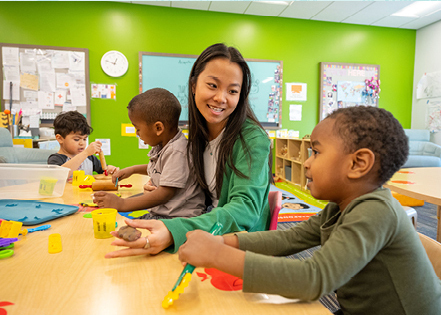
Senior Lydia Liang works with the Robinson Community Learning Center���s preschool program, interacting with children ages 3-5, and said泭she���s seeing a lot of children dealing with ACEs. They come to the RCLC with different泭 experiences. Some are children of refugees, some are immigrants泭and others are from within the local community.
���They���re so young and already they have gone through so much,��� she said.泭���But there���s an opportunity to rewrite the stories these communities are used to. Seeing how many people live such a different life, it has put an emphasis on how important this work is. Every little泭thing contributes in some way.���
Michael said: ���Liang���s project this semester involves incorporating neuroscience learnings into informational materials sent home to parents to泭educate them on neuroscience and early childhood brain development.
���There���s not a single strategy that���s going to be universally adoptable. I���m a neuroscientist, and I believe in data.泭But from an individual and community healing lens, when the person in front of me has experienced trauma and then feels hopeful that things can be different���that is also a valid and泭reliable measure. A lot of this work is about hope���and igniting courage to take action.���