
New FTT assistant professor Matthew Payne brings humanistic focus to study of video games.
Read more: .
]]>
New FTT assistant professor Matthew Payne brings humanistic focus to study of video games.
Read more: .
]]>
Psychology graduate student Andrea Kalchik is focusing her research on brain processes.
Read more: .
]]>From a group of almost 3,000 applicants, the foundation awarded 177 Fellowships this year to a diverse group of scholars, artists and scientists “on the basis of prior achievement and exceptional promise.”
“The Guggenheim is one of the nation’s most prestigious fellowships,” said , I.A. O’Shaughnessy Dean of the . “We’re delighted that Don Crafton and Scott Monroe are continuing our strong tradition of excellence with these awards.”
Faculty members in 91³ԹÏ’s College of Arts and Letters have won 15 Guggenheim fellowships in the past 14 years.
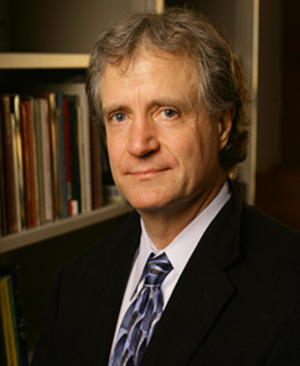 Scott Monroe
Monroe, William K. Warren Foundation Professor of , has spent much of his career investigating the role of life stress in provoking episodes of major depression. Over the past decade, he has begun to focus on why some people experience repeated episodes of depression throughout life and others don’t. He will use the Guggenheim fellowship to try to discover early indicators of recurrence risk for major depression.
“One of the big problems with previous research is that we’ve been misled into thinking that almost everybody who develops depression for the first time has a recurrence; in fact, about 50 percent never have another episode — and we don’t know much about them,” Monroe said. His most recent work has helped to document this important finding, and to shed light on the flaws in the science behind the errant statistics.
Depression has been predicted to be the second leading cause of disease disability in the world by 2020, Monroe noted. “Partly that is due to how common depression is, but it’s this recurrent aspect that really accounts for the public health concern and the devastating personal consequences associated with the disorder.”
Monroe will work with colleagues to explore the data from a 15-year longitudinal study of people with depression, looking for factors that distinguish those who go on to multiple recurrences from those who do not. In a separate narrative project, he will interview people who have experienced many episodes to determine if they can provide key information about the psychosocial circumstances surrounding their very first episode.
“We’re in a good position to begin to test and understand the kinds of factors that may forecast likelihood of recurrence, setting the stage for more detailed genetic, biological and psychosocial research on high risk,” Monroe said.
In a focal piece of the project, Monroe is interested in comparing the types of depression that come about following major life stress with those that appear to arise “out of the blue” (i.e., unprovoked by a significant life event). Determining if people with recurrent depression experience their first episode after major life stress — or not — will provide a pivotal finding for advancing understanding of the psychobiological mechanisms underpinning recurrence risk.
“Recurrences of depression may be a tractable problem that we can actually do something about,” he said. “If we learn more about recurrences, too, our understanding might be traced backward to enhance understanding of the less recurrent forms of the disorder. That’s why I’m so excited about this work. It’s manageable, and there are good possibilities. If we are fortunate, we could make a nice contribution here.”
Monroe was one of just three psychologists nationally to be awarded a Guggenheim Fellowship.
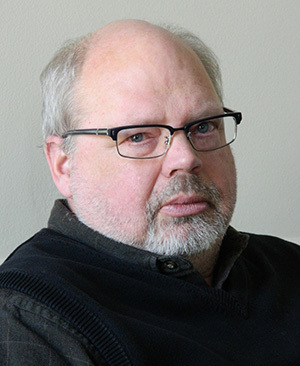 Donald Crafton
Crafton, the Joseph and Elizabeth Robbie Professor of at 91³ԹÏ, will use his Guggenheim Fellowship to research and write about a group of Los Angeles artists who influenced the visual style of the Disney animation studio in the 1930s.
“They were a group of painters who revived the lost art of watercolor painting and rejected European avant-gardism, which was catching on in L.A. at the time,” Crafton said. “They thought watercolors were most appropriate for capturing the luminosity and transparency of the distinctive California atmosphere. The palettes are typically bright, vibrant colors.”
Known as the California Watercolor Association, the artists were enlisted to teach Disney’s animators and then hired as employees when Walt Disney opened his own art studio. Along the way, their philosophy and techniques became highly visible in Disney productions.
“It was a happy accident,” Crafton said. “The European storybook style of animation disappeared very quickly and the new white palette and geometrical shapes started to predominate.”
Crafton uncovered the influence of the group while working on his book, “” (2013), which won the Society for Media and Cinema Studies’ . The prize recognizes “the best new scholarly work that exemplifies rigorous, interdisciplinary and theoretical inquiry into issues of vision and visuality.”
When he returns from his one-year sabbatical, Crafton plans to bring his research into the classroom, where he explores the ways that animation interacts with modern art. He said the project could turn into a book, a gallery exhibition or an online archive.
In 2001, the Academy of Motion Picture Arts and Sciences named Crafton an inaugural Academy Film Scholar. He has received several major fellowships, including two from the National Endowment for the Humanities. And in 2007, he received the University of 91³ԹÏ’s Presidential Award.
Originally published by Aaron Smith at on May 7.
]]> Gitta Lubke
Data, data everywhere. In genomics research, there is a data deluge, so innovative ways to analyze all that information will play a critical role in future breakthroughs.
, associate professor of at the University of 91³ԹÏ, is at the forefront of developing new statistical methods to help find DNA markers that are related to psychiatric disorders — and spur further research regarding individual patients’ conditions.
“Understanding the biological causes of psychiatric disorders and their interplay with environmental risk factors is a prerequisite of a successful, personalized approach to treatment,” Lubke says.
The DNA data that Lubke and her colleagues use consist of very large numbers of genetic markers — the spots in DNA where base pairs can differ between people.
“The idea is to check whether more people with a disorder have, for example, ‘A’ rather than ‘T’ in a given spot than people without that disorder,” Lubke says. “If so, you can look at whether that spot in the genome corresponds to a gene and then look at the protein that is coded and what it does.”
The current approach is to test all genetic markers separately, requiring millions of tests, and to use a case/control variable for the disorder. “But that variable often doesn’t do justice to something as complex as borderline personality disorder, for instance,” Lubke explains. “Testing each genetic marker separately is not necessarily optimal.”
Thus, she and her students are investigating alternative methods and comparing them to the standard approach. To support a project called “MRI: Acquisition of a Data Analytics Cluster for Computational Social Science,” Lubke and several colleagues were also recently awarded a $452,000 grant from the National Science Foundation.
Lubke’s other main project right now is a borderline personality study in collaboration with in The Netherlands, where she received her Ph.D.
This collaboration gives her access to a very large data collection — the , which has been collecting data since the 1980s and recently added a biobank with genetic data and other biomarkers.
The borderline project includes a study on how best to model questionnaire data, a genome-wide search for relevant genetic markers using standard methods, and the application of alternative methods.
Lubke’s other projects with VU range from studies on internalizing and externalizing problems and well-being to a pilot program for graduate-student exchanges that allows a 91³ԹÏ quantitative psychology student to study and research at VU while 91³ԹÏ hosts two of VU’s biological psychology students. Moving forward, Lubke hopes to secure additional funding to expand the program and to enhance the student experience by making housing and courses available to visiting students.
“International experience not only looks good on a CV,” she says, “but also opens new horizons and offers ample opportunity to collaborate and network.”
At 91³ԹÏ, Lubke’s research includes projects looking at resilience in later-life, with psychology professor , and the validity and utility of a two-part system for personality disorder diagnosis, with principal investigator , the William J. and Dorothy K. O’Neill Professor of Psychology.
“All of these projects are interesting and fun — my only problem is that I need to come up with a method to somehow stretch the 24 hours a day has,” Lubke says.
“I really enjoy the process of discovering bits and pieces of answers, and putting them together. I guess I’d be pretty bored if answers had already been found to all questions. Of course, there’s a good bit of frustration at times, but that’s part of it.”
Lubke takes great pride in being part of 91³ԹÏ’s impressive quantitative psychology program, from the far-ranging expertise of faculty to its collaborations with other colleagues inside and outside the department.
“O³ܰù faculty represents such a wide scope of different topics within quantitative methodology that you can always find an expert when faced with a specific question. This is a great advantage for students and faculty alike.”
In the classroom, Lubke’s teaching is directly related to her research. She is currently updating her Mixture Modeling course, for example, to include new approaches to modeling complex human behavior.
“That way students can get new ideas how best to analyze their data, and it benefits my own research.”
Lubke says she is inspired by her experience as a student-teacher when she attended the University of Amsterdam. To address low scores on stats exams, the institution assigned all undergraduates to small work-groups that met several times each week.
“The groups were led by seniors like myself, and our task was to design small, practical and fun exercises that helped students understand stats and actually like it,” she recalls. “Figuring out a didactic way of explaining concepts in small steps was the dominant theme, and it’s still central in my teaching.”
Originally published by Aaron Smith at on Dec. 3, 2012.
]]> Timothy Fuerst
, one of the most-cited economists in the world, is joining the University of 91³ԹÏ this fall as William J. and Dorothy K. O’Neill Professor of Economics.
Fuerst’s appointment is the “crown jewel” in a series of recent hires that will bring even greater depth and diversity to the rapidly growing , says Chair , the Gilbert F. Schaefer Professor of Economics.
“Tim’s research ranks him in the top 3 percent of the most-cited economists,” Jensen notes. “In addition to his world-class research on how credit constraints can exacerbate recessions, his long-standing affiliation with the Federal Reserve Bank brings real-world experience with the formation of monetary policy into the classrooms at 91³ԹÏ.”
Joining Fuerst are three new assistant professors, Jensen says. "Wyatt Brooks adds to our depth in macroeconomics and international economics, Andreas Hagemann to our depth in econometrics, and Sarah Miller to our depth in applied microeconomics and health economics.
“Last year was a great one for recruiting new faculty. Because the number of economics majors has more than tripled in the last decade and because we service more than 400 business majors every semester, we have a need to expand our faculty in all areas to maintain reasonable class sizes and provide the variety of electives our majors deserve.”
Fuerst’s intellectual contributions have revolved around developing theoretical models for monetary policy and business cycle analysis, including what happens when financial markets go awry and liquidity is in short supply. Two of his most-cited papers outline the now-classic “liquidity effects” and “agency cost” models.
“Both of these issues were important features of the Great Recession of 2008,” Fuerst says. “It is quite humbling to think that my work can shed some light on these events.”
A large portion of his other research involves understanding features of monetary policy rules that encourage economic stability, he says.
Fuerst, who received his Ph.D. from the University of Chicago and served as a senior economic adviser with the Federal Reserve Bank of Cleveland, will teach graduate courses at 91³ԹÏ in monetary theory and policy, with a special emphasis on business cycles and financial markets. At the undergraduate level, he will teach courses in macroeconomics.
“I am simply delighted to join a group of economists who are building a pre-eminent economics department at a great Catholic university,” he says. “I am eager to be part of this intellectual journey.”
 Wyatt Brooks
Assistant Professor focuses his research on the role international trade plays in the growth of developing countries.
“China, for instance, has experienced a huge increase in national income and, at the same time, an even larger increase in international trade,” Brooks says. “This pattern is true in many other countries that have had similar increases in growth in the post-war period. This observation raises many important questions: Is international trade crucial for growth, or is trade a byproduct of growth? If trade is important, why does trade liberalization not always lead to growth?
“I study detailed trade data across many liberalizing countries to try to find answers to these questions.”
Brooks, who received his Ph.D. in economics from the University of Minnesota, will be teaching principles of macroeconomics this semester.
“My goal for the course is to introduce students to fundamental concepts in macroeconomics through discussion of current events,” he says. “I plan to use the current debt crises in Europe, the late-2000s recession, the growth of China, and the ongoing actions of the Federal Reserve as starting points to discuss sovereign debt, business cycles, the financial system and fiscal and monetary policy.”
 Andreas Hagemann
Research from new assistant professor focuses on applications of the “bootstrap,” a method for improving the reliability of statistical estimates.
“My work lies at the interface between economics and mathematical statistics,” Hagemann says. “I develop new tools for economists to test economic models, to make well-founded predictions and decisions, and to compare theoretical results with actual data.
“I always loved econometrics for its clarity and precision. When you put your research and teaching on rigorous mathematical foundations, there is very little room for purely philosophical disagreements,” he says. “You are either right or wrong.”
Hagemann, who received his Ph.D. in econometrics from the University of Illinois, will teach an undergraduate class in econometrics this semester that introduces students to “the theory behind standard statistical tools that economists use to, for example, predict real estate prices or evaluate the effect of policy reforms.”
 Sarah Miller
, who will join the Department of Economics as an assistant professor in January 2014, is currently a Robert Wood Johnson Foundation Scholar in Health Policy Research, a post-doctorate program at the University of Michigan. She received her Ph.D. in economics from the University of Illinois.
Miller’s research is in the area of public economics, with a focus on health economics and consumer credit.
“These topics appeal to me because they have the potential to inform and improve public policy,” she says. “For example, my dissertation research analyzes how expanding health insurance coverage to the uninsured affects their decision to use the hospital emergency room for non-urgent care.
“I used data from a major health care reform that occurred in Massachusetts in 2006, which in many ways served as the basis for the Affordable Care Act. My research demonstrates that the provision of insurance coverage to the uninsured can affect where they seek care in potentially cost-reducing ways.”
At 91³ԹÏ, Miller says, she plans to teach courses on both public economics and health economics.
 Mary Flannery
In addition to Fuerst and the three new assistant professors, the department this year welcomes to the faculty , who has been hired as a professional specialist in applied microeconomics. Flannery is a “double Domer” with two economics degrees from the University: a B.A. in 1978 and M.A. in 1979. She received her Ph.D. in applied microeconomics from the University of Maryland.
“My main focus is on teaching, although I have done research work in telecommunications and am currently interested in researching the teaching of economics,” she says. “But my background is in working with undergraduates, and I am excited to continue that here.”
Initially, Flannery will teach a course on the principles of microeconomics. She also will advise students on the department’s new major in international economics and new minor in business economics.
Originally published by Aaron Smith at on Aug. 20, 2012.
]]>
A two-day working conference titled “” will bring a dozen researchers to the University of 91³ԹÏ campus May 22 and 23 (Tuesday and Wednesday) to share and discuss a broad range of perspectives on the nature of learning.
“We’re taking a critical look at conventional schooling and bringing insights from other domains to understand human learning and to improve schooling — which is one of my goals as a teacher and researcher,” says organizer , professor and chair of the .
The event is supported by the Henkels Lecture Fund from the College of Arts and Letters’ , as well as funding from the University’s and the , where Blum is a faculty fellow.
The idea for the conference, she says, grew out of a panel discussion last year at the American Anthropological Association. “Participants talked about learning and education from all different angles — learning in and out of the classroom, the education of young children and university-age adults, cognitive learning and other kinds of learning,” Blum says. “Out of that grew a sense that we had interesting things to say to each other and wanted to continue the conversation.”
It is a conversation Blum has been exploring through a variety of projects over her academic career, including comparative research on the concepts of truth and deception in China and the United States, where she focused on plagiarism and cheating among college students.
“I’m interested theoretically in speech — its intentions and motives, and whether people are telling the truth and conveying their actual, authentic feelings or simply trying to accomplish some sort of practical aim,” she says.
“I applied that to the question of plagiarism and cheating, but as an anthropologist I always have to understand things in their broader context, so I began to ask questions to understand more about the life of students and the meaning of college education. It raises interesting questions about the nature of education in general.”
Blum says her teaching and research “dovetail perfectly — in some ways I’m doing research every day in the classroom.”
Last fall Blum taught a class called “The Anthropology of Childhood and Education” to 12 juniors and seniors. “We talked about the nature of childhood from conception to adulthood, and the kinds of education that go along with all those phases.”
When the class ended, Blum and her students decided to continue the investigation with a time-capsule project. Each student contributed photographs and letters to themselves or others, which were placed in a box and sealed. The plan is to reopen them at a class reunion in 10 years.
“We’re going to keep in touch and learn about all these life-cycle events as they move on in their lives,” says Blum, who also teaches courses on food and culture, and the fundamentals of linguistic anthropology.
“I’m interested in the nature of experience and the self, and the influence of society on that personal experience, whether it’s language or morality or learning,” Blum says. “I’m interested in the relationship between the individual, culture and society, with a particular focus on language as one of the primary mediators between the internal and external.”
Blum is currently working on a cross-cultural study of higher education and is also writing a book called “Learning Versus Schooling: A Professor’s Re-education.”
“My only goal before was to simply understand the world, but now I really do want to improve the world,” Blum says. “I feel very strongly that I want to be useful.
“I’ve received a lot of riches from the world and it’s my turn to put something back into it.”
Originally published by Aaron Smith at on May 10, 2012.
]]>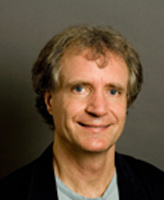
The University of 91³ԹÏ’s recently earned accreditation from the American Psychological Association (APA).
This new designation—along with a recently expanded faculty of leading researchers—is putting the College of Arts and Letters’ young clinical program firmly on the fast track to national prominence, says Director , the William K. Warren Foundation Professor of Psychology.
“I don’t think there’s another program on the planet that in this amount of time has transformed from being unknown to being highly recognizable,” he says.
The transformation started with a programmatic shift. “We were a counseling program that looked clinical, and we’re becoming a clinical program that has a counseling flair,” says associate professor , the former director who shepherded the program conversion.
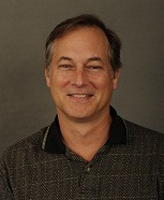
Counseling psychology focuses on non-pathological difficulties—“life transitions such as divorce or being away from home that many people go through but some struggle with more than others,” he explains. In contrast, clinical psychology studies diagnostic categories such as addictions, depression, panic disorders and schizophrenia.
“One strength of counseling is an emphasis on multicultural issues,” Smith says, “and we’re going to carry that forward.”
In some universities, Monroe adds, “clinical and counseling can be very different entities, but here there was overlap so it made sense to move in that direction.
Although the department’s counseling program was great, Monroe says, we recognized that “there would be more opportunities available with a clinical program—a broader foundation for students, with more job availability.”
One challenge the department faced in launching the new program was building its clinical presence before being accredited. But with support from the University and College, the department has hired four nationally recognized clinical psychologists and five up-and-coming assistant professors since 2006.
“That’s just an unprecedented influx of resources,” Smith says. “With these people, we might already be among the top 10 programs in the country. We’re already getting a lot of attention nationally.”
The senior hires include three endowed chairs—Monroe, , and Professor , who is known for her work in the treatment of both adolescent and adult depression.
“We have a real strength in mood disorders, particularly in depression, and from a variety of perspectives—sleep, marriage and relationships, health, stress,” Smith says. “We also have a number of other traditional clinical psychology areas that are well covered like eating and personality disorders as well as child clinical psychology.”
With accreditation secured and 16 faculty now in place, adds Monroe, the clinical program is set to accomplish great things.
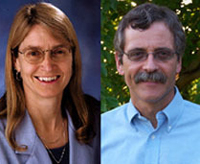
The William J. and Dorothy K. O’Neill Professor of Psychology, Clark is on the task force for the upcoming fifth edition of the Diagnostic and Statistical Manual of Mental Disorders and kicked off her appointment at 91³ԹÏ with a five-year, from the National Institute of Mental Health to study personality disorders and the ways in which they are diagnosed.
The Andrew J. McKenna Family Professor of Psychology, Watson is a specialist in personality assessment whose work both investigates the structure and measurement of personality and mood, and examines how personality traits relate to clinical disorders. He recently finished the editorship of the Journal of Abnormal Psychology, a flagship journal in the field.
Both rank among the Top 100 most-cited psychologists in the ISI Web of Science index.
Monroe’s own research interests lie in psychopathology, with a particular emphasis on the depressive disorders. He recently published a paper about recurrence of depression in Psychological Review, the preeminent theoretical journal in psychology. He is also former president for the Society of Research in Psychopathology, of which Clark is now president-elect.
“We have so many brand new people within the program,” Smith says. “I’m looking forward to them getting their labs up and running and mastering what they do well. That’s the immediate future. Then we start experiencing some synergies between the areas.”
For example, he says, one assistant professor in the department is focusing on hormone regulation of relationships and mood, while another studies memory and sleep. “We treat sleep disturbance as a symptom of depression, and her work would suggest that maybe sleep disturbance is a cause of depression.
“That’s a fundamental question that needs to be sorted out,” Smith says, “and we’re ideally equipped to do that sort of thing now.”
Originally published by at on September 30, 2011.
]]>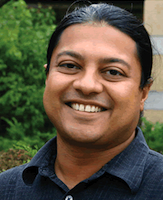
Even the most carefully planned humanitarian and development efforts are often stymied by the chaotic realities on the ground in war-torn zones such as Sudan and Northern Kenya.
University of 91³ԹÏ economic anthropologist aims to improve the success rate of these critical relief missions by studying how local trade networks are able to operate in the same areas with remarkable resilience and efficiency.
“How do traders manage to get their items across different militia and warlord territories when non-governmental organizations (NGOs) can’t—or can only do it expensively and inefficiently through armed trucking convoys or by air-dropping food and other relief supplies?” asks Oka, an assistant professor in 91³ԹÏ’s . “Donated relief food becomes very expensive by the time it reaches the refugees.”
“When you speak to the people on the ground, even those working in the NGOs, they know that the traders are far more efficient than the NGOs,” Oka says. “The food is brought in from the E.U. or the U.S., but the local traders distribute it. And even though the longevity of each trader or agent within a network might not be very long, the network itself is stable and resilient. One trader leaves, another comes in his or her place. They know each other through the network. It enables trade to continue in these war zones where they can’t depend upon institutions and contracts.”
Supported by the , the , and the Oka is a fellow—the research project is in its initial stage.
“The project involves long hours documenting commodity flows, understanding the trade networks, as well as riding in the traders’ trucks across conflict areas, interacting with various militia groups and military personnel, and drinking endless cups of tea with NGO workers, smugglers, warlords, and refugees,” Oka says.
He will return to Africa this summer to conduct extensive interviews and observations in 12 Turkana pastoral communities in Northern Kenya and near the Kenya–Sudan border to examine the long-term feasibility and effectiveness of relief intervention projects. Specifically, he will be looking at how changes in the sizes of the Turkana herds and their lack of access to markets affects conflicts and raids between communities.
“There is very little on-the-spot analysis of what could go wrong,” he says. “How do we know if conflict is caused by low herd size or lack of access to markets? What happens if we start bringing in food without this information? What happens to market prices if a lot of relief food suddenly enters the market? How do we make sure that people are not selling the food but actually eating it and building up the livestock?”
Oka also raises concerns about the people who suffer if such relief efforts fail to reduce conflict or make a positive impact on their lives.
“There are always unintended consequences to any intervention,” he says. “My goal is make sure that any development project in which I am involved is informed by on-the-ground analysis and is based on observed reality of local events and behaviors.”
Long-term studies of how all this unfolds are rare. “Ideas that seem rational and very plausible sitting in my office here in 91³ԹÏ or at an NGO meeting in D.C.,” Oka says, “can and do start unraveling at the local level, sometimes for the good but usually for the worse. And it is always those we want to help, who will bear the burden of our failure.”
Originally published by at on April 04, 2011.
]]>
The (HSS) has arrived at the University of 91³ԹÏ—a move that promises to benefit the society, the University’s (HPS) program and 91³ԹÏ’s science programs by providing new opportunities for collaboration among society members, faculty and students.
HSS, which relocated from the University of Florida this fall, is the world’s largest society dedicated to understanding science, technology and medicine, and their interactions with society in historical context. The organization has more than 3,000 members.
The society’s work “fits into 91³ԹÏ’s mission to cultivate an appreciation of human achievement while underscoring a desire to better the human condition,” says Robert Jay Malone, HSS executive director. “This way of thinking also motivates scientists, and so creates a common goal between the humanities and the sciences.

“By nurturing this shared objective, HSS and 91³ԹÏ hope to create an atmosphere where science is seen as a personal endeavor and not an objective practice removed from context, devoid of emotion and biases,” he continues. “The history of science can serve as a kind of conscience for science, providing practitioners—as well as the public—with insights into how science operates and giving examples of where it has given comfort and where it has startled us into new ways of thinking.”
Don Howard, professor of philosophy and director of the HPS graduate program at 91³ԹÏ, says he looks forward to partnering with the society to bring new conferences to campus, support future research, and give students more opportunity to learn from working scholars. Because HSS also serves the Philosophy of Science Association, he says, HPS will now benefit from having “the two biggest professional associations in the two areas central to our graduate program be housed at 91³ԹÏ.”
According to Malone, HSS organizes the world’s largest annual meeting devoted to the history of science, which will help make “international scholars aware of the importance that 91³ԹÏ assigns to the history of science.”
The society also plans on organizing colloquia where graduate students can present their work and polish their deliveries for meetings and the job market. In addition, says Malone, HSS’ comprehensive repository will expose students to the latest trends in the field. “For example, we are encouraging more poster presentations—a staple at scientific meetings—at conferences,” he says, “and I am hopeful that we can work with students to raise the number of such presentations.”
The society’s arrival “represents the real maturing and importance” of 91³ԹÏ’s program, says Phillip Sloan, who currently is a member of the society’s Isis editorial board, a former elected council member of the HSS, recent emeritus member of the 91³ԹÏ faculty for HPS and the Program of Liberal Studies, and a concurrent member of the University’s Department of History.
“O³ܰù HPS program is unusual in the landscape,” he says. “By requiring coursework in the history and the philosophy of science, it encourages a closer collaboration within the discipline. That was a founding vision of the program.”
]]>