tag:news.nd.edu,2005:/news/authors/arienne-calingo tag:news.nd.edu,2005:/latest 91Թ | 91Թ | News 2026-03-02T15:28:00-05:00 91Թ gathers and disseminates information that enhances understanding of the University’s academic and research mission and its accomplishments as a Catholic institute of higher learning. tag:news.nd.edu,2005:News/179513 2026-03-02T15:28:00-05:00 2026-03-03T10:19:00-05:00 91Թ Exoneration Justice Clinic client Reginald Dillard exonerated after 27 years of wrongful imprisonment Eight smiling people pose together in front of a brick building with a "CORRECTIONS" sign.
Reginald “Reggie” Dillard, a client of 91Թ Law School’s Exoneration Justice Clinic, is pictured with members of the clinic shortly after his release.

Reginald “Reggie” Dillard, a client of the 91Թ Law School (EJC), was exonerated Feb. 23 after spending 27 years in prison for a crime he did not commit.

Dillard was convicted of murder in 2000 based on the 1998 shooting of Christopher Thomas in Elkhart, Indiana, and was sentenced to 65 years in prison. On Feb. 19, special prosecutor, Marshall County elected prosecutor Nelson Chipman, agreed to vacate Dillard’s conviction, and Judge Christopher Spataro signed the order dismissing the criminal charges, officially exonerating Dillard.

The EJC filed a petition for post-conviction relief on Dillard’s behalf in Elkhart County Superior Court in July 2022. Extensive litigation followed, including proceedings before the Indiana Supreme Court in which the clinic requested the assignment of an impartial judge. After a special judge and a special prosecutor were appointed, the court held a two-day evidentiary hearing that began Feb. 18 and concluded Feb. 19.

Seven smiling people in suits and a man in blue scrubs with waist shackles give thumbs up in a room.
Reggie Dillard is pictured with members of the 91Թ Law School Exoneration Justice Clinic following the evidentiary hearing.

The EJC presented new evidence at the evidentiary hearing last week. Following the close of evidence, the special prosecutor concluded that Dillard’s constitutional rights under Brady v. Maryland had been violated through the withholding of material exculpatory evidence and agreed that his conviction should be vacated. The court entered an order vacating Dillard’s murder conviction, and the following morning, the state moved to dismiss the charges, acknowledging that the evidence did not support retrying the case.

The petition for post-conviction relief filed in 2022 alleged serious misconduct in the investigation and prosecution of the case. Dillard asserted that former Elkhart Police Department Detective Stephen Rezutko fabricated witness statements and maintained an undisclosed sexual relationship with a key witness against Dillard. Following an internal affairs investigation, the Elkhart Police Department found that Rezutko engaged in improper sexual conduct with informants in criminal cases, but this information was not disclosed to defendants, including Dillard, for decades. Dillard also alleged that exculpatory and impeachment evidence was withheld, including benefits provided to key witnesses and compelling evidence implicating two other men in Thomas’ murder.

Smiling man in green beanie, sunglasses, and blue jacket walks from GATE 02, holding a white bag.
Reggie Dillard walks out of prison following his exoneration.

In a message to the entire EJC team on the morning of Dillard’s release, Professor , founder and director of 91Թ Law School’s Exoneration Justice Clinic, wrote: “As you know, last Thursday, following a two-day evidentiary hearing, Judge Christopher Spataro vacated Reginald Dillard’s 2000 wrongful murder conviction. This morning Judge Spataro dismissed the criminal charges against Reggie with prejudice and ordered his immediate release from custody. As the result of the hard work of many of our clinic students, past and present, Reggie has been officially exonerated. Later today, Reggie will regain his freedom and be reunited with his family and friends.”

Immediately after his release, Dillard spoke to members of the EJC who gathered outside the prison to welcome him home, offering a heartfelt message of gratitude and hope.

A man with a gray goatee, wearing a blue quilted jacket over a gray shirt, looking right against a tiled wall.
Reggie Dillard speaks to members of the 91Թ Law School Exoneration Justice Clinic immediately following his release from prison.

“Thank you. I’ve got a lot of people that care for me,” Dillard said. “There was a time when I was the voiceless, and now I’ve become a voice for the voiceless, and I plan on being that voice.”

EJC staff attorney emphasized the broader significance of the exoneration while speaking with Dillard and members of the clinic team outside the prison.

“It’s a day that we also must take to look at this Elkhart criminal justice system and make it better and take a step forward,” Murphy said. “Reggie’s freedom and Reggie’s exoneration today is a huge step along that path. It never would have been possible without so many, especially , Reggie’s lead attorney; Professor Jimmy Gurulé with the Exoneration Justice Clinic; and so many 91Թ law students who fought to help this evidence come to light and help Reggie be free.”

Murphy also addressed Dillard directly: “Reggie, today is your day. This is your story, this is your life. You get to write the ending to it.”

A group of twelve people smiles and poses for a photo at a restaurant table. One man gives a thumbs up. Food and drinks cover the table.
Reggie Dillard is reunited with his fiancée, daughter and son during a lunch with the EJC team after his release from prison.

Dillard’s case has been one of the clinic’s longest-running matters. Even before the clinic was formally established, Slosar and some volunteer students had been working on Dillard’s case as early as 2018.

Several EJC students played crucial roles in the evidentiary hearing. Third-year law student Andrew Zimlich presented a key piece of evidence that contributed to Dillard’s exoneration.

“It has been an honor and a blessing to play a part in Reggie’s exoneration effort,” Zimlich said. “This victory speaks to the hard work of the many students and attorneys who poured their energy and passion into doing justice no matter the obstacles. I will forever be inspired by the incredible grace and resilience that Reggie showed in the face of unimaginable hardship, and I have no doubt that he will go on to inspire countless others.”

Third-year law student Albert Kwon also presented evidence in the case.

“After almost three decades, Reginald Dillard finally walks free,” Kwon said. “It was my honor to contribute to that effort, and his exoneration is a testament to the power of hard work and hope. This result is also a reminder of why the EJC continues to inspire: its mission to correct injustice even in the most difficult, long-fought cases.”

Man in green beanie, sunglasses, and quilted jacket smiles widely while hugging another man in a dark blue suit.
Reggie Dillard and EJC staff attorney Kevin Murphy embrace following Dillard’s release from prison.

Gurulé praised the clinic team that investigated and litigated the case, including Murphy, staff attorney , legal staff assistant , and adjunct professor Slosar. He also acknowledged that, along with Zimlich and Kwon, several other clinic students contributed to Dillard’s exoneration.

Dillard’s exoneration is the EJC’s fourth exoneration, after the exonerations of Kara Beaty in April 2025, Anthony Bedolla in August 2024 and Andy Royer in July 2021. Notably, it is the EJC’s third straight exoneration that was achieved with the agreement of the prosecutors on the case. Since its founding, the EJC has remained committed to criminal justice reform, litigating wrongful conviction cases and educating the public about miscarriages of justice.

Learn more about 91Թ Law School’s Exoneration Justice Clinic at .

Originally published by Arienne Calingo at on Feb. 24.

]]>
Arienne Calingo
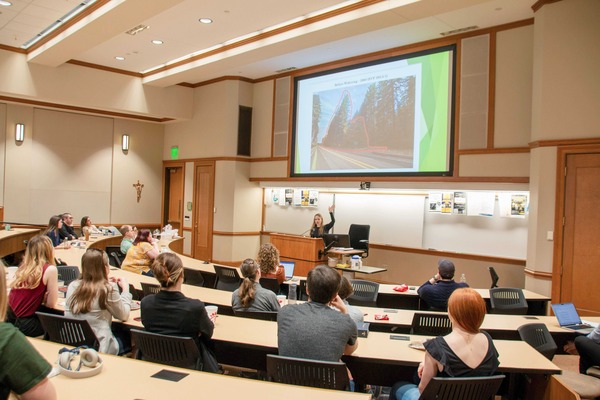
tag:news.nd.edu,2005:News/160653 2024-03-21T09:00:00-04:00 2024-03-21T12:01:01-04:00 Oak Flat under threat: Stephanie Barclay leads discussion on urgency of protecting Indigenous sacred site The Native American Law Students Association (NALSA) at the University of 91Թ, in collaboration with 91Թ Law School’s , hosted the event “Sacred Lands: Apache Stronghold v. United States of America” earlier this month. The discussion, led by Professor , centered on the importance of upholding religious liberty protections for Oak Flat, a site in Arizona that has been sacred to the Apache people for centuries and is being threatened by a massive copper mining operation.

Barclay, who serves as the faculty director of the 91Թ Law School Religious Liberty Initiative, participated in oral argument before the en banc Ninth Circuit in Pasadena, California, last March, where she represented as amici the National Congress of American Indians, an Apache tribal elder and other groups that protect Native American cultural heritage and rights.

was one of the first cases that the 91Թ Law School supported when the clinic was newly established in 2020. For the past three years, faculty and students from the clinic have worked with members of the Apache tribe to protect Oak Flat.

“It is always great to learn about the ways in which the Law School supports freedom of religion, especially with regard to Native American sacred lands, which Professor Barclay explained have had the least success in legal protection,” said Katie DePaola, president of NALSA. “Part of NALSA’s mission is to educate students on Native American legal issues, and having ties to these issues through 91Թ Law School’s Religious Liberty Initiative is very meaningful to our student organization.”

Apache Stronghold v. United States involves a proposed mining project that would turn the sacred site at Oak Flat into a massive 2-mile-wide, 1,000-foot-deep crater, ending Apache religious practices at Oak Flat forever.

At the event, Barclay spoke in depth about the Religious Freedom Restoration Act (RFRA) and its relevance to the case. RFRA establishes rights beyond those protections afforded by the Free Exercise Clause by creating a heightened standard of review for government actions that substantially burden a person’s exercise of religion.

The Religious Liberty Clinic argues that the destruction of Oak Flat constitutes a substantial burden under RFRA on Native American religious exercise, as Native American religious identity, expression and practices are inextricably tied to the sacred land.

Stephanie Barclay classroom

“Since time immemorial, [Oak Flat] has been sacred to multiple tribes including the Western Apache, and they believe it is the direct corridor to their Creator,” Barclay said. “The physical destruction the government anticipates at Oak Flat will take away any choice the Western Apache has to continue performing their religious exercise at this sacred site.

“They face the elimination of plants, natural resources, shrines with religious significance, and religious ceremonies,” she added. “They face their places of worship being inaccessible simply because those places will cease to exist, making religious exercise physically impossible.”

Barclay also stated that, whether they are directly or indirectly affected by government actions, Native American tribes tend to be particularly vulnerable to ongoing government interference and violations of their religious liberty.

Bre Gruber, a Navajo undergraduate student at the University of 91Թ, corroborated this and shared that the persisting challenges that Native American tribes face extend beyond the desecration and destruction of sacred lands.

“Indigeneity, whether it be the spiritual practices, language or other cultural practices, has consistently been challenged,” Gruber said. “These challenges threaten the existence of indigeneity as it is intrinsically tied to the land, the people and the language. These issues being discussed on the 91Թ campus are crucial to emphasizing their importance.”

On March 1, a divided en banc Ninth Circuit issued its decision in Apache Stronghold, affirming the district court’s denial of Apache Stronghold’s motion for a preliminary injunction. The Ninth Circuit’s ruling clears the way for the destruction of Oak Flat, and 91Թ Law School’s Religious Liberty Clinic hopes that the Supreme Court will correct it.

“Professor Barclay’s work along with the Religious Liberty Clinic student fellows is making such a strong national impact,” said , senior associate director at the Kresge Law Library. “It was moving to hear about the students’ self-reflective approach to this work and how deeply the tribes value the clinic’s efforts.”

The event drew a diverse array of attendees from across the University. Tori Van Arsdale, an undergraduate student and tribal member of the Navajo Nation, said, “As an Indigenous student, it was uplifting to see 91Թ Law School talk about the underrepresented issues faced in Indian Country, past and present, such as the Apache Stronghold vs. United States case. This type of Indigenous visibility is an essential tool for change in our communities.

“Here at 91Թ, we continue to work toward Native American inclusivity in discussions across campus and beyond, and I am hopeful for change with events such as ‘Sacred Lands.’ I appreciate 91Թ Law School for supporting the Apache and Oak Flat and for continuing to take the initiative in sharing Native American perspectives and realities.”

Originally published by Arienne Calingo at on March 20.

]]>
Arienne Calingo
tag:news.nd.edu,2005:News/152868 2023-05-03T08:00:00-04:00 2023-05-02T16:26:18-04:00 Religious Liberty Clinic participates in oral argument to defend Oak Flat Apache Stronghold v. United States was one of the first cases that the University of 91Թ Law School supported when the clinic was newly established in the 2020-21 academic year. For the past two years, faculty and students from the clinic have stood with members of the Apache tribe to protect Oak Flat, a sacred site in Arizona that is threatened by a massive copper mining operation.

After a divided ruling from the U.S. Court of Appeals for the Ninth Circuit, the legal battle continued this spring when the Ninth Circuit reheard the case “en banc,” meaning in front of a full panel of 11 judges. Less than 1 percent of en banc requests are granted.

Professor , director of the , participated in oral argument before the en banc Ninth Circuit on March 21 in Pasadena, California. Barclay represented the National Congress of American Indians, an Apache tribal elder and other groups that protect Native American cultural heritage and rights. The groups were also represented in an amicus brief the Religious Liberty Clinic filed in the Ninth Circuit last fall.

involves a proposed mining project that would destroy sacred land where the Apache have gone for centuries to worship, pray and conduct religious ceremonies. The site is also sacred to various other Native American tribes, including the ancestors of today’s O’odham, Hopi, Zuni, Yavapai and Apache tribes.

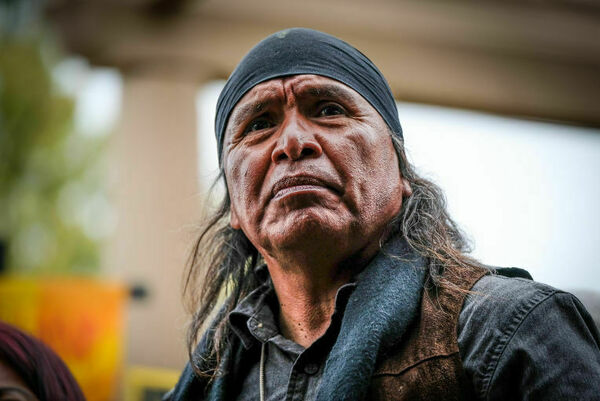
Wendsler Nosie Head Of Apache Stronghold
Wendsler Nosie, the head of Apache Stronghold, attended the proceedings in Pasadena following the en banc hearing.

Apache Stronghold — a nonprofit community organization dedicated to the defense of Native American sacred sites — has argued that the proposed copper mine at Oak Flat would violate the religious rights of many Apache and other Native Americans. Resolution Copper, a joint venture of British-Australian mining companies BHP and Rio Tinto, plans to construct a copper mine that would turn the sacred site into a massive crater.

In a previous hearing at the Ninth Circuit, a three-judge panel held in a 2-1 ruling that the federal government could proceed with the transfer of Oak Flat to Resolution Copper.

At the en banc rehearing, Barclay provided three arguments in support of Apache Stronghold to a new panel of judges: “First, this court should revisit its troubling rule under Navajo Nation. Second, the land rider did not displace RFRA (Religious Freedom Restoration Act). Third, it is government, rather than private action in this case, that imposes the substantial burden on the religious exercise of the Apache people.”

She argued alongside Luke Goodrich, vice president and senior counsel at Becket Law.

The destruction of Oak Flat would impose a substantial burden on Native American religious exercise, as Native American religious identity, expression and practices are inextricably tied to the sacred land, Barclay told the panel of judges.

Whether they are directly or indirectly affected by government actions, Native American tribes tend to be vulnerable to government violations of their religious liberty. 

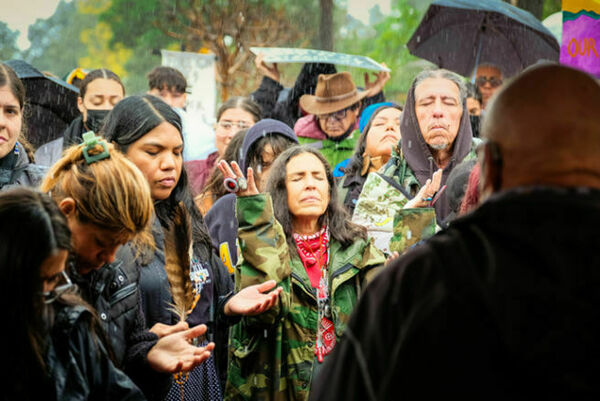
After the en banc hearing, a diverse coalition of Indigenous activists, environmental groups, religious advocates and legal practitioners convened in front of the courthouse steps, where Barclay delivered remarks.

Post Oral Argument
A group of Oak Flat supporters gathered together outside of the courthouse to call for protection of the sacred site of Oak Flat in Arizona.

“I was proud to argue in oral argument on behalf of 91Թs Religious Liberty Clinic today. 91Թ was proud to argue alongside Becket and our Apache friends in this fight for Oak Flat,” Barclay said.

“Although our religious beliefs are different, we see that what the government is doing is wrong,” she said. “Just as we would hope that people would defend [us] if someone wanted to destroy a sacred shrine or a pilgrimage site for Christian religious groups, so, too, should the government have to justify its actions if it wants to destroy this sacred site of Oak Flat.”

Barclay reiterated her support for Apache Stronghold and saving Oak Flat following the oral argument: “Im optimistic that, after argument today, the Ninth Circuit will issue a ruling that will make clear that our religious freedom laws apply equally to people of all faith and to all sorts of places of worship whether were talking about a synagogue or a mosque or a Native American sacred site.”

Established in 2020, the 91Թ Law School Religious Liberty Initiative promotes and defends religious freedom for all people through advocacy, formation and thought leadership. The initiative protects the freedom of individuals to hold religious beliefs as well as their right to exercise and express those beliefs and to live according to them.

The Religious Liberty Initiative has represented individuals and organizations from an array of faith traditions to defend the right to religious worship, to preserve sacred lands from destruction, to promote the freedom to select religious ministers and to prevent discrimination against religious schools and families.

Learn more about the Religious Liberty Initiative at .

To read this story in full, visit .

Originally published by Arienne Calingo at on April 28.

]]>
Arienne Calingo