The research, spearheaded by a former undergraduate student at the University, Principal investigators Nieuwland Professor Emeritus of Aquatic Science in the Department of Biological Sciences, , assistant research professor, and collaborators synthesized 50 studies, which contained 2,500 biological measurements. These observations document the spatial and temporal variation in PFAS in the biota of the largest group of freshwater lakes in the world.
“We focused on the biota, not the water or the sediment, to determine what chemicals get into the organisms from algae and microbes all the way up to the top predators, like salmon and bald eagles,†said Lamberti, who is affiliated with 91³Ô¹Ï’s
PFAS compounds do not break down because their carbon-fluorine bonds are some of the strongest bonds in chemistry. They resist heat, water and natural degradation, and therefore build up in soil and water. When an organism like algae absorbs the compound, it may be eaten by aquatic insects and fish, which retain the toxin. The concentration of PFAS increases in each step of the food chain, peaking in top predators — a process called biomagnification.
Though there are thousands of types of toxic PFAS, the study focused on six common ones as they were the most detected across the Great Lakes. One specific compound that was phased out of production between 2000 and 2002, perfluorooctanesulfonic acid (PFOS), declined in the Great Lakes during the study period. And while there was high variation in trends among the lakes, the research showed the lowest contamination levels in Lake Superior, with the highest in Lake Ontario. The pattern aligns with population and manufacturing density, Lamberti said. Additionally, this is a result of Lakes Superior and Michigan being larger and deeper.
Peter Martin ’24, a former undergraduate student and the lead author on the paper, started the project with Lamberti’s team in 2022 at the beginning of his junior year. Martin, now a doctoral student at Michigan State University, used the project as his senior honors thesis. He worked with Miranda and postdoctoral associate , among others, as he completed the research.
“There was so much variation within certain periods of time, and then across the entire 42-year timescale,†Martin said. “And the thing that was really jarring was that there wasn’t one specific temporal trend (a change over a period of time) for all five of the Great Lakes. Each lake had its own specific temporal pattern.â€
Additionally, the researchers determined that the biomagnification process is not linear, Miranda said.
“There are some different pathways to get to the top of the food web, which are impacted by which groups of organisms that we have,†she said. Organisms that remain in the water will amass PFAS both through consumption of other organisms and also through the PFAS circulating in the water.
“But if you have a bird eating a fish, the bird is going to have a different load of PFAS because they don’t exchange with the water,†Miranda said.
The good news is that if companies phase out a compound — even if it remains pervasive in the environment — it will eventually be flushed out of the lakes, Lamberti said.
However, that “flushing†period varies widely. The average time a single drop of water spends in a lake ranges from less than three years in Lake Erie to 200 years in Lake Superior.
“Unfortunately, the Great Lakes hold onto their water and contaminants for a very long time, meaning that there’s ample time for toxins to be taken up by the biota,†Lamberti said.
Although the decline of PFOS is a victory, he noted that more compounds continue to be developed on a regular basis that go untested for toxicity.
Miranda is addressing the gaps in the data that Martin amassed during the project — there are many more studies and data about the top-level consumers than for the primary producers like algae and plants. Because there is less data for those organisms, researchers do not know as much about how the PFAS compounds enter the food chain.
“We are collecting several components of the food web, like biofilm, detritus, algae and aquatic insects to see how PFAS enter and circulate at the base of the food web and move up to top predators,†she said.
The study was funded by Illinois-Indiana Sea Grant, the Great Lakes Fishery Trust, the Indiana Water Resources Research Center at Purdue University and the University of 91³Ô¹Ï Environmental Change Initiative.
“We hope that this paper opens the eyes of scientists, industry and the general public, as well as the government, about this persistent problem,†Lamberti said. “Even if you remove a compound from production, like PFOS, it’s still there, and will be around for decades.â€
Contact: Brandi Wampler, associate director of media relations, 574-631-2632, brandiwampler@nd.edu
]]>The , published in the Journal of the American Chemical Society, was carried out in the laboratory of Navari Professor of Life Sciences in the Department of Chemistry and Biochemistry, with structural aspects of the study performed by of the Institute of Physical Chemistry “Blas Cabrera†in Madrid, Spain. They discovered that the protein PA2854 performs the reaction that keeps the outside layers, or envelope, of gram-negative bacteria connected to each other.
Mobashery and collaborators studied the process in Pseudomonas aeruginosa (P. aeruginosa), a ubiquitous antibiotic-resistant bacterium commonly affecting people with cystic fibrosis. P. aeruginosa, like other gram-negative bacteria including E. coli, Klebsiella pneumoniae and Salmonella, are shielded by a three-layer biological envelope that prevent many antibiotics from penetrating and damaging the bacteria. Gram-positive bacteria do not have an outer membrane and are generally more susceptible to antibiotics.
“PA2854 functions as a glue, a way that keeps the outer membrane attached to the cell wall, a process that is necessary for the health of the organism,†said Mobashery, who is affiliated with the and the . “When you abolish the ability of the bacterium to make that cross-link, the cell envelope is no longer in good shape.â€
The research evolved after Luis F. Avila-Cobian, one of the authors and a previous student in Mobashery’s lab, identified 71 proteins in P. aeruginosa that interacted with a key, cell wall modifying protein. Avila-Cobian determined that PA2854 (annotated for the position that its gene occupies in the pseudomonal genome), one of the 71, might be a transpeptidase.
Transpeptidases are known as bacterial enzymes that assist with building a rigid, protective cell wall. This discovery led them to investigate its role in the bacterium further.
To keep the cell envelope intact, PA2854 works in tandem with lipoprotein OprI. OprI is a part of the outer membrane, and PA2854 performs a chemical reaction that links Oprl to the cell wall. Amr M. El-Araby, a doctoral student in Mobashery’s lab, performed key experiments in both live bacteria and in vitro for the reconstituted system that used purified proteins and cell wall components to demonstrate the process in greater detail.
In the light of the shared structure and function for the envelope, Mobashery asserts that the discovery will apply to more than just P. aeruginosa.
“Experiments such as the one we have described are critical in understanding one by one what each protein in the bacterium does. In other words, we’re demystifying functions of the genes of bacteria in hopes of understanding the collective set of biochemical processes that define the organism,†said Mobashery, who is also affiliated with the at 91³Ô¹Ï.
The work in the United States was funded by the National Institutes of Health, the Ruth L. Kirschstein National Research Service Fellowship and the American Heart Association Predoctoral Fellowship. The work in Spain was funded by the Ministry of Science, Innovation and Universities by the State Research Agency.
Contact: Brandi Wampler, associate director of media relations, 574-631-2632, brandiwampler@nd.edu
]]>The study, , shows that chronic exposure to the insecticide chlorpyrifos at concentrations too low to cause immediate toxicity causes fish to age faster at the cellular level.
The research began with field studies in China where collaborators examined thousands of fish collected over several years from lakes with differing levels of pesticide contamination. Rohr and colleagues observed that fish living in contaminated lakes lacked older individuals, while populations in relatively uncontaminated lakes included many older fish. This pattern suggested that fish were not failing to add to their populations, but rather were dying earlier in life.
“When we examined telomere length and deposition of lipofuscin in the livers of the fish, well-established biological markers of aging, we found that fish of the same chronological age were aging faster in the contaminated than clean lakes,†said Rohr, the Ludmilla F., Stephen J. and Robert T. Galla Professor and Chair in the Department of Biology.
Chemical analyses revealed that chlorpyrifos was the only compound found in the fish tissues that was consistently associated with signs of aging. These include shortened telomeres, which act like the plastic caps shoelaces and decrease fraying in chromosomes, and lipofuscin deposition, a build-up of “junk†like old proteins and metals within long-lived cells. However, to determine whether chlorpyrifos was the direct cause, researchers needed to conduct controlled laboratory experiments with concentrations matching those measured in the wild, Rohr said.
In this laboratory experiment, chronic low-dose exposure to chlorpyrifos caused progressive telomere shortening, increased cellular aging and reduced survival, particularly in fish from the contaminated lakes that were already physiologically older.
“Although the laboratory results closely matched the field observations, it was possible that a missed high-dose exposure event in the field, rather than chronic low-dose exposures, caused the reduced lifespan,†said Rohr, who is affiliated with 91³Ô¹Ï’s , and
To rule out this driver, Rohr and colleagues conducted another laboratory experiment demonstrating that short-term exposure to much higher doses caused rapid toxicity and death but did not accelerate aging through shortened telomeres and increased lipofuscin. This demonstrated that long-term accumulation of exposure to extremely common low concentrations — not brief high-dose spikes — was responsible for the observed aging, Rohr said.
The loss of older individuals can have serious ecological consequences, as older fish often contribute disproportionately to reproduction, genetic diversity and population stability, Rohr said.
“These findings also raise broader concerns because telomere biology and aging mechanisms are highly conserved across vertebrates, including humans,†Rohr said. Potential future research will explore how widespread the phenomenon may be across species and chemicals.
While the European Union has largely banned chlorpyrifos, it remains in use throughout China, parts of the United States and in many other countries. However, the aging effects observed in this study occurred at concentrations below current U.S. freshwater safety standards, Rohr said.
“Our results challenge the assumption that chemicals are safe if they do not cause immediate harm,†he said. “Low-level exposures can silently accumulate damage over time by accelerating biological aging, highlighting that chemical safety assessments must move beyond short-term toxicity tests to adequately protect environmental and human health.â€
The research was funded by the National Science Foundations in both the United States and China, the Illinois-Indiana Sea Grant and the Frontiers Research Foundation.
Contact: Brandi Wampler, associate director of media relations, 574-631-2632, brandiwampler@nd.edu
]]>Lieberman’s Paper Analytical Device Project (PAD) is a low-cost, rapid screening card that, when paired with a mobile app, allows medical professionals to test antibiotics and determine within seven minutes whether they are substandard or falsified. PADs are designed to be scalable, and used in parts of the world where access to reliable antibiotics remains a major public health challenge.
The other grand prize winning team, led by Yemisi Ogundare, project director for Jhpiego Nigeria, developed Com-WATCH, an integrated, data-driven technology for tracking stock control and identifying substandard and falsified antibiotics in Nigerian communities. The two winners of the Trinity Challenge were selected from 171 applications from 51 countries, and the prize includes an award of £500,000 (approximately 672,000 U.S. dollars) over two years to each winner.
Lieberman’s PADs do not require the use of additional chemicals, solvents, instruments or electricity, and have been proven effective throughout Africa. They identify medications that do not contain the correct chemicals, or the correct amount of chemicals, and they interface with stock control technologies, Lieberman said. The award will allow Lieberman to expand the PAD program to Cameroon, Ethiopia, Kenya, Malawi and Namibia.
“I’m honored and really grateful,†she said. “Antimicrobial resistance threatens us all, because bacteria don’t pay attention to borders.â€
The award will allow Lieberman’s lab to test the antibiotics that are most important in treating bacterial infections in community settings in low- and middle-income countries. Ensuring that sick people and animals get good quality antibiotics will protect patients and slow down development of “superbugs,†which are strains of bacteria that become resistant to antibiotics.
“We are interested in building tools that will let people test antibiotics in their own communities,†Lieberman said. “By sharing these rest results across multiple sites, we can increase the impact.â€
People in low- and middle-income countries lack access to common antibiotics. Of the 7.75 million who die of bacterial sepsis each year, almost 3 million have infections that could be treated with common oral antibiotics like penicillin and amoxicillin. The lack of access has caused increased antimicrobial resistance, with deaths in both humans and animals.
This year marks the third time the Trinity Challenge has been held. The first, in 2021, was based on pandemic preparedness, and the 2024 challenge was focused on antimicrobial resistance.
“Our new winners from our third challenge have applied innovative thinking to this complex problem in global health, and I applaud their creativity and dedication,†said Professor Dame Sally Davies, executive chair of the Trinity Challenge as well as the UK Special Envoy on antimicrobial resistance, in a news release. “They show that everyone can make a difference and be part of the solution to the antibiotic emergency.
“Their plans to harness the power of new and existing technology and local level data to successfully detect substandard and falsified antibiotics or track stock control within a country will fill knowledge gaps and inform decision-makers.â€
This is the second award for Lieberman’s PAD project in 2025. the Gustavus John Esselen Award for Chemistry in the Public Interest in February.
“At 91³Ô¹Ï, we are driven by a commitment to serve communities and promote human dignity. Professor Lieberman’s PAD project exemplifies those ideals by ensuring access to safe, effective medicines, and this award will allow her to expand its impact to more people who need it most,†said Steve Corcelli, interim William K. Warren Foundation Dean of the 91³Ô¹Ï College of Science.
]]>Fields was among the nearly 400 researchers who were named awardees by President Joe Biden on January 14. PECASE is the highest honor bestowed by the U.S. government for scientists and engineers early in their careers.
Neutrinos are produced in many places in the universe, and the ones Fields studies are created using particle accelerators. Her research grant from the DOE in 2020, while she was a staff scientist at (Fermilab), funded several measurements that will help scientists better understand neutrino beams. She has continued that work at 91³Ô¹Ï since 2021.
“We currently have a surprisingly poor understanding of the number of neutrinos created in accelerator-based neutrino beams,†she said, adding that her reaction to the recent honor is one of gratitude.
“The research I proposed was not the most glamorous work; it will not directly answer any of the big outstanding questions about how our universe works,†she said. “But it will help turn our accelerator-based neutrino beams into the precise tools we need to answer some of those questions.
“So I'm glad this type of work is being recognized and hope it encourages more people to work on this important (and fun!) topic.â€
Fields earned her bachelor’s degree in physics and math from the University of Arkansas, a certificate of advanced study in mathematics from the University of Cambridge and her master’s and doctorate degrees in physics from Cornell University. She was an associate scientist at Fermilab before being named an associate professor at 91³Ô¹Ï.
“We were lucky to recruit Dr. Fields to join our department,†said Morten Eskildsen, chair of the Department of Physics & Astronomy. “Laura has, in a short amount of time, been able to revitalize our research in the field of neutrino physics, and I am pleased that she is being recognized with the PECASE.â€
Established by President Bill Clinton in 1996, PECASE recognizes scientists and engineers who show exceptional potential for leadership early in their research careers. The award recognizes innovative and far-reaching developments in science and technology and expands awareness of careers in science and engineering. This year’s awardees are employed or funded by 14 participating agencies within the Departments of Agriculture, Commerce, Defense, Education, Energy, Health and Human Services, Interior, Transportation and Veterans Affairs, as well as the Environmental Protection Agency, the intelligence community, the National Aeronautics and Space Administration, the National Science Foundation and the Smithsonian Institution.
While grateful for the recognition, Fields said that none of her research would be possible without the support of her department, students and postdoctoral fellows. She said she appreciates the support of many collaborators on projects including the , the , andÌý.
Originally published by at on January 17, 2025.
]]>
Frank Hadley Collins, professor emeritus in the College of Science at the University of 91³Ô¹Ï, died Nov. 16 in Tucson, Arizona. He was 80.
Collins, the former George and Winifred Clark Chair in the Department of Biological Sciences, retired in 2019 after a long career as one of the country’s leading researchers in vector biology. He performed genome-level studies of arthropod vectors of human pathogens, and completed field and laboratory research on the mosquito Anopheles gambiae, the primary vector of malaria parasites in sub-Saharan Africa.
“Someone once said that if you think you are leading and turn around to see no one following you, then you are just taking a walk. Frank was always running a few steps ahead of others in his field and definitely was not just taking a walk,†said Bernard Nahlen, director of 91³Ô¹Ï’s Eck Institute for Global Health. “He was a remarkable thinker and leader but also a very humble guy who never turned around to look behind, since he was always looking forward to addressing the most challenging questions in his field.â€
Collins joined the faculty at 91³Ô¹Ï in 1997 after 14 years at the Centers for Disease Control and Prevention (CDC) in Atlanta, where he was chief of the Vector Genetics Section of the Center for Parasitic Diseases. He earned his bachelor’s degree in biology from Johns Hopkins University, held a master’s degree in English literature from the University of East Anglia in Norwich, England, and earned his doctorate in entomology from the University of California, Davis.
Collins directed the Anopheles gambiae genome project VectorBase — a bioinformatics resource center for arthropod vectors. He also started the Global Health Strategic Research Initiative at 91³Ô¹Ï that developed into the Eck Institute for Global Health.
Nahlen met Collins in 1986 when Collins was the lead entomologist in the Vector Genetics Section at the CDC.
“I saw firsthand how he went well above and beyond the call of duty when I was asked to go to his apartment to check on him, since he had fallen ill with falciparum malaria,†Nahlen said. “This was a result of Frank feeding wild-caught anopheline mosquitoes from western Kenya on his arm while transporting them back to Atlanta.â€
Over his career, Collins published more than 230 papers and sat on numerous boards, committees and panels. He was elected a fellow of the American Association for the Advancement of Science in 1998. A highly decorated researcher, he took special pride in supervising 15 postgraduate students and mentoring 30 postdoctoral scientists during his career. In 2019, the American Society of Tropical Medicine and Hygiene awarded Collins the Harry Hoogstraal Medal for Outstanding Achievement in Medical Entomology.
“He was a good listener and had a knack for bringing people together, be it for purposeful discussions or in collegial fellowship over beverages,†said Crislyn D’Souza-Schorey, the Morris Pollard Professor in the Department of Biological Sciences. “Part of his success was that he recognized the importance of building community to move things forward.â€
Late in Nahlen’s career, Collins persuaded him to return to 91³Ô¹Ï. Both Nahlen and D’Souza-Schorey described Collins as generous with his time, whether professionally or personally.
Collins was married to fellow researcher Nora J. Besansky, the Martin J. Gillen Professor of Biological Sciences. He seemed happiest when watching birds from the deck of their home in South Bend or when observing javelinas and other desert wildlife from their living room after moving to Tucson, Nahlen said.
“Frank had a memorable impact on his field of science, on all whom he trained and all of us who had the privilege to have him as a friend,†Nahlen said.
Originally published byÌý at on Nov. 22.
]]>
Nobel laureate Michael Levitt, a professor of structural biology at Stanford University, will be awarded the by the University of 91³Ô¹Ï’s on Sept. 9 (Monday).
Levitt won a Nobel Prize in chemistry in 2013, shared with Martin Karplus and Arieh Warshel, for developing the first method to calculate chemical reactions using computers — while integrating features of classical physical and quantum mechanics. Their work, the majority of which was performed in the 1970s, led to new insights into how proteins fold or misfold, and how enzymes catalyze. By looking at the structure of molecules, the trio revolutionized the field of biochemistry and research into the structural basis of diseases.
Levitt’s lecture will begin at 5:30 p.m. in the Dahnke Ballroom on the seventh floor of Duncan Student Center. He will focus on the fusion of the three types of intelligence: biological intelligence, human intelligence and artificial intelligence. His talk, titled, “Multidisciplinary Revolution in Biology and Artificial Intelligence,†will describe how AI and computational biology have revolutionized our approach to disease, making drug development faster and more cost-effective. Levitt will also underscore the critical role of multidisciplinary collaboration that will drive the next revolution in biology and AI.
Levitt, the Robert W. and Vivian K. Cahill Professor of Cancer Research at Stanford, said he was honored and pleasantly surprised to be named the 2024 Carrier Medal recipient.
“Usually, after the Nobel Prize, you don’t get prizes . . . and I was very complimented,†he said. “This is, I think, the largest American prize I have ever received, and I’m excited to come to 91³Ô¹Ï to give my talk.â€
Levitt started his career in computers during the 1960s when computers were as large as rooms. Born in Pretoria, South Africa, he earned his undergraduate degree in physics at King’s College in London, and his doctoral degree in computational biology from the University of Cambridge.
The framework behind computational structural biology began around the same time Levitt embarked on his research. His mentor at Cambridge, John Kendrew (who had won the Nobel Prize for Chemistry in 1962), requested that Levitt spend a year with Schneior Lifson, a professor of chemical physics at the Weizmann Institute in Rehovot, Israel, before beginning his doctoral program. Lifson had several theories about atomic interactions, but proving them required a computer.
“(Kendrew) wouldn’t accept me as a Ph.D. student until I went to Israel for a year, sort of like a gap year, and I didn’t understand why,†Levitt said. “But as a result, at the end of that first year in Israel, I was able to complete a computer model that would explain the energetics of a protein structure.â€
During the research at the Weizmann Institute, Levitt, Karplus and Warshel combined their expertise to develop computer programs that could simulate the behavior of complex molecular systems. Creating hybrid models that integrated classical physics and quantum mechanics allowed them to describe chemical reactions in large molecules like proteins. Most of the work was finished by the time Levitt was 25.
Over time, Levitt became more and more fascinated with the field. But, “I was never somebody who had a five-year plan,†he said. He first became interested in science because of television. He watched television for the first time during a visit with his aunt and uncle in Great Britain. One program that caught his interest was a science show featuring Kendrew.
“I knew then that, basically, this is the person I wanted to do a Ph.D. with,†Levitt said.
That one television program led Levitt to science — highlighting the importance of continuing to make science “visible†even among today’s crowded choices. Given annually for sustained, outstanding achievements in any area of science, the Rev. Carrier Medal exemplifies one way to bring science to the public’s attention, Levitt said.
“We’ve always lived in a society of celebrities, and in some ways, it’s just a way to focus on a certain area: A sports celebrity probably makes young people keener about sports,†he said, adding that there can also be science celebrities. “If you look at how our society has changed as a result of science and technology, it’s important to actually encourage people to become scientists.â€
91³Ô¹Ï’s award is named after Rev. Joseph Celestine Basile Carrier, C.S.C., who is recognized as the first director of the science program at the University in 1865, when the College of Science was established as a department.
Contact: Jessica Sieff, associate director of media relations, 574-631-3933, jsieff@nd.edu
]]>
Rohr was presented with the honor during a ceremony June 26 at the Villars Symposium in Villars-sur-Ollon, Switzerland. His research was selected from among the , which is administered by the . Rohr, representing the United States, along with Pedro Jaureguiberry, representing Argentina, and Peter Haase, representing Germany, each received a prize of 1 million Swiss francs, equivalent to about $1.1 million. The money will be used to further his research.
Rohr’s winning research, “A planetary health innovation for disease, food, and water challenges in Africa,†was recommended by the to a jury of 100 renowned sustainability and planetary health experts for the prize.
“My team and I are so shocked and thrilled to win this international prize,†Rohr said of the honor, which rewards and promotes breakthroughs that show the greatest potential to keep the earth from crossing what are known as “planetary boundaries.†These are processes that regulate the stability and resilience of earth systems, such as climate change, freshwater change and land system change.
“The Frontiers Planet Prize is a tremendous honor for Professor Rohr’s transformative research,†said the Charles and Jill Fischer Provost at the University of 91³Ô¹Ï. “We are deeply grateful for this award, which will enable Professor Rohr and his team to continue advancing scalable solutions that have the potential to enhance the lives of millions of people.
“As a leading global Catholic research university, 91³Ô¹Ï is committed to caring for our common home and pursuing innovative solutions to the complex social and environmental crises our world is facing.â€
, Rohr’s research focuses on reducing schistosomiasis, a parasitic disease affecting more than 250 million people worldwide that causes organ damage and death, and is transmitted to humans from freshwater snails that are infected with parasitic flatworms.
The snails that transmit the flatworm prefer to live in vegetation that proliferates partially because of fertilizer runoff. People can become infected multiple times when using waterways for washing and leisure, Rohr said.
However, Rohr and collaborators study more than ways to reduce disease. Their interdisciplinary approach includes removing snail-loving vegetation at water access points, composting the vegetation, feeding the vegetation to livestock and providing economic opportunities from the profitable compost and livestock feed.
“The generous grant that accompanies this prize will allow us to hone our remote sensing techniques for detecting the vegetation, testing whether communities sustain the intervention after education and training, scaling the innovation to other parts of Africa, and developing commercially viable scaling approaches,†said Rohr, who is affiliated with 91³Ô¹Ï’s and the . “This research has the potential to improve millions of lives because it equips these marginalized communities with the knowledge to develop sustainably, and to escape disease-poverty traps.â€

Now in its second year, the prize is awarded by the Frontiers Research Foundation, based in Switzerland. The foundation has received prize nominations from 20 academies of science and 475 leading universities and research institutions among 43 countries. Launched by the foundation on Earth Day 2022, the Frontiers Planet Prize aims to mobilize science for a global green renaissance. The prize is endorsed by the International Science Council in its efforts to accelerate the most impactful scientific solutions.
Before being named as one of the three international prize winners, Rohr shared about his research in front of policy, practice and philanthropy thought leaders at the symposium led by the Villars Institute, an international nonprofit foundation dedicated to accelerating the transition to net-zero emissions. Rohr and the other national champions engaged with key planetary health experts, all of whom have the capability to shape policy and influence civil society.
The symposium also included a global cohort of system- and solution-oriented high school students from schools all over the world, which offered an additional chance to foster intergenerational collaboration and prepare the next generation to combat climate change.
“The remarkable contributions of the three international winners underscore the critical importance of interdisciplinary research in safeguarding our planet’s future. Their innovative approaches exemplify the spirit of the Frontiers Planet Prize, fostering a deeper understanding of planetary boundaries and providing a roadmap for a more sustainable and resilient world,†said Johan Rockström, chairman of the jury and pioneer of the Planetary Boundaries framework, in a news release.
Rohr’s research was funded by the National Institutes of Health, the National Science Foundation, the Indiana Clinical and Translational Sciences Institute and a Stanford University seed grant. A complete list of co-authors on Ìýcan be found .
Originally published by at on June 26.
]]>
Charles “Chuck†Frank Kulpa Jr., professor emeritus in the Department of Biological Sciences, died April 30 in South Bend. He was 80.
Kulpa was a respected scholar and professor of environmental and applied microbiology for 40 years. He studied the metabolism of microbes, including bacteria, and investigated topics including their ability to degrade toxic pollutants in the environment.
“Chuck used a novel combination of molecular, biochemical and cellular approaches to determine how microbes detoxified these pollutants, and he was among the first microbiologists to embrace the new field of ‘biotechnology’ that is now so fundamental to science,†said Professor Gary Lamberti, whose office was next to Kulpa’s in Galvin Life Science Center.
A triple graduate of the University of Michigan (with bachelor’s, master’s and doctoral degrees) and avid Wolverine football fan, Kulpa began working as a professor at the University of 91³Ô¹Ï in 1972 and retired in 2012.
“He was an experimentalist. He enjoyed talking about the details of all sorts of lab procedures and was curious about everything in the science news and enjoyed discussing current topics with colleagues,†said Professor Joseph O’Tousa. “This was key to how he approached his course and lab teaching assignments.
“Yet he would also want to talk to me about family news and other things going on outside of work. His friendship provided an important perspective for me in balancing these life activities. I imagine his students benefited from this as well.â€
Intellectually curious, Kulpa frequently took advantage of novel opportunities. For instance, when Kulpa studied how to remediate polluted areas by “seeding†them with microbes, he speculated that he would not find suitable microbes in the Midwest because much of the soil has been polluted by industry.
When Lamberti mentioned that he was traveling to Alaska for some research, Kulpa had an idea.
“One day he asked me, ‘Gary, can you bring me some dirt from Alaska?’†Lamberti said. “He explained that he needed the dirt to search for bacteria that he can culture because Alaska has low pollution.
“Dutifully, I brought him back vials of soil from remote areas of Alaska, and he was thrilled to find some new microbes to test in his lab.â€
At the same time, Kulpa was down to earth and, when he was department chair, he allowed students to throw pies in his face for a fundraiser, Lamberti shared. “I think Chuck enjoyed it more than the students.â€
According to , he was an avid golfer and played on the green of St. Andrew’s in Scotland, an experience that held deep meaning for him. He also enjoyed traveling and sharing his travel stories with all who would listen. Kulpa is survived by his wife, four children, 18 grandchildren, a great-grandchild, a brother and a sister.
“He cherished his family,†O’Tousa said. “ He was beaming whenever he talked of the many times he and Loretta and their farm would be the destination spot for a summer week with their grandkids or their treks to the east coast to visit their grandchildren.â€
Visitation will be from 12 to 2 p.m. Saturday (May 11) at Brown Funeral Home, 521 E. Main Street, Niles.
]]>
Adding a pre-ketone supplement — a component of a high-fat, low-carb ketogenic diet — to a type of cancer therapy in a laboratory setting was highly effective for treating prostate cancer, researchers from the University of 91³Ô¹Ï found.
Recently published online in the journal Cancer Research, theÌý from , the John M. and Mary Jo Boler Collegiate Associate Professor in the Department of Biological Sciences, and collaborators tackled a problem oncologists have battled: Prostate cancer is resistant to a type of immunotherapy called immune checkpoint blockade (ICB) therapy. ICB therapy blocks certain proteins from binding with other proteins and paves the way for our body’s fighter cells, T cells, to kill the cancer.
“Prostate cancer is the most common cancer for American men, and immunotherapy has been really influential in some other cancers, like melanoma or lung cancer, but it hasn’t been working almost at all for prostate cancer,†said Lu, who is affiliated with the Adding a dietary supplement might overcome this resistance, the lead author in the study, Sean Murphy, suggested.
Murphy, a ’24 alumnus who was a doctoral student in Lu’s lab, had been following a keto diet himself. Knowing that cancer cells feed off of sugar, he decided that depriving mouse models of carbohydrates — a key component of the keto diet — might prevent cancer growth.
He divided the models into different groups: immunotherapy alone, ketogenic diet alone, a pre-ketone supplement alone, the ketogenic diet with the immunotherapy, the supplement with the immunotherapy, and the control. While the immunotherapy alone had almost no effect on the tumors (just like what happens to most patients with prostate cancer), both the ketogenic diet with the immunotherapy and the pre-ketone supplement with the immunotherapy reduced the cancer and extended the lives of the mouse models.
The supplement with the immunotherapy worked best.
“It turned out this combination worked really well,†Lu said. “It made the tumor become very sensitive to the immunotherapy, with 23 percent of the mice cured — they were tumor-free; in the rest, the tumors were shrinking really dramatically.â€
The evidence points to the possibility that a supplement providing ketones, which are what is produced in the body when people eat a keto diet, might prevent the prostate cancer cells from being resistant to immunotherapy. This may lead to future clinical studies that examine how ketogenic diets or keto supplements could enhance cancer therapy.
While keto diets allow for minimal carbohydrates, the success of this study is not about the lack of carbohydrates, Murphy and Lu stressed. It is about the presence of the ketone body, a substance produced by the liver and used as an energy source when glucose is not available. The ketones disrupt the cycle of the cancer cells, allowing the T cells to do their job to destroy them.
The discovery was also exciting on a molecular level, Lu said. Any type of dietary study can suffer from the potential issue of causation: Are the results from the diet or other changes made because of the diet? But Lu and his collaborators confirmed their results using single-cell RNA sequencing, which examines the gene expression of single cells within the tumor.
“We found that this combination of the supplement and the immunotherapy reprogrammed the whole immune profile of the tumors and recruited many T cells into the tumors to kill prostate cancer cells,†Lu said.
The successful therapy also reduced the number of a type of immune cell called neutrophils. Once in the tumor microenvironment, neutrophils’ natural properties become greatly distorted, and they become largely responsible for inhibiting T cell activities and allowing more tumor progression. Dysregulation of neutrophils is also associated with many other diseases.
“With the main ketone body depleting neutrophils, it opens the door for investigating the effects of the keto diet and the ketone supplement on diseases ranging from inflammatory bowel disease to arthritis,†Murphy said.
Lu agreed.
“What’s exciting is that we’re getting closer to the mechanism, backed up by genetic models and what we’re seeing in the tumors themselves, of why this works,†he said.
Co-authors include Sharif Rahmy, Dailin Gan, Guoqiang Liu, Yini Zhu, Maxim Manyak, Loan Duong, Jianping He, James H. Schofield, Zachary T. Schafer, Jun Li and Xuemin Lu, all from the University of 91³Ô¹Ï.
The research was supported by a grant from the American Institute for Cancer Research, funding from the National Institutes of Health and a core facility grant from Indiana Clinical and Translational Sciences Institute. Other support included the Department of Defense and the Boler Family Foundation at the University of 91³Ô¹Ï. A provisional patent application has been filed based on this study by the IDEA Center at 91³Ô¹Ï.
Contact: Jessica Sieff, associate director of media relations, 574-631-3933, jsieff@nd.edu
]]>A joint initiative of the College of Engineering and College of Science and a key priority in the University’sÌý, the BELS Initiative will advance human health and wellness through interdisciplinary biomedical research and training — from fundamental advances through detection, prevention and treatment of disease.
“91³Ô¹Ï is well-positioned to lead this transformative initiative and to spearhead discoveries that will directly improve human health, particularly for vulnerable and underserved populations,†saidÌý. “I can think of no better inaugural director than Paul Bohn, whose deep experience and expertise span across the life sciences and engineering.â€
Bohn is an internationally known leader in the field of analytical chemistry. He has served as director of what is now theÌý since 2008 and also directs the National Science Foundation-supported . His research focuses on molecular nanotechnology, personal health monitoring, and imaging of microbial communities. He is a fellow of the American Chemical Society, has authored or co-authored more than 300 publications and holds nine patents.
Bohn will work closely with an executive committee that includes Culligan;Ìý; and to direct significant new investments in infrastructure and instrumentation over the next decade; work with academic units across campus to recruit faculty scholars to advance research and training in bioengineering and life sciences disciplines; and implement cross-disciplinary graduate and postdoctoral training programs.
“I am excited about this initiative because we are going to be addressing problems that very few other academic institutions are trying to solve, including rare diseases and global health disparities, which align with our Catholic mission,†Schnell said. “We are trying to think strategically about how we can investigate biomedical problems by identifying the tools and technologies we can develop for better diagnostics and treatments anywhere around the world.â€
More than 80 91³Ô¹Ï faculty and professionals are involved in bioengineering-related research and training in both of the colleges and in multiple dedicated institutes with thriving research portfolios. They study and build everything from engineering models of heart tissues to new drugs to treat cancer and diseases. The Bioengineering & Life Sciences Initiative will build on that strong foundation, facilitating the kind of collaborative, cutting-edge research that leads to impactful results.
“Instead of funding one idea from an individual researcher in a silo, now we are funding entire biomedical research projects as an enterprise,†Schnell said. “This kind of innovation doesn’t happen overnight. The work of the initiative — from identifying the specific research challenges to major breakthroughs — is a multiyear process. But over time, this University-wide effort will make 91³Ô¹Ï a stronghold of world-changing biomedical research.â€
¸é´Ç³Ü²µ³ó±ô²âÌý, because of distance, poverty or both. The BELS Initiative will pay particular attention to these marginalized groups, and undertake research that can have a broad impact outside of a traditional hospital or medical facility setting. 91³Ô¹Ï researchers are uniquely positioned to work with medical professionals around the world to identify and tackle the challenges they face in the field.
“What excites me most about the Bioengineering & Life Sciences Initiative is that it will be a great program in the spirit of 91³Ô¹Ï’s mission to be a powerful means for doing good in the world,†said Bohn, who earned his bachelor’s degree in chemistry from 91³Ô¹Ï in 1977 and his doctorate in chemistry from the University of Wisconsin-Madison. “This is an opportunity to work at the frontiers of biomedical research, and that’s exactly where 91³Ô¹Ï should be.â€
Speaking about Bohn’s service to the Berthiaume Institute for Precision Health, Rhoads said, “Paul has been one of our most effective institute directors. Through his directorship of the Berthiaume Institute for Precision Health, Paul used his exceptional, forward-looking leadership skills to grow the institute and help people produce their best work. Paul, thank you for your commitment to 91³Ô¹Ï and its research mission. We cannot wait to see what you do next with BELS.â€
An acting director of the Berthiaume Institute will be named in the coming weeks. To learn more, visitÌý.
To learn more about the Bioengineering & Life Sciences Initiative, seeÌý.
Ìý
]]>The College of Science at the University of 91³Ô¹Ï has public lectures and eclipse-themed planetarium shows planned both on and off campus in the weeks and days leading up to the eclipse. An eclipse watch party is scheduled on April 8. Each event is free and open to the public.
“We’re excited to bring everyone together to learn about eclipses, and then enjoy the event together,†said Keith Davis, director of the at 91³Ô¹Ï. “The next total solar eclipses in North America won’t happen until 2044 and 2045, so this will be a rare opportunity for many of us.â€
More details about each event can be found on the for the following:
Planetarium show, “Get Ready for the April 8 Solar Eclipse!†6:30 p.m. Tuesday (Feb. 13) in the Digital Visualization Theater, Room 100, Jordan Hall of Science.
Discussion of historical solar eclipses at 6:30 p.m. March 19 (Tuesday), Room 105, Jordan Hall of Science.
Lecture, “What if the Sun Doesn’t Come Back?†Talk begins at 6:30 p.m. March 27 (Wednesday) at the St. Joseph County Public Library Main Branch Auditorium, 304 S. Main St., South Bend.Ìý
Lecture, “Eclipses in Outer Space: How Astrophysicists Use Eclipses of other Stars to Find New Planets.†Talk begins at 6:30 p.m. April 2 (Tuesday) at the St. Joseph Public Library Main Branch Auditorium.
Planetarium show, Ìý“Into the Shadow.†6 and 7:30 p.m. April 4 (Thursday) and 7 p.m. April 5 (Friday), Room 100, Jordan Hall of Science.
Eclipse watch party on the Irish Green from 1 to 4:30 p.m. April 8. The entire eclipse event in South Bend will begin at 1:53 p.m., reach 97 percent totality at 3:09 p.m. and end at 4:08 p.m.
At each event, attendees will have the opportunity to pick up some eclipse glasses, which are crucial for viewing the eclipse. Davis emphasized that people should never look at the sun directly, not even during a partial eclipse event, or they can permanently damage their eyesight.
During a total solar eclipse, the moon passes directly between the Earth and the sun, casting the darkest parts of its shadow on regions of the Earth. This completely blocks the face of the sun from those regions. Although the moon is between the sun and Earth during every new moon, it’s usually not perfectly aligned, so its shadow doesn’t usually land on the Earth.
During this year’s eclipse, the moon will block the sun in certain areas from Mexico to Maine, and the sky will darken as if it were dawn or dusk. Indiana will experience totality, or 100 percent blockage of the sun, in an approximately 115-mile-wide stretch diagonally from Evansville to just south of Fort Wayne.
Originally published by at on Feb. 1.
]]>
A team of astrophysicists led by , assistant professor in the at the University of 91³Ô¹Ï, created the first-ever catalog of small, Earth-like planets with Jupiter-like siblings (planets that share the same star) — a critical component in the search for life elsewhere in our universe.
Forthcoming in the Astrophysical Journal, the Kepler Giant Planet Search took a decade to complete.
“This catalog is the first of its kind and an unprecedented opportunity to explore the diversity of planetary systems that are out there with things that are like the solar system, but not exactly the solar system, and it gives us a chance to rewrite the story of how the planets form,†Weiss said. “The science question that I’ve been trying to answer over the past decade is: Of the other small planets like Earth that are out there, which of them have Jupiter siblings? Because this might be an important characteristic to look for, if we want to figure out where to find life.â€
Previous research over the past several years has singled out Jupiter as one of the reasons for life on Earth. During the formation of the solar system, Jupiter slingshotted rocky and icy debris and embryonic planets toward Earth’s current location. Jupiter still hurls debris in Earth’s direction today. The debris may have carried water to our planet intact, creating the oceans and later, fostering life.
Based on data collected from the W. M. Keck Observatory on Mauna Kea in Waimea, Hawaii, Weiss and collaborators recorded almost 3,000 radial velocities of 63 stars like our sun that host 157 known, small planets. The 157 small planets range from the size of Mars to the size of Neptune, and some of them have rocky surfaces that might be suitable for life. During the study, the team discovered 13 Jupiter-like planets, eight planets closer to the size of Neptune, and three companion stars.
Perhaps counterintuitively, large, gas-filled giant planets outside of our solar system are difficult to find because some common detection methods don’t work. The Kepler space telescope, which retired after nine years in 2018 after it ran out of fuel, had been an excellent tool for scientists to find small exoplanets that orbited close to their stars. It used the transit method, which measures tiny dips in the brightness of the companion star to indicate the presence of a planet as it orbits its star.
Gas giants, however, are usually much farther from their stars and don’t cross in front of them with any practical regularity for astronomers. Jupiter, for instance, takes 12 years to orbit the sun. Also, unlike planets close to their stars, distant planets often have slightly tilted orbits as seen from Earth, making the dips in brightness less prominent.
Weiss and collaborators used the radial velocity method, which uses Doppler spectroscopy. The team measured the “wobble†of a star as the waves appear to pull slightly closer and away from Earth based on the gravitational tug from a large, orbiting planet.
“Jupiters are large and they pull a lot on the stars we can measure. We can find them if we take many, many measurements over time, which is exactly what I had to do,†Weiss said. For every star in the sample, she and collaborators observed the Doppler shift of the star’s light waves for a minimum of 10 nights and in some cases up to hundreds of nights.
“It varies depending on the star,†she said, adding that “observing†the stars wasn’t done by directly looking through the telescope. Astronomers control the Keck telescope from remote observing stations worldwide, including at 91³Ô¹Ï.
Though Weiss was excited about the discovery of the Jupiter-like planets, the catalog of Earth-and-Jupiter-like planetary systems is the aspect that will help astronomers in years to come. This paper, for instance, is the primary paper in the Kepler Giant Planet Search for which future papers will be based. Some will describe architectural patterns observed in planetary systems, the efficiency of detection of planets, and the joint occurrence of giant and small transiting planets.
“Probably the thing I’m most excited about is revisiting this story of how the Earth formed,†Weiss said. “Now that we have more information about what other kinds of planetary systems are out there, we’re looking for patterns, finding new discoveries, and these possibilities really excite me.â€
In addition to Weiss, other collaborators on the study include astronomers from the University of California, Berkeley; the University of Southern Queensland, Australia; California Institute of Technology; IPAC-NASA Exoplanet Science Institute; University of California, Los Angeles; University of Chicago; University of the Pacific; University of Nevada, Las Vegas; Nevada Center for Astrophysics; Pennsylvania State University; University of California, Irvine; University of Hawaii; Princeton University; University of California, Riverside; University of California, Santa Cruz; Gemini Observatory/National Science Foundation’s NOIRLab; and the University of Kansas.
Contact: Jessica Sieff, associate director, media relations, 574-631-3933, jsieff@nd.edu
]]>Südhof was awarded the Nobel Prize in Physiology or Medicine in 2013 for his work from the 1990s in which he studied sac-like structures, called vesicles, that transport substances to different places inside the cell and then send molecules from the cell’s surface as signals to other cells in the body.
By studying brain cells from mice, he showed how vesicles are held in place, ready to release signal-bearing molecules at the right moment, He shared the prize with James E. Rothman and Randy W. Schekman.
Südhof will accept the Rev. Carrier Medal at 5 p.m. Monday (Oct. 23) in the Dahnke Ballroom, on the seventh floor of the Duncan Student Center at 91³Ô¹Ï. His lecture, “Toward a Cell Biology of Alzheimer’s Disease,†will describe his laboratory’s recent studies that illustrate how investigations into the cell biology of neurons and glia have the potential to provide insight into the molecular mechanisms of Alzheimer’s disease, and might lead to better therapies. The event is free andÌý. A reception will follow.
The annual Carrier Medal is the most prestigious award presented by the College of Science, and is given for sustained, outstanding achievements in any field of science. The medalists are invited to give a lecture on the campus of the University of 91³Ô¹Ï. The award is named after Rev. Joseph Celestine Basile Carrier, C.S.C., who is recognized as the first director of the science program at the University in 1865, when the College of Science was established as a department.
The inaugural Rev. Carrier Medal and Lecture was first awarded in 2022 to Donna Strickland, a 2018 winner of the Nobel Prize in Physics and a professor at the University of Waterloo in Waterloo, Ontario, Canada.
For more about Dr. Thomas Südhof and the award, visit .
]]>One of the world’s most burdensome neglected tropical diseases, schistosomiasis occurs when worms are transmitted from freshwater snails to humans. The snails thrive in water with plants and algae that proliferate in areas of agricultural runoff containing fertilizer. People become infected during routine activities in infested water.
Researchers from the University of 91³Ô¹Ï, in a study recently published in Nature, found that removing invasive vegetation at water access points in and around several Senegalese villages reduced rates of schistosomiasis by almost a third. As a bonus, the removed vegetation can also be used for compost and livestock feed.
“Disease, food, energy, water, sustainability and poverty challenges intersect in many ways, but are typically addressed independently,†said lead author , the Ludmilla F., Stephen J. and Robert T. Galla College Professor and Department Chair in the at the University of 91³Ô¹Ï. “We sought to break down these silos and identify win-win solutions, while demonstrating their cost effectiveness so that residents would hopefully adopt them widely.â€
Rohr and his team spent seven years on the project, with research conducted in 23 villages and clinical trials in 16. They found that villages with substantial fertilizer use had more submerged vegetation. These villages had more snails and a higher prevalence of schistosomiasis infection in children, said Rohr, who is affiliated with the and the .
Researchers hypothesized that removing vegetation could reduce infections while providing greater access to the open water that is crucial for daily activities and recreation. So, they conducted a three-year randomized controlled trial in 16 communities, where children were treated for their infections and the researchers removed more than 400 metric tons of vegetation in water access points from half the villages. These removals resulted in a decline in snail abundance as well as schistosomiasis infection rates being nearly a third lower than those observed in control villages.
[Learn more about Rohr's research on schistosomiasis and .]
Rohr’s team also tried to profitably improve food production by partly closing the nutrient loop, returning nutrients captured in the removed plants back to agriculture. So, they worked with local farmers to compost the vegetation for use on pepper and onion plants, increasing their yields, and demonstrated that the vegetation could be effectively used as cattle, sheep and donkey feed. Alexandra “Lexi†Sack, who worked as a postdoctoral researcher in Rohr’s lab from 2021 to 2023, assisted Senegal’s in-country team with the care and design of the sheep-feeding trials, and performed much of the analysis of the vegetation removal results.
“This is important work because it encompasses many different disciplines by combining schistosomiasis prevention and food security,†Sack said. “Often these interventions are separate when the neglected tropical diseases, which includes schistosomiasis, are contributing both to and resulting from poverty.â€
With the expertise of co-authors Christopher B. Barrett, an economist at Cornell University, and Molly Doruska, a doctoral student also at Cornell, the research team demonstrated that the benefits of removing the vegetation and using it in agriculture were nearly nine times higher than the costs.
“We took this public nuisance, which is reducing health, and converted it into a private good that improves income,†Rohr said.
The team was also able to illustrate how to scale the project using artificial intelligence and satellite imagery to identify snail habitat and thus hotspots for schistosomiasis, which will allow them to target their intervention training to areas that need it the most.
Villagers helped with removing vegetation once they understood the public health benefits of the intervention, but in the long run, relying on voluntary labor may not be as effective as the researchers removing the vegetation.
“In the next steps, sociologists and economists on the project will quantify how the innovation affects quality of life and whether it is biased based on wealth, gender and/or age,†Rohr said.
The team will also investigate how biodigesters might be implemented to turn the aquatic vegetation into fertilizer and gas that can be used for cooking or to fuel generators for electricity production. Rohr said they hope to leverage investments by the Swiss government, which has committed to installing 60,000 biodigesters in Senegal for carbon credits.
The ongoing research could not be accomplished without all of the partners who contributed, especially the Senegalese citizens, Rohr said.
Christopher Haggerty, a postdoctoral student at 91³Ô¹Ï during the study, contributed to this research. A complete list of co-authors can be found on .
The research was funded by the National Institutes of Health, the National Science Foundation, the Indiana Clinical and Translational Sciences Institute and a Stanford seed grant.
Contact: Jessica Sieff, associate director, media relations, 574-631-3933, jsieff@nd.edu
]]>Researchers, including those at the University of 91³Ô¹Ï, discovered the gas giant planet by combining two approaches: First, they inferred the planet’s existence using a data-driven method. Next, 91³Ô¹Ï researchers captured and confirmed the image of the planet using the Subaru Telescope operated by the National Astronomical Observatory of Japan (NAOJ) and the Keck Observatory, both located on Mauna Kea in Hawaii.
“This is very exciting,†said , assistant professor in the , who specializes in observing and building the highly sensitive instruments to directly image exoplanets and whose lab members imaged the planet at Keck. “Discovering this planet means that using this method, we’re going to continue to find more planets using this technique.
“It also gives us a new planet for astronomers to test atmospheric models on, to understand what planets look like.â€
Astronomers have detected more than 5,000 exoplanets, which are planets that orbit stars other than our sun, through indirect methods. When using indirect methods, astronomers infer the existence of a planet because of a “wobble†detected by analyzing the star’s spectrum, or identifying changes in the star’s brightness as the planet passes between Earth and a distant star. However, only about 20 planets — including this latest planet, HIP 99770 b — have been imaged directly, partially because the technology is new, and also because it takes a long time to find the planets to image in the first place.Ìý
Chilcote is part of the team that built the Coronagraphic High Angular Resolution Imaging Spectrograph (CHARIS), which is coupled to the NAOJ’s Subaru Coronagraphic Extreme Adaptive Optics instrument that imaged the planet. Traditionally, astronomers who wanted to directly image planets did blind searches, looking for the presence or absence of stars in an “unbiased†way.
In the new strategy, Thayne Currie, of the NAOJ, the University of Texas at San Antonio and Eureka Scientific, first used an indirect method. Using the Hipparcos-Gaia Catalog of Accelerations to determine the precise location of stars in the sky, a process called astrometry, he and collaborators identified a star that appeared to change position in the sky. This catalog combines data from two star-mapping missions, Hipparcos and Gaia, separated by 25 years, at which point astronomers can determine which stars appeared to be moving in an abnormal way — suggesting a gas giant planet was orbiting them.Ìý
Next, researchers turned to the Subaru telescope (that includes Chilcote’s CHARIS) to directly image HIP 99770 b.
The new planet is larger than Jupiter, and is further from its star than Jupiter is from the sun. But because the sun HIP 99770 b orbits is significantly larger, its conditions could be similar to those in our outer solar system.
“The most exciting thing in finding this planet is that this new technique works, and this ‘biased’ method of finding planets is going to expand the number of planets we can directly image, allowing us to see the spectrum of the planet and measure its atmosphere,†Chilcote said.
And there will be more discoveries to come from this method. HIP 99770 b was one of the first stars observed from the Gaia candidates. The team is analyzing data from around 50 other stars, and they expect that there will be more discoveries in the future.Ìý
“[HIP 99770 b] is a proof of concept of this new strategy for finding imageable planets that will get far better in the next five years,†Currie said in a news release.
Discoveries like this are the epitome of what astronomers hope to see right now, and even though it takes time to verify and publish results, each new discovery leads to information about where we came from and whether there’s other life in the universe.
“This planet is going to give future astronomers, essentially, a target they can study for many, many years, to learn about its history and where it fits into the space of planetary physics,†Chilcote said.
Originally published by Deanna Csomo Ferrell at on April 26.
]]>, an associate professor in the , evaluated the role evolution plays in ecosystems in the Chesapeake Bay by studying a type of grass-like plant, Schoenoplectus americanus, also called chairmaker’s bulrush. The research team used a combination of historical seeds found in core sediment samples, modern plants, and computational models to demonstrate that “resurrected†plants were allocating more resources in their roots below ground, allowing them to store carbon more quickly than modern plants.
“We think this surprising reduction in below-ground growth might be a response to increased pollution in Chesapeake Bay,†McLachlan said. “Decades of pollution have resulted in higher levels of nitrogen and phosphorus in the waters, and since these are plant nutrients, evolution might now favor plants that ‘invest’ less in expensive roots.â€
The seeds from the historical plants had remained underground on the property of the Smithsonian Environmental Research Center on the bay, dormant since the mid-1900s. McLachlan and other researchers collected them and allowed them to germinate and grow. Known as resurrection ecology, this type of research provides direct evidence that can support assumptions about evolutionary change.
Computational models had previously established the threat of sea level rise to coastal wetlands, and have incorporated scientists’ understanding of how flooding affects plant growth and how plant growth affects stability. While modern plants and samples from the mid-1900s grew similarly above ground, the modern plants invested less resources into rooting deeper below ground. This created less biomass below ground and could reduce the capacity of wetlands to withstand flooding.
McLachlan and collaborators showed, through computational models, that the modern plants store carbon in soils 15 percent slower than the plants did in the mid-1900s.
McLachlan was astounded by the speed with which evolutionary change occurred in Schoenoplectus americanus.
“The research shows the role evolution plays as ecosystems are increasingly stressed by the impacts of human society,†he said.Ìý
First author Megan Vahsen, a doctoral student at 91³Ô¹Ï, had discovered the importance of below-ground plant traits as early as 2017 as a first-year graduate student at 91³Ô¹Ï. Though the researchers cannot specifically say that plants are investing relatively more of their energy above ground and less below ground because of pollution, she believes the combination of techniques used in the current research provides novel predictions about the impact of evolution on ecosystems. She expects the study will motivate researchers to study the causes that drive evolutionary change.
“For reasons of inconvenience, science has often ignored what happens below ground,†she said, noting that she and undergraduates at 91³Ô¹Ï spent about 500 hours washing and sorting plant roots. “But we have learned so much in this study; there are so many secrets happening below ground.â€
McLachlan said the research further demonstrates the role evolution plays as ecosystems are increasingly stressed by the impacts of human society.Ìý
“Evolutionary change over almost a century played a destabilizing role for coastal ecosystems. Other species in other ecosystems might have responded differently to human environmental impact, perhaps providing more resilience to ecosystems, or perhaps having no impact at all,†he said. “Now that we've shown that evolutionary change can be fast enough and large enough to affect ecosystem resilience, we hope other researchers will consider this component of biological response to global environmental change.â€
Other collaborators in this research include Michael Blum and Scott Emrich of the University of Tennessee, Jim Holmquist and Patrick Megonigal of the Smithsonian Environmental Research Center, Brady Stiller of the University of 91³Ô¹Ï and Kathe Todd-Brown of the University of Florida, Gainesville. The study was funded by the National Science Foundation and the United States Coastal Research Program.
Ìý
Contact:ÌýJessica Sieff, assistant director of media relations, 574-631-3933,Ìý
]]>The Rev. Carrier medalist will be invited to give a public lecture on campus as part of the award presentation.
The medal is named after Rev. Joseph Celestine Basile Carrier, C.S.C., who is recognized as the first director of the science program at the University in 1865, when the College of Science was established as a department.
“In creating the Rev. Carrier Medal, we will honor world-class achievement in the sciences and inspire 91³Ô¹Ï students to strive for the same level of greatness as that of Father Carrier and our medalists,†said , the William K. Warren Foundation Dean of the College of Science.
Father Carrier was born in France in 1833 and was interested in the natural sciences from an early age. He immigrated to the United States, joined 91³Ô¹Ï in 1860 and was ordained in 1861. He solidified the science program at the University, which at that time was a six-year program that included two preparatory years and four collegiate years.
The inaugural Rev. Joseph Carrier, C.S.C., Science Medal will be presented in November to Donna Strickland, who won the Nobel Prize in physics in 2018.
Strickland, a professor at the University of Waterloo in Ontario, will accept the award and present a lecture at 3:30 p.m. Nov. 3 (Thursday) in Room 105, Jordan Hall of Science. The event is free and open to the public.
Strickland was awarded the Nobel Prize for her part in inventing a technique called chirped pulse amplification, which has allowed doctors to perform corrective eye surgery and manufacturers to cut glass for cellphones. She shared the 2018 prize with her doctoral adviser, Gérard Mourou, for work they published in 1985 while she was at the University of Rochester in New York.
“Professor Strickland has changed modern science and helped to revolutionize laser physics,†Schnell said. “Thanks to her discoveries, laser technology allows humanity to tackle new and challenging scientific and technological problems. We are now able to explore complex interactions between light and matter, accelerate atomic particles or develop new sources of radiation to treat cancers. We are very pleased that she has agreed to accept our inaugural Carrier Science Medal and look forward to her lecture.â€
Strickland was the third woman, after Marie Curie in 1903 and Maria Goeppert Mayer in 1963, to win the Nobel Prize in physics. Andrea Ghez later won the prize in 2020.
Strickland’s Nobel-winning research was outlined in her first-ever scientific paper. She began work at the University of Waterloo in 1997 after working as a research associate at the National Research Council Canada, as a physicist at Lawrence Livermore National Laboratory and as a member of the technical staff at Princeton University.
In addition to the Nobel Prize and Carrier Medal, Strickland has received the Sloan Research Fellowship, a Premier’s Research Excellence Award and a Cottrell Scholar Award. She received the Golden Plate Award from the Academy of Achievement and holds numerous honorary doctorates.
Strickland is a fellow of the Royal Society of Canada, a Companion of the Order of Canada, and a member of the National Academy of Sciences. She is also an honorary fellow of the Canadian Academy of Engineering and the Institute of Physics.
An annual call for nominations for the Carrier Medal will be open to national and international senior scientists. Any candidate nominations will remain valid and shall be considered by the award selection committee throughout three nomination cycles. Teams or groups may be nominated for this award as well. See the for more information about the Carrier Medal.
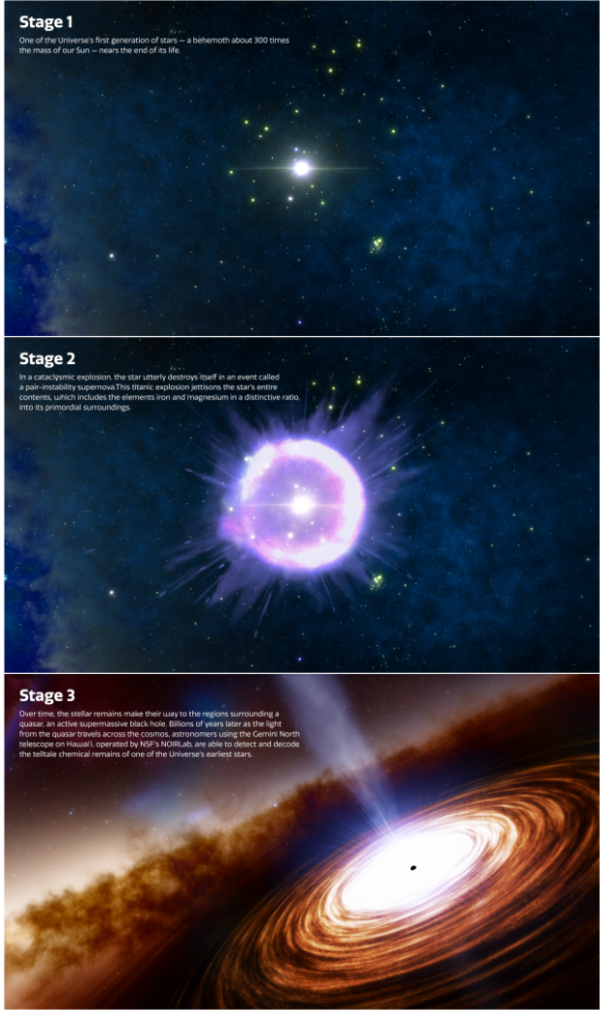
]]>ResearchersÌýin this international collaboration led by Yuzuru Yoshii, professor at the UniversityÌýof Tokyo and laureate professor at the University of Arizona, andÌýÌýthe Grace-Rupley Professor of Physics at 91³Ô¹Ï, discovered that a distant quasar was highly enriched with iron, leading to an extremely low magnesium to iron ratio. The most likely explanation forÌýthis ratio of magnesium to iron in the quasar is that it was produced by an exotic supernova, called a pair-instability supernova (PISN).
“Stars that undergo a PISN explosion may be among the first to have been born, and be responsible for the rapid enrichment of distant galaxies now being studied with the James Webb Space Telescope,†Beers said.
Though predicted theoretically, until now convincing evidence for Pop III stars had not been found, even though astronomers have been interested in the possible existence of these stars for decades. Researchers had sought chemical evidence for a previous generation of such stars in the halo of the Milky Way, with at least one tentative identification discovered, Beers said.
Yoshii said he has been interested in the nature of the very first stars born in the universe for his entire career. “It has been a lifelong dream of mine that we might actually study the nature of the first stars from observations, and now it appears to be coming true,†he said.
However, “the clearest signature of a PISN is probably the extremely low magnesium/iron abundance ratio found in the quasar that is the subject of this study,†Beers said.
PISN supernovae are associated with stars that are 150 to 300 times the mass of the sun. These stars live only 2Ìýto 3 million years — compared with the sun, which is more than 4 billion years old — so direct observations of them are not expected in the Milky Way. However,Ìýastronomers are hoping to identify them from studies of their light curves. Light curves show the rise and fall of the light generated in the explosion.
“This still would prove to be a very challenging observation, requiring long-term monitoring of many objects in hopes of catching their explosions ‘in the act,’†Beers said. “Alternatively, their presence can be inferred indirectly, from studies of the chemical fingerprints they leave behind when they explode.â€
Beers said he and other collaborators suspect that individual stars formed from material enriched by PISN explosions in the early Milky Way might be found in the near future, based on extensive photometric surveys with specific filters capable of measuring the magnesium/iron ratios for tens of millions of individual stars. Beers’ Galactic Archaeology group is calibrating methods to estimate the this abundance ratio of stars in photometric surveys, such as the Javalambre Photometric Local Universe Survey (J-PLUS) and Southern Photometric Local Universe Survey (S-PLUS), currently underway in both the Northern and Southern Hemispheres.
In addition to Yoshii and Beers, other researchers involved in the study include Hiroaki SameshimaÌýand Toshikazu Shigeyama, University of Tokyo;ÌýTakuji Tsujimoto, National Astronomical Observatory of Japan;Ìýand Bruce A. Peterson, Australian National University.

To the right is a diagram showing the stages of the development of a pair-instability supernova:
Originally published by at on Sept. 28.
]]>Packed in six crates — one of which was only a half-inch smaller than the width of a wide-body freight plane door — the Gemini Planet Imager (GPI) arrived at 91³Ô¹Ï after a trip from its location several hours north of Santiago, Chile. It passed through Atlanta, then Chicago and finally Elkhart, Indiana, before being loaded onto a semitruck bound for South Bend, Indiana.
It’s fair to say that , assistant professor in the , who is heading up a project to revamp and upgrade the equipment, was anxious about the instrument’s trip — but he was also excited to get started, because it has been 14 years since GPI was commissioned and seven years since it was installed.
“GPI was designed and built with a bunch of (educated) guesses in mind,†he said. “Now, we can reconfigure it and get absolutely cutting-edge science.â€
After Chilcote and collaborators complete the upgrades — at which time the instrument will be known as GPI 2.0, in late 2023 or early 2024 — the instrument will be installed at Gemini North in Mauna Kea, Hawaii, the twin observatory to the one in Chile.
The instrument was built by a consortium of U.S. and Canadian institutions with Chilcote and Quinn Konopacky, associate professor of physics at University of California, San Diego, as well as astrophysicists at Stanford University, Cornell University and Herzberg Astronomy and Astrophysics in Victoria, British Columbia, Canada. GPI had been mounted to the telescope at the Gemini South Observatory in Chile since 2013, where it aided in the search for Jupiter-like planets until it was removed in August 2020. The instrument was slated to arrive in South Bend in 2020, but the global coronavirus pandemic delayed plans.
In 2017, Chilcote and others approached the broader astronomy community to ask what types of upgrades should be completed. “We asked, ‘What do you need, at a minimum, to go to the next step in your science, now that you’ve learned what directions might be interesting to pursue further?’†he said.
The first iteration of GPI allowed astronomers to observe large, warm planets through their infrared light, as well as faint disks of dust from comets and asteroid belts in faraway solar systems. The upgrade will allow astronomers to see lower-mass planets that orbit more closely to their stars.
“We were limited to something called ninth-magnitude stars, so with these upgrades we’re going to be looking at what are called 14th-magnitude stars, which are about 100 times fainter,†Chilcote said. The brightest stars in the sky are considered first magnitude, while the dimmest to the unaided eye are sixth.
The logistics for removing GPI from the Gemini in Chile were tricky enough, but by the time it arrived in Indiana, the day had to have an almost zero chance of precipitation. Although the telescope is open to the air when assembled, its parts cannot tolerate rain (or snow; originally GPI was scheduled to arrive during winter months).
Chilcote and others cleared out parts of Nieuwland’s machine shop, and they had to purchase a specific type of crane that fits inside the rooms on the ground floor but was still capable of holding the two-and-one-half-ton instrument. On a bright sunny day in June, a team transferred the crates from the truck to Nieuwland. The smallest crates fit through the door, but the largest one was never expected to fit while still in the crate. Chilcote and others opened the crate and, using heavy equipment, turned GPI on its side to get it through the door.
He found himself holding his breath. A lot. Thankfully, the transfer went smoothly.
Researchers have discovered more than 5,000 extrasolar planets, Chilcote said, but most were detected using the transit method. With that method, scientists must detect slight variations in the brightness of a star, caused when a planet crosses in front of it. Others have been detected using the so-called “wobble†method, or radial velocity method, where scientists detect shifts in the star’s spectrum using Doppler. But GPI finds planets by directly imaging them, based on the glare from the star. GPI allows astronomers to measure a planet’s size, temperature and even composition through spectroscopy.
By the time the GPI Exoplanet Survey Team completed its goal in 2019 to characterize exoplanets, more than 500 nearby stars had been reviewed. The instrument discovered seven new debris disks as well as 51 Eridani b, a Jupiter-like planet in the constellation Eridanus that takes 32 Earth years to complete the orbit of its star. The instrument also discovered brown dwarf/gas giant exoplanet HR 2562 B in 2016, currently known as the most massive exoplanet discovered.
The project is funded by the National Science Foundation Major Research Instrumentation Program and the Heising-Simons Foundation. In addition to 91³Ô¹Ï, the University of California, San Diego, the Herzberg Astronomy and Astrophysics, Cornell, the Gemini program, the Space Telescope Science Institute and the University of California, Santa Cruz also contributed to the construction of and research for the instrument.
Contact: Jessica Sieff, 574-631-3933, jsieff@nd.edu
]]>