tag:news.nd.edu,2005:/news/authors/joanna-basile tag:news.nd.edu,2005:/latest 91Թ | 91Թ | News 2012-12-19T16:00:00-05:00 91Թ gathers and disseminates information that enhances understanding of the University’s academic and research mission and its accomplishments as a Catholic institute of higher learning. tag:news.nd.edu,2005:News/36439 2012-12-19T16:00:00-05:00 2021-09-03T21:04:20-04:00 91Թ announces new Ph.D. program in anthropology A student studies an array of bones

The University of 91Թ’s will launch a in the , with the first cohort of students due to enroll in fall 2014.

The new program, says , professor and chair of the department, will focus its curriculum and training on integrative anthropology.

“The strengths of 91Թ’s anthropology department are in its commitment to multiple approaches to understanding humanity and its diversity, willingness to face big questions, individual excellence in teaching and scholarship, exceptional mentoring of students and engagement beyond academia,” she says.

“The Ph.D. program will seek to produce graduates who express those same strengths.”

When the program launches, it will be the only doctorate in anthropology offered by a Catholic university in the United States.

“The excellence of our faculty and the research opportunities in conjunction with many important programs at 91Թ make this an opportune moment to begin a small, superb Ph.D. track,” says , I.A. O’Shaughnessy Dean of the College.

Programs with ties to current anthropology research efforts at the University include the ; ; ; ; ; and the , particularly the physics and biology departments.

“Having strong faculty — themselves prominent and pre-eminent in a variety of fields — will attract attention from the nation’s best undergraduates seeking strong, ethically engaged training for work in academia or outside,” Blum says.

The Ph.D. program is a welcome addition to the Department of Anthropology, joining an undergraduate program that received high praise in 2010 during the department’s most recent external review.

Citing the department’s strong integrative approach to anthropology and the fact that its undergraduate program “has characteristics of a high-quality graduate program at the master’s degree level,” the review board’s top recommendation was to establish a graduate track.

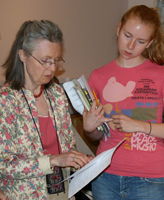
Elizabeth Elliott and Claire Brown on Inishark Island, Ireland Elizabeth Elliott and Claire Brown on Inishark Island, Ireland

“Having a doctoral component,” Blum says, “will strengthen an already-strong program and enhance simultaneously our research capacities, intellectual footprint, international scholarly profile — and the undergraduate educational experience.”

In addition to providing new research and teaching opportunities for faculty, she explains, the graduate program will provide academic role models, deeper research engagement and more class discussion sections for undergraduates.

Professor will serve as inaugural director of graduate studies. The program eventually will enroll 25 students, with entering cohorts of five to six students each year; the expected time to degree is five to six years.

“We believe we can create a program that will produce graduates who are exceptionally well-prepared to perform as teachers, scholars and practitioners,” Blum says. “Our graduates will be better suited to meet contemporary professional demands than students who are traditionally trained primarily for their dissertation research.”

Many anthropology doctoral programs produce graduates who are excellent researchers in a particular subject area, she notes, but they’re not necessarily prepared to take on the full range of duties associated with an academic or nonacademic career.

“We will have something to offer both students and the field: an opportunity to reinvent graduate education for the 21st century,” Blum says. “We will prepare doctoral students who have realistic — and idealistic — plans for their potential contributions to the world following completion of their degree.

“When our students go forth, they will serve as ambassadors for a program that is committed to genuine holistic inquiry and global perspectives, all in the context of contributing superb research and knowledge of the human condition.”

Applications to the doctoral program will be due Dec. 15, 2013.


Originally published by Joanna Basile at on Dec. 14, 2012.

]]>
Joanna Basile
tag:news.nd.edu,2005:News/36320 2012-12-14T15:00:00-05:00 2021-09-03T21:04:18-04:00 91Թ launches Doctor of Musical Arts program Sacred Music at 91Թ

Sacred music is foundational to many of the world’s artistic traditions, and this is especially so when it comes to Western music. It is also an artistic — and academic — area that continues to grow and develop.

To celebrate and promote this diverse art form, the University of 91Թ is launching a Doctor of Musical Arts (DMA) program with majors in organ and choral conducting, beginning in fall 2013.

“Given 91Թ’s educational mission, its Catholic foundation and our recent investments in faculty who are recognized leaders in sacred music, the University is uniquely poised to develop young musicians to serve the Church and world,” says , I.A. O’Shaughnessy Dean of the .

The doctorate, he notes, will be a core component of the University’s larger initiative and has been generously supported by a grant of nearly $2 million.

The goal of the new program is to prepare musicians to work at the highest artistic levels in colleges and universities; cathedrals, churches, and seminaries; and in the larger community of artists, says , professor of conducting in the College’s .

“We will offer DMA degrees specifically in organ and choral conducting because these are fields where the repertoire focuses on sacred genres but at the same time is not exclusively sacred music. In fact, these repertoires cover a broad spectrum of artistic achievements in history,” Téllez says. “Ecumenical and cross-cultural connections can and must be made.”

Carmen-Helena Téllez Carmen-Helena Téllez

Students accepted into the three-year DMA program, approximately four each year, will be provided with full tuition plus a yearly stipend, part of which includes paid internships at local churches. Program requirements include a short thesis and three major recitals, one of which must be a lecture recital.

In addition to deep study of their performance medium, DMA students will receive training in areas such as musicology, ethnomusicology, historical performance practices, Church music traditions, liturgy and ritual studies, theology, music theory, composition and music in interdisciplinary arts. The program challenges students to position the music they perform in its religious context as well as its historical, theoretical, aesthetic and social dimensions. Sacred Music at 91Թ will also offer advanced training in working with children’s choirs to students in both the DMA and the College’s .

Each DMA student will be admitted into a concentration, either conducting or organ. With the advice of a faculty mentor, they also have the option of combining a coherent track of courses to obtain a certificate of secondary specialization in professional fields that have important interactions with the practice of sacred music, such as:

  • Interdisciplinary presentation, which may include a practicum in the arranging and composition of sacred music;
  • Early music, with emphasis on history and performance practice;
  • Liturgical studies or another area in theology; or
  • Lay ministry, consistent with new certification standards approved by the U.S. Conference of Catholic Bishops and the standards of other North American Christian denominations.

Téllez, a renowned specialist in contemporary choral repertories and the use of multimedia and digital display in performance, will lead the performance studio in conducting. Before coming to 91Թ in 2012, she served as director of the Latin American Music Center and director of graduate choral studies at Indiana University.

Craig Cramer Craig Cramer

, professor of music, will lead the performance studio in organ. In addition to being a master teacher with a strong student-placement record, Cramer performs on stages, in concert halls and at churches around the world. Most recently, he was invited to be the featured organist at the 2014 National Convention of the American Guild of Organists in Boston.

“The number of places that teach sacred music — including organ — has dropped precipitously, and 91Թ has made an incredible commitment to ensure that we have a place in this profession,” he says. “And with that new organ, our program is poised to take another quantum leap forward.”

In addition to working with 91Թ faculty, DMA students will regularly have the opportunity to interact with major artists on ensembles, Téllez adds, noting that Sacred Music at 91Թ recently hosted composer James MacMillan this fall at its inaugural festival and conference.

“Many well-known artists will be coming to campus through our Mellon Sacred Music Drama Project and the new Lilly Religious Musical Heritage Project,” she says. “This allows students to develop important professional connections with leaders in the field.”

The University also has multiple centers and initiatives around the world — including in Rome, London and parts of Latin America — in which Téllez anticipates the DMA faculty and students will be participating.

The DMA program will also emphasize tools in digital arts and instructional technologies that open new avenues for artistic expression as well as audience outreach and interaction, Téllez says.

“Many current aspects of the arts are new within the past 15 years, and we want to embrace those new facets. This program will attend to the needs of the 21st-century artist and current threads in culture.”

The deadline to apply for fall 2013 is Feb. 1.


Originally published by Joanna Basile at on Dec. 13, 2012.

]]>
Joanna Basile
tag:news.nd.edu,2005:News/34013 2012-10-04T15:00:00-04:00 2021-09-03T21:03:58-04:00 Sacred Music at 91Թ receives Mellon Grant Carmen-Helena Téllez Carmen-Helena Téllez

With a $400,000 grant from the , the University of 91Թ has announced the launch of the Sacred Music Drama Project, a four-year, cross-disciplinary initiative designed to engage people more deeply with the power of shared creativity, performance and scholarship.

The project will draw on humanistic, artistic and sacred topics from a variety of musical traditions to develop new coursework and to stage the production of a major dramatic performance each year. The Mellon grant will also bring both eminent and emerging guest artists to campus and will fund the commission of a new work of sacred music drama at the end of the project.

“We seek to bridge several divides that too often prevent humanistic studies from achieving their highest levels of impact,” says , professor of conducting in the and concurrent professor of in the . “And the first of these divides is between scholarship and practice.

“We believe that the humanities are well-served when scholarship and research are directly and immediately performed and experienced, bringing the work of the classroom to life through the embodiment of the ideas studied in books and online.”

Making connections between people in different academic areas across the University is another key goal of the Sacred Music Drama Project, says Téllez, who will chair the faculty committee guiding the project and act as principal investigator for the grant and music director of the projects.

Sacred Music at 91Թ

“Our interdisciplinary collaborations will serve to break down traditional boundaries not just between performers and scholars but also between faculty, undergraduates and graduate students,” she says.

“We hope to link the project to a range of courses that allow people across the humanities and the arts an opportunity to participate in each other’s ‘production processes’ and to test ideas that relate directly to their particular subject disciplines.”

Using a permeable studio model, the Sacred Music Drama Project will also allow participants to explore new modes of presentation by sharing their different perspectives and by combining traditional and new media.

“We hope the successful methodologies that emerge will assist both scholars and artists to discover new collaborative models,” Téllez says.

The Mellon Sacred Music Drama Committee will soon issue an open call for proposals and nominations. 91Թ faculty from multiple disciplines will be invited to participate in the Sacred Music Drama Project, programming it into their curricula and connecting students with visiting performers, artists and scholars.

Studying and staging interdisciplinary works of sacred music drama will do more than connect people and programs on the 91Թ campus, Téllez believes. The project aims to create and sustain new forms of interaction within the wider community as well by sharing musical experiences and disseminating research findings.

“We hope to establish best practices for dialogue, to produce new and excellent artistic works, to develop innovative technologies — and to leave a filmed documentation of these projects for professionals and students everywhere,” she says.

As a university, 91Թ is particularly well-positioned to generate a national and even international impact with these initiatives, Téllez says.

“We aspire for the Mellon Sacred Music Drama Project to have a lasting influence on the campus culture and the broader community well beyond the University because we can connect with people on a range of topics that matter in today’s world.”


Originally published by Joanna Basile at on Oct. 3, 2012.

]]>
Joanna Basile
tag:news.nd.edu,2005:News/33965 2012-10-02T15:00:00-04:00 2021-09-03T21:03:55-04:00 Psychologist Nicole McNeil receives APA award Nicole McNeil Nicole McNeil

In recognition of her distinguished body of scholarship, the University of 91Թ’s has received the 2013 Boyd McCandless Award from the (APA).

“Past winners of this award are a veritable ‘who’s who’ of developmental science,” says Daniel Lapsley, chair of the and Alliance for Catholic Education Collegiate Professor of Psychology. “Nicole is keeping very impressive company, and we are proud of her accomplishments.”

McNeil, Alliance for Catholic Education Associate Professor of Psychology, focuses her research on the development of mathematical thinking in various forms. Over the past several years, she has received more than $2 million in funding from the Institute of Education Sciences and the National Science Foundation to continue her research. She also oversees several related, student-led projects.

“Some studies focus on identifying which skills in preschool, kindergarten and early elementary school are the best predictors of later mathematics achievement and algebra readiness,” McNeil says. “Other studies focus on identifying the cognitive processes involved in children’s understanding and misunderstanding of important math concepts.

“Still other studies focus on the malleability of children’s early mathematical concepts and skills, with the goal of identifying the best ways for parents and teachers to structure children’s environments to help them construct an understanding of important math concepts.”

The Boyd McCandless Award is given annually to someone who has made a “distinguished contribution” to the field of developmental psychology or the dissemination of developmental science, or has conducted programmatic research of distinction. What McNeil finds most rewarding about receiving the award, she says, is that it is based on a scholar’s entire body of work to date, rather than just a singular achievement.

“Thus, I think the award speaks to the selection committee’s recognition of the quality and importance of my research to date,” she says, “as well as their confidence in the enduring impact of my work. … It’s an amazing honor to receive the award. It’s still kind of unbelievable to me.”

As the 2013 Boyd McCandless Award recipient, McNeil will give a talk at the APA’s next annual meeting in Hawaii. She will also head the committee to select the following year’s winner.

“I can’t believe I’ve achieved enough to be included with such an illustrious group of people,” she says. “It certainly is motivating, though. I can only hope that I will be as good of a representative of the award as the previous winners have been.”


Originally published by Joanna Basile at on Sept. 26, 2012.

]]>
Joanna Basile
tag:news.nd.edu,2005:News/32197 2012-07-26T13:00:00-04:00 2021-09-03T21:03:37-04:00 Christian Smith honored by American Sociological Association Christian Smith Christian Smith
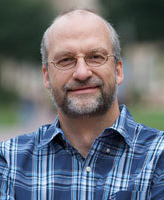
University of 91Թ Professor has won the 2012 Distinguished Career Award from the Altruism, Morality and Social Solidarity section of the (ASA). The accolade, presented at the ASA’s annual meeting in August, recognizes a senior scholar who has made significant contributions to the section’s areas of focus over an extended period of time.

Smith says the acknowledgment is a true honor. “I think the award reflects a recognition among my colleagues that the various strands of my research and publishing on generosity, adolescents, theory of human personhood, religion and even political activism share a common theme that takes morality and self-giving seriously,” Smith says.

“A lot of social science does not do that, so it is good to have that recognized.”

Smith, the William R. Kenan Jr. Professor of Sociology in 91Թ’s , is a concurrent professor in the and director of both the and the .

He has won numerous awards for his research and publications. One of his most recent books, “What Is a Person?: Rethinking Humanity, Social Life, and the Moral Good From the Person Up,” was named one of Choice magazine’s Top 25 Academic Titles of 2011, won the 2010 Cheryl Frank Memorial Prize from the International Association for Critical Realism and received a 2010 PROSE Award honorable mention in the philosophy category at the American Publishers Awards for Professional and Scholarly Excellence.

Currently, Smith is completing research for the , a project funded by a $5 million grant from the John Templeton Foundation that brings together the often disconnected and diverse approaches to generosity in order to research it in all its forms. He plans to write at least one book based on his findings.

He is also completing the fourth and final wave of the National Study of Youth and Religion, a longitudinal panel study of teenagers and emerging adults. Research so far on this project has yielded multiple books, including “Souls in Transition: The Religious and Spiritual Lives of Emerging Adults” and “Soul Searching: The Religious and Spiritual Lives of American Teenagers.” In 2011, the Lilly Fellows Program in the Humanities and the Arts awarded “Souls in Transition” its Lilly Fellows Program Book Award.

Smith also recently received a planning grant from Lilly Endowment Inc. to do background work on a potential study on parenting in the United States.

“I will continue to do much the same kind of work I have already done,” he says, “but it is encouraging to have a sense that somebody out there is benefiting and appreciating.”


Originally published by Joanna Basile at on July 23, 2012.

]]>
Joanna Basile
tag:news.nd.edu,2005:News/31308 2012-06-22T12:55:00-04:00 2021-09-03T21:03:25-04:00 Theologian Gary Anderson elected to American Academy of Jewish Research Gary Anderson

, Hesburgh Professor of Catholic Theology at the University of 91Թ, has been named a fellow of the (AAJR).

The AAJR is the oldest organization of Judaic scholars in North America, and fellows are nominated and elected by their peers. The group has approximately 100 members in the United States — and Anderson is one of a select few who is not Jewish.

“For me,” Anderson says, “to be treated in such a way by my Jewish colleagues while at a Catholic institution is the highest of honors given the importance I have placed on Jewish studies in my own life and career."

A member of the faculty in the ’ , Anderson specializes in biblical studies, with a focus on the Old Testament and the history of its interpretation, particularly in early Judaism. His most recent books include “” and “.”

“The Bible continues to shape and inform how Jews and Christians understand themselves in the modern world,” he says. “All my historical work is oriented toward that larger issue. I am never satisfied with the question ‘What did this text mean for its author?’ I also want to ask, ‘Who are we in light of this text?’ By that, I mean, how does the Bible function for contemporary Jewish and Christian theology?”

Anderson says most of his academic career has involved close work with Jewish sources and Jewish scholars. “I believe that the theological task of interpreting the Bible cannot be done well without a deep and abiding conversation with our Jewish peers.”

Formerly a professor at Harvard University, Anderson says he was initially concerned about his scholarly focus on Judaism once he had moved to a Catholic university.

“I worried whether my own work in Jewish studies would be taken less seriously,” Anderson says. “I have found that this has not been the case at all. Last year, I was awarded a prestigious Straus-Tikvah Fellowship in Jewish studies at New York University, and the reception of this award is more confirmation that my standing among my Jewish colleagues has, if anything, advanced since coming to this University.

“Jewish scholars in both the United States and in Israel tell me all the time of their high estimation of the Department of Theology at 91Թ. Many think it is the best place to study Second Temple Judaism outside of Israel. Needless to say, such words of praise for what we are doing here are very gratifying.”

Originally published by Joanna Basile at on May 14, 2012.

]]>
Joanna Basile
tag:news.nd.edu,2005:News/31432 2012-06-20T11:00:00-04:00 2021-09-03T21:03:27-04:00 Examining Christian perceptions and Muslim identity Olivia Remie Constable

, a professor in the at the University of 91Թ, has been awarded a fellowship from the for her book project “Christian Perceptions of Muslim Identity in Medieval Spain.”

Among other things, her work will examine Christian attitudes toward Muslim dress and appearance and whether Muslims could engage in public religious expressions, teach Arabic to their children and maintain bathhouses, schools, cemeteries and other separate spaces important to the continuity of their culture and religion.

“Over the period that my study covers, Christian attitudes changed dramatically about all of these things,” Constable says.

Director of the University’s , Constable specializes in the social, economic and cultural history of the Mediterranean world, particularly the Iberian Peninsula. Her current research focuses on the time between the 12th and early 16th centuries.

“This was a period after Christians had conquered large areas that had once been in Muslim control, and so there were Muslims living under the administration of Christian rulers,” she says. “I am looking at how this relationship worked and at Christian understandings of what was needed for Muslim neighbors to remain Muslim.”

In the century or so after the conquests, she says, Christians generally accepted the distinctive Muslim religious practices and ways of life. But over time, Christian attitudes became less and less tolerant.

“Eventually, in Spain, the Christian administration decided it was no longer possible for Muslims and Christians to live together, and all Muslims were expelled from the Iberian Peninsula,” Constable says. “My research looks at how — and why — this change in attitude took place.”

Out of several thousand applications each year, the Guggenheim Foundation selects approximately 5 percent as fellows, based on exceptional academic achievements and on continued promise of exceptional work in the future. Two of this year’s winners are from 91Թ — both of them medievalists.

In addition to Constable, Margot Fassler, Keough-Hesburgh Professor of Music History and Liturgy in the Department of Theology and co-director of the Sacred Music at 91Թ initiative, for her research on Hildegard of Bingen.

“I think this is testimony to the strength of medieval studies at 91Թ, to the strength of our medievalist faculty and to the support we get from the College of Arts and Letters,” Constable says.

Previous Guggenheim recipients with ties to the Medieval Institute include Kathryn Kerby-Fulton, Department of English; Ann Astell, Department of Theology; and John Van Engen, Department of History.

“Needless to say, I am delighted to receive this award,” Constable says. “It is an honor in itself, but I am also happy to have the time to spend on my research and writing.”

Originally published by Joanna Basile at on May 17, 2012.

]]>
Joanna Basile
tag:news.nd.edu,2005:News/31395 2012-06-13T13:00:00-04:00 2021-09-03T21:03:26-04:00 College of Arts and Letters launches international economics major A male student raises his diploma to the crowd

Linguistic and cultural fluency is an increasingly important asset in business. To address the growing demand for professionals who can both understand and help shape the world market, the University of 91Թ’s has created a new major in international economics.

The major combines substantial coursework in the with advanced training in language and culture, starting with French, Italian or Spanish. It will also provide students with the potential for overseas internships and specialized research projects.

“This program will be an attractive option for ambitious, sophisticated and savvy 91Թ undergraduates seeking to prepare themselves for successful international careers,” said , Gilbert F. Schaefer Professor of Economics and chair of the Department of Economics.

These careers, he says, span the government and nonprofits as well as multinational corporations and more local entities that do business overseas or have international interests in areas such as research, law or even the arts.

“The new major’s blend of economics with foreign language and culture exemplifies the College’s liberal arts approach to nurturing the development of future global citizens,” says , professor and chair in the , who, together with Jensen, spearheaded the initiative for the new course of study.

Students in this major will take an introductory class called “Exploring International Economics,” plus a minimum of eight economics courses and seven to 10 intermediate and advanced courses in French, Italian or Spanish, including at least four that have a cultural, economic and/or historical emphasis.

Under the guidance of faculty mentors, all international economics majors will also complete a capstone research project that integrates the analytical aspects of economics with the linguistic and cultural aspects of a Romance language.

The course offerings and program initiatives in the new major, Cachey says, are designed to help students understand how aesthetic and cultural categories and value judgments are shaped by — and, in turn, influence — economic trends and political conditions, whether they go on to graduate school or immediately enter the business world.

“We will produce graduates,” he says, “who will become leaders and global citizens in a world that is increasingly interconnected from an economic point of view and requires individuals with a specialized knowledge of local languages and cultures to navigate the uneven terrain of the world’s environmental, cultural, social, economic and political geographies.”

Both Cachey and Jensen say they intend to expand the international economics major beyond their two departments, and anticipate collaborating with other foreign language and culture programs in the College, including Arabic, Chinese, Japanese and Korean.

“The new international economics major has tremendous potential for our majors in the says that department’s chair, , who notes that many East Asian languages students already choose to double major in either economics or business. “We hope to offer this new option to them soon.”

The new major’s distinctive approach will not only serve students well, Jensen says, it can also make a difference in the marketplace as the College’s international economics majors move into leadership positions in their careers.

“This new major has a direct correlation to the 91Թ’s commitment to ‘constructive and critical engagement with the whole of human culture,’” he says, quoting from the University’s mission statement.


Originally published by Joanna Basile at on June 11, 2012.

]]>
Joanna Basile
tag:news.nd.edu,2005:News/31214 2012-06-05T15:00:00-04:00 2021-09-03T21:03:23-04:00 Solving a fascinating puzzle Robert Goulding

, an associate professor in the University of 91Թ’s , was recently awarded a grant from the (ACLS) to support a research project that combines mathematics, philosophy and Renaissance science.

Goulding, who also teaches in the graduate program, says his work focuses on English scientist and mathematician Thomas Harriot (1560-1621), whom he calls “a really unusual figure” in intellectual history.

“In an age when mathematicians were few, and even many of the well-educated were completely innumerate, Harriot seemed to live and breathe numbers,” Goulding says. “It was quite natural for him, for instance, sitting in his study in London during a rainstorm, to calculate how long it would take the courtyard outside his window to fill with water if rain continued to fall at the present rate.”

By analyzing Harriot’s optical manuscripts, Goulding looks to illuminate the day-to-day practices of the Renaissance scientist and explain his investigations into reflection and refraction within the larger context of Renaissance optics and natural philosophy.

As an extension of this project, Goulding and two scholars from the Max Planck Institute for the History of Science in Berlin will attempt a feat that several others over the past 400 years have tried but never accomplished: publishing annotated versions of Harriot’s entire collection of manuscripts.

“We hope that new digital technologies will allow us to overcome the obstacles that defeated our predecessors,” Goulding says.

Harriot wrote thousands of pages of notes on almost every topic that interested him, but he wrote mainly for himself, so his records need to be examined and interpreted.

“My work on the manuscripts to this point has involved not only deciphering the rapidly noted Latin, endless calculations and scribbled diagrams,” Goulding says, “but also, with the aid of my own diagrams and mathematical software, a great deal of ‘reverse engineering’ to reconstruct the problem or the experimental apparatus that would have led Harriot to these particular calculations or diagrams.”

Because of this time-consuming and intensive analysis, Goulding says, he was delighted to receive the ACLS award, which will help push his project forward.

“My work on Harriot in the past has taken place in snatches between other research projects,” he says. “I knew I needed an extended period really to do this project justice, and that is what this award will allow me to do.”

Goulding has also received funding from the National Endowment for the Humanities that will allow him to spend fall 2012 as a fellow at the in Chicago.

“It was a very nice surprise to receive the Newberry award after I’d already heard about the ACLS,” Goulding says. “The Newberry is one of the world’s great libraries for the period in which I work. I will be able to pursue there most of my research on the intellectual contexts of Harriot’s work.”

As a final product of his fellowship, Goulding will turn his findings into a book on Harriot’s optics, a topic he plans to supplement in print with information about the “optical culture” of the period and Harriot’s place in it.

On a more personal level, however, Goulding says his feeling of accomplishment will come when all of these manuscripts he’s wrestled with for years — the numbers, diagrams and calculations — finally come into focus, when the sketches he has made in his own notebooks or on his computer precisely match Harriot’s.

“There is a feeling, then, of 400 years dissolving, and for a moment, I am working not on some dusty, yellowing manuscripts but elbow to elbow with a fellow human being on a fascinating puzzle about the natural world,” he says.

“People probably think of the history of science as a rather dry field. But for me, at least, the great reward of this discipline is the ability to slip into the thoughts, as it were, of someone separated by vast distances of time and space. I hope for many more moments of that sort.”


Originally published by Joanna Basile at on May 14, 2012.

]]>
Joanna Basile
tag:news.nd.edu,2005:News/30793 2012-05-11T15:00:00-04:00 2021-09-03T21:03:18-04:00 Music historian and liturgical scholar Margot Fassler wins three research awards Margot Fassler

Art. Sacred music. Medieval history. And the digital humanities. , Keough-Hesburgh Professor of Music History and Liturgy at the University of 91Թ, brings them all together in her current research on Hildegard of Bingen — research for which she has been recently awarded fellowships from both the (ACLS) and the .

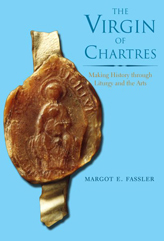
Adding to these accolades, Fassler, a professor in the who co-directs the in the College of Arts and Letters, on May 11 (Friday) received the for “” (Yale University Press, 2010).

“It seems that 2012 is my year,” Fassler says.

Excellence in medieval studies

"The Virgin of Chartres"

The annual Gründler prize recognizes an author whose work in any area of medieval studies is judged to be an outstanding contribution to the field. Fassler accepted the award before 3,000 of her peers at the International Congress on Medieval Studies at Western Michigan University.

Her winning book, about the history of the Cathedral of 91Թ in Chartres, France, draws on local histories, letters, obituaries, chants, liturgical sources and reports of miracles to explore the cult of the Virgin of Chartres and its development in the 11th and 12th centuries. The book explores how the past was made in the central Middle Ages and argues for an understanding of the liturgical framework of time.

“It was especially meaningful to win this prestigious award in 2012,” Fassler says, “because I am the third 91Թ faculty member in a row to win, joining my colleagues and — all three of us fellows of 91Թ’s ."

Noble, a professor in the Department of History, won in 2011 for his book “Images, Iconoclasm, and the Carolingians,” marking the first time the Gründler prize had ever been awarded twice to faculty from the same university, let alone in back-to-back years. Van Engen, the Andrew V. Tackes Professor of History, won in 2010 for “Sisters and Brothers of the Common Life: The Devotio Moderna and the World of the Later Middle Ages.”

In addition to the 2012 Gründler prize, Fassler’s “The Virgin of Chartres” received the biennial ACE/Mercers’ International Book Award in late 2011 for “an outstanding contribution to the dialogue between religious faith and the visual arts.”

Humanities in the digital age

Next up for Fassler are two research projects focusing on the medieval figure Hildegard of Bingen. The first, called “Hildegard’s Scivias: Art, Music, and Drama in a Liturgical Commentary: Book and Digital Model,” is supported by an ACLS Digital Innovation Fellowship — one of only eight given out each year.

“My project concerns a set of interlocking illuminations provided for a late-12th-century copy of Hildegard’s theological treatise ‘Scivias,’ written in the 1140s,” Fassler says. “I will be working with Christian Jara, a talented and experienced digital artist, to create a digitized model of the cosmos as Hildegard envisioned it, adding music and dramatic dimensions to the model, all of which are texts and musical compositions by Hildegard as well.”

The new project, Fassler says, will take advantage of 91Թ’s “splendid” Digital Visualization Theater (DVT), a 50-foot dome that allows viewers to fully immerse themselves within and fly through high-resolution and high-fidelity images. “We hope to have this 12th-century universe ready for display in the DVT when the Medieval Academy of America meets at 91Թ in spring 2015,” she says.

Peter Holland, McMeel Family Chair in Shakespeare Studies in the Department of Film, Television, and Theatre and the associate dean for the arts in the College of Arts and Letters, says the use of new technologies in projects such as Fassler’s is transforming the work of humanities scholars.

“We have wonderful people doing brilliant work in the digital humanities here in the College — cutting-edge, innovative projects that take the way we can understand something in wholly new directions,” Holland says.

And the possibilities are endless, notes Susan Ohmer, director of DigitalND, a new initiative designed to streamline and strengthen digital work at 91Թ. “Research such as Margot’s exemplifies the contributions that digital humanities can make to scholarship by opening up new methods of analysis and new bodies of research material for scholars to consider.”

Interdisciplinary exploration

In addition to the ACLS Digital Innovation Fellowship, Fassler was this year named a Guggenheim fellow, a midcareer award based on both “prior achievement and exceptional promise.”

The award will support Fassler’s new book about Hildegard’s early writings. The first interdisciplinary monograph on “Scivias,” it treats the work as a liturgical commentary, one that incorporates art, drama and music in its explanations of the sacraments, she says.

“It is an exciting time to be finishing a study of Hildegard, as she will be named a Doctor of the Church in fall 2012,” Fassler adds.

Although deep into her Hildegard research, Fassler has certainly not forgotten about the subject of her last book, which she turned into a course called “Chartres Cathedral in the Middle Ages and Today: Art, Music, Liturgy and Identity.”

As part of this Arts and Letters undergraduate class, Fassler and Katie Bugyis, a teaching associate in the Medieval Institute, took 14 students to France during spring break to study the art, architecture and theological importance of the cathedral, which houses the most complete array of in situ medieval glass and sculpture in Europe. The trip was supported by the College of Arts and Letters, the Nanovic Institute for European Studies and “Les Amis de la Cathédrale de Chartres.”

“We are preparing a website on our trip and our studies in Chartres, so stay tuned,” Fassler says, adding with a note of pride that “the work of these students has been the best thing yet about 2012.”

Originally published by Joanna Basile at on May 11, 2012.

]]>
Joanna Basile
tag:news.nd.edu,2005:News/28693 2012-02-02T16:00:00-05:00 2021-09-03T21:02:52-04:00 Sociologist Christian Smith wins multiple book awards Christian Smith

, William R. Kenan Jr. Professor of Sociology at the University of 91Թ, was recently honored for two of his latest books: “” and “.”

In December, Choice magazine selected “What Is a Person?” as one of its . A publication of the Association for College and Research Libraries (a division of the American Library Association), the list represents the best of the approximately 7,000 scholarly titles Choice reviews each year from across all academic disciplines.

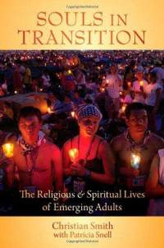
“Souls in Transition” recently won the . The biennial prize from the Lilly Fellows Program in the Humanities and the Arts recognizes a work from any academic discipline that best represents the principles of the organization, which aims to strengthen and shape the character of church-related learning institutions for the 21st century.

Souls in Transition

Drawing on a nationally representative survey and hundreds of in-person interviews, “Souls in Transition” explores the religious and spiritual lives of 18- to 23-year-olds in the United States. Smith co-wrote the book with , a postdoctoral fellow at Rice University who received her Ph.D. from 91Թ’s .

“’Souls in Transition’ cuts through the media clutter on college-age adults to offer a vital portrait of their religious, moral and spiritual assumptions and practices,” the Lilly prize committee says. “The implications in this work for the way colleges and universities — religiously affiliated or not — recruit, retain, instruct and prepare students for lives that matter are challenging and profound. ‘Souls in Transition’ should be required reading for anyone working in higher education.”

Smith calls the award delightful and unexpected.

“I think it shows that the book is proving very helpful and enlightening for those who work in liberal arts colleges, such as those associated with the Lilly Fellows Program,” he says. “It feels great to have produced a book that is useful to people in the real world, not merely narrow scholarship for the ivory tower.”

“Souls in Transition,” which also won a distinguished book award from Christianity Today in 2010, is a follow-up to Smith’s 2005 book, “,” co-authored with Melinda Lundquist Denton of Clemson University.

In 2013, Smith says he will begin a new wave of data collection to continue the series, this time focusing on the religious and spiritual lives of people in their mid to late 20s.

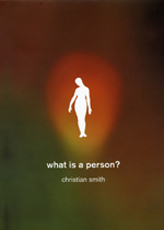
What is a Person?

In his award-winning book “What Is a Person?” Smith presents a new model for social theory that embraces the best of our humanistic visions of people, life and society.

“This book addresses some really basic questions in social theory about human nature, action, culture and social structure,” Smith says. “I think these matters are very important, but one always wonders if such a book will make any impact.”

Being named to Choice’s Top 25 Outstanding Academic Titles of 2011 “definitely affirms the significance of the book,” he adds, “which I hope expands its audience and future influence.”

“What is a Person?” also won a 2010 honorable mention in the philosophy category at the American Publishers Awards for Professional and Scholarly Excellence and the 2010 Cheryl Frank Memorial Prize from the .

According to the IACR prize committee, the book “draws on first-wave critical realism to critique rival approaches and advance a model of the person that can serve as the indispensable basis for sociological theory and analysis.”

Lost in Transition

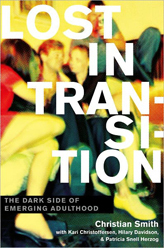
Smith specializes in religion in modernity, adolescents, American evangelicalism and culture. His previous books include “Passing the Plate: Why American Christians Don’t Give Away More Money” and “Christian America? What Evangelicals Really Want.” In 2011, he published “Lost in Transition,” written with Snell Herzog and two current Ph.D. students in the Department of Sociology: Kari Christoffersen and Hilary Davis.

In 91Թ’s , Smith directs both the and the .

He also leads the University’s initiative. Established in 2009 with a $5 million grant from the John Templeton Foundation, Science of Generosity brings together the often disconnected and diverse approaches to this topic in order to research generosity in all its forms.

In addition, Smith is leading the sociology working group for , a four-year, international project housed at 91Թ. Funded by a $657,000 grant from the Andrew W. Mellon Foundation, Religion Across the Disciplines calls on leading scholars from around the world to join with faculty and graduate students at 91Թ to investigate the influence of religious knowledge in history, international relations, literature, music and sociology, as well as the influence those fields have on religion itself.


Originally published by Joanna Basile at on January 06, 2012.

]]>
Joanna Basile
tag:news.nd.edu,2005:News/28448 2012-01-19T15:00:00-05:00 2021-09-03T21:02:48-04:00 91Թ psychologist developing new math learning strategies Nicole McNeil

What do children know about mathematics before they start learning it in school? How do external factors like language, education and culture affect children’s understanding? What is the best way to structure an environment so they have the building blocks needed for success in math?

These are just some of the questions 91Թ psychologist seeks to answer in her research, for which she recently received a three-year, $565,000 grant from the (IES).

“The development of mathematical thinking presents a paradox,” says the Mary Hesburgh Flaherty and James F. Flaherty Assistant Professor of Psychology, whose scholarship focuses on , specifically mathematical cognition.

“On one hand, young children and even infants have been shown to have a surprisingly sophisticated understanding of abstract math concepts,” she says. “On the other hand, math is a notoriously difficult subject to learn in school, with many children and adults failing to achieve basic competence.”

This is McNeil’s second IES award. In 2007, she received a four-year grant totaling more than $750,000 to determine whether modifications to traditional arithmetic practice could improve children’s understanding of mathematical equivalence.

The new funding will allow McNeil to build on what she learned during the first study in order to “develop and test a comprehensive intervention that is affordable, effective at producing mastery, and easy for teachers and parents to administer in schools, after-school programs and homes.”

Her goal, she says, is to create a program that has the potential to have “real and lasting benefits for children’s mathematical achievement and algebra readiness in the long term.”

Mathematics

To further support her work, McNeil has also recently been awarded a five-year CAREER grant from the (NSF) worth approximately $750,000. CAREER grants are NSF’s “most prestigious awards in support of junior faculty who exemplify the role of teacher-scholars through outstanding research, excellent education, and the integration of education and research within the context of the mission of their organizations.”

As part of the NSF grant, McNeil will conduct a longitudinal study to see if a better understanding of math equivalence in the second grade leads to greater success in higher grades, especially algebra readiness in the sixth grade.

As an undergraduate, McNeil planned to become a doctor and was double majoring in chemistry and psychology at Carnegie Mellon University. One of her professors suggested she build her medical school application resume by working in a research lab on campus, and she found her way into one focused on cognitive development and communication.

“I developed a passion for cognitive development research—I couldn’t get enough of it—so I abandoned my idea of going to medical school and instead chose to pursue a Ph.D. in psychology,” she says.

Inspired by that experience, McNeil now challenges her students in the to discover their own academic passions. She encourages them to find a “big question” that intrigues them and then works to provide the tools and guidance they need to pursue an answer.

“I feel strongly that students need to have one-on-one attention from faculty members,” McNeil says. “It gives them the opportunity to bounce ideas off and ask questions of an expert in the field. This type of intellectual discourse puts them in the position to eventually make a real contribution to the field.

“Students in my lab also get to be involved in every aspect of research, from conceptualization to dissemination.”

Through all this work on her own scholarly projects and with her students, McNeil hopes she can help parents and teachers determine the best ways to structure each child’s mathematical education so that all children can learn to be successful in school—and beyond.


Related Headlines

(VIDEO)


Originally published by Joanna Basile at on January 06, 2012.

]]>
Joanna Basile
tag:news.nd.edu,2005:News/28208 2012-01-09T17:00:00-05:00 2021-09-03T21:02:46-04:00 Rousseau exhibit to focus on dignity of the human person Julia Douthwaite

, professor of French in the University of 91Թ’s Department of Romance Languages and Literatures, is organizing a series of events to honor Swiss philosopher and writer Jean–Jacques Rousseau’s 300th birthday and stimulate a cross–disciplinary discussion on social justice and human dignity.

The project, called “,” will be part of the curriculum for more than a dozen courses throughout the and the and will feature both guest lectures and an Amnesty International photography exhibit on poverty and human rights that includes portraits from Mexico, Egypt, Nigeria, India and Macedonia.

Douthwaite says she and a student chanced upon the exhibit, called “DIGNITÉ,” on its opening day during a research trip to Paris in 2010. “We were captivated by the images, the stories on the walls,” she says.

Knowing that others at 91Թ would find the collection just as moving, Douthwaite approached the curator and the photographers who were at the opening and convinced them to make the Snite Museum of Art the exhibit’s first stop in the United States.

“Since finishing my recent book project on revolutionary France,” she says, “I’ve been thinking a lot about human rights: the origin of the concept, its progress and obstacles. And so gradually, I realized that I had a concept: Rousseau, pioneer of humanitarian thought, would marry ‘DIGNITÉ’ and the 2012 tricentennial.”

Jean–Jacques Rousseau

Visiting lecturers for the series include Professor Christie McDonald from Harvard University, who will focus on Rousseau and gender studies; Professor Christopher Kelly from Boston College, who will discuss political theory of “On the Social Contract”; Professor Jason Neidleman from University of LaVerne, who will lecture on Rousseau and religious liberty; and Professor Serge Margel from L’École des hautes études en sciences sociales in Paris, who will talk about Rousseau and moral philosophy. Two of the “DIGNITÉ” photographers have also been invited to speak about photojournalism and global political activism: Johann Rousselot (India) and Philippe Brault (Egypt).

According to Douthwaite, faculty throughout the University are planning to incorporate the exhibit into classes they will teach in spring. Those participating are from the College of Arts and Letters’ Program of Liberal Studies, Ph.D. in Literature Program, and departments of American studies, , English, political science and history, as well as faculty from the and the Law School’s Center for Civil and Human Rights.

“The demonstrable commitment to social justice and poverty studies at 91Թ make this kind of work take flight here,” she says.

Lea Malewitz, Lauren Wester, and Julia Douthwaite

During summer 2011, Douthwaite worked with two French students, Lea Malewitz and Lauren Wester, to prepare the exhibit with colleagues in 91Թ’s and translate into English the original French exhibit catalogue, Dignité: Droits humains et pauvreté.

Douthwaite and the students also selected excerpts from Rousseau’s texts and paired them with images from the exhibit to create study guides for students and the faculty who plan to incorporate discussions of the project into their curricula.

“The study guides do not aim to canonize Rousseau,” Douthwaite says. “On the contrary, we aim to put Rousseau’s work and thought into a dialectical kind of questioning with recent thinkers in political science, gender studies, and religious history.”

Douthwaite says including students in her work through projects such as this is a priority for her as both a scholar and a teacher. “The collaboration we have undertaken this summer has been energizing and, I think, has opened the students’ eyes to some new avenues for professional development where they will be able to use their expertise in the future.”

Diana Matthias and Lea Malewitz help prepare the DIGNITY exhibit

Malewitz, a senior double majoring in French and Arabic studies, says her work on the project was an invaluable educational experience that helped her fine-tune her language skills.

“This was the first time I had ever done any translating,” she says. “Usually in language classes, we focus on producing our own language. I found this project enhanced my vocabulary both in words I had never seen before and in thinking about the shades of meaning of words I already know. The challenge of conveying exactly what the author meant was really enriching.”

The students have also been able to get involved in other aspects of the exhibit, from choosing the artwork and texts that will be displayed to designing the layout of the room, says Wester, a 2011 91Թ graduate who completed her undergraduate degree in French and psychology and is now working toward a master’s in French at the University.

Lauren Wester

Wester says she was particularly eager to get involved with the project because it built on her previous humanitarian work as a volunteer document translator for francophone refugees at Freedom House in Detroit.

“First of all, I hope that visitors learn to appreciate their own living conditions after viewing the miserable situations that the people in ‘DIGNITÉ’ are subjected to,” Wester says. “Secondly, I’d like people to recognize that these terrible conditions still exist throughout the world. Making the 91Թ and South Bend community aware of these injustices is one of the most important things this exhibit can do.”

In addition to conveying a powerful message about human rights and Rousseau’s work, the project demonstrates how relevant French studies are in today’s world, Douthwaite says.

“With our linguistic expertise, the students and I have provided valuable assistance to Amnesty International in France,” she says. “With our historical and literary abilities, we also have been able to conceptualize linkages between past and present—between Rousseau’s prescience in ‘The Discourse on the Origins of Inequality’ and today’s urgent call for a more just economy.”

DIGNITY will be on display in the Snite Museum from Jan. 15 until March 11. The exhibit—along with the translated document Douthwaite, Wester and Malewitz created—will then move on to Chicago.

“As the DIGNITY exhibit launches its American tour,” Douthwaite says, “it is gratifying to know that our catalogue, and the memory of the leadership role of 91Թ students and faculty, will go along with it.”


Originally published by Joanna Basile at on December 01, 2011.

]]>
Joanna Basile
tag:news.nd.edu,2005:News/28137 2012-01-04T10:15:00-05:00 2021-09-03T21:02:45-04:00 Music historian and liturgical scholar wins international book prize Margot Fassler

, Keough-Hesburgh Professor of Music History and Liturgy and co-director of the at the University of 91Թ, has won the biennial ACE/Mercers’ International Book Award.

The award from (ACE) recognizes Fassler’s 2010 book “” as “an outstanding contribution to the dialogue between religious faith and the visual arts.”

A detailed history of the Cathedral of Our Lady of Chartres in France, the book draws on local histories, letters, obituaries, chants, liturgical sources and reports of miracles to explore the cult of the Virgin of Chartres and its development in the 11th and 12th centuries. The book offers a detailed study of the West façade, interpreting the art in the context of liturgical and musical understandings.

“I was shocked to be a finalist, let alone to win, and very, very grateful,” Fassler says of the award, which she hopes will encourage more scholars to invest time in interdisciplinary research.

“There are no shortcuts,” she says. “You have to learn another field, and then you have to learn how to combine knowledge from two fields in creative yet responsible ways.”

Fassler says her inspiration for “The Virgin of Chartres” stemmed from an earlier book she wrote on the music and liturgy of the Abbey of St. Victor in France. The abbey was destroyed during the French Revolution, and Fassler says she was heartbroken that she could not personally experience the beauty of a place she had come to know and love through her research.

For subsequent work, Fassler looked for inspiration among buildings she could visit in person. She says she was immediately taken with Our Lady of Chartres, which has a magnificent 12th-century façade that incorporates sculpture and glass.

“I was very powerfully drawn into the ways that the music I knew would sound in my head when I looked at the art,” Fassler says of the cathedral. “Of course, it is designed to stimulate the memory, to make the glass and sculpture sound. The brilliant ways the exegetical understandings are embodied in the portal, with various uses of perspective, still continue to amaze me after all these years.

“I think the most surprising thing of all was realizing, about three years into the book, that the arts and related music constituted a giant history-making enterprise and that the identity of a community depended on knowing it, on learning to negotiate its meanings.”

A musicologist and liturgical scholar in the , Fassler is on the faculty in both the and the .

“Over the last 15 years, I have become increasingly interested in the intersection of music and art in a liturgical context,” she says. “Although I always focus on music, I am a committed interdisciplinarian. I work on music, religion and art—and I make documentary films for teaching about these subjects.”

Currently, Fassler is completing work on a textbook and a companion guide on medieval music, as well as a book on Hildegard of Bingen, which will include digital modeling, and bringing her compositions and the illuminations for one of her treatises together in an interdisciplinary study. “She demonstrates the importance of music as a theological discipline.”

Fassler is also organizing two conferences, one at the 91Թ Centre in London, which will focus on the cantor-historian in the Middle Ages, and another featuring the compositions of James MacMillan, who will be in residence on 91Թ’s main campus for the Feast of the Holy Cross and the Seven Sorrows in September.

Over spring break, she is escorting a class of 91Թ undergraduate students to Chartres to learn more about the cathedral, the people and processes of reading the arts theologically.


Originally published by Joanna Basile at on December 22, 2011.

]]>
Joanna Basile
tag:news.nd.edu,2005:News/28011 2011-12-19T15:00:00-05:00 2021-09-03T21:02:41-04:00 Noted conductor and artist Carmen-Helena Tellez joins 91Թ faculty Carmen-Helena Tellez

In July 2012, scholar, conductor and interdisciplinary artist Carmen-Helena Tellez will join the University of 91Թ as a professor in the and in the program in the .

She comes to the from Indiana University Bloomington, where she was the director of graduate choral studies in the Jacobs School of Music, holding the position previously held by noted artist-scholars Julius Herford, George Buelow and Thomas Dunn. There, Tellez taught conducting techniques and mentored graduate students in the analysis and scholarship of choral music.

She has also led the Indiana University Contemporary Vocal Ensemble since 1992 and is completing her 20th year as director of Indiana University’s Latin American Music Center, a research institution dedicated to the promotion of Latin American art music.

At 91Թ, Tellez will lead the graduate studio in conducting in addition to pursuing research and teaching.

“Carmen-Helena is a renowned specialist in 20th and 21st century choral and choral orchestral sacred repertory, a major growth area for 91Թ’s new program in sacred music,” notes , Keough-Hesburgh Professor of Music History and Liturgy and co-director of the Master of Sacred Music program.

Tellez’ academic expertise and her skills as a conductor make her an essential partner for 91Թ’s faculty in sacred music, Fassler adds.

“She is an energetic and innovative programmer of events featuring contemporary composers and discussions of their works but also of canonic composers who can be experienced from a new inter-artistic and interdisciplinary perspective.”

“I currently work on projects that reveal an expanded concept of sacred music in particular and choral music in general,” Tellez says. “I study how different forms of collective singing, especially when manifested in ritualized contexts, express the highest values and deepest concerns of a society.”

An international lecturer on Latin American repertory and interdisciplinary performance, she has contributed to the “Grove Dictionary of Music and Musicians.” Tellez’s work also extends into a real-world exploration and experience of music.

“Carmen-Helena has strong artistic relationships with many composers both nationally and internationally, and we look forward to exciting collaborations beginning next fall with composer James MacMillan, who will be in residence in mid September,” says Fassler, adding that Tellez co-commissioned and premiered his composition “Sun Dogs” at Indiana University in 2006.

“I concentrate on the creation and production of artistic events with multimedia components and interdisciplinary perspectives,” Tellez says, “crossing the boundaries between choral singing, experimental theater, and sound installation.”

Tellez currently serves as artistic co-director of Aguavá New Music Studio, a group of artists with which she has recorded and toured internationally. Tellez has won support for her academic and performance work through grants and awards from the U.S.-Mexico Fund for Culture, the Rockefeller Foundation, the Lilly Foundation, the Indiana Arts Commission, and the United States Information Agency.

After meeting with Fassler and other scholars in the College of Arts and Letters, Tellez says she was impressed by everyone’s commitment to ensuring that scholarship in sacred music and the sacred arts reaches its highest potential at 91Թ—an effort to which she is now personally dedicated, as well.

“Beyond its intrinsic beauty as the vehicle for spiritual expression of the highest order, sacred music is the cradle of the Western art music heritage,” Tellez says.

“It is also a treasure of inspiration for new musical and interdisciplinary works that may resonate with the issues and spiritual needs of the modern world.”


Originally published by Joanna Basile at on December 15, 2011.

]]>
Joanna Basile
tag:news.nd.edu,2005:News/26031 2011-09-12T16:40:00-04:00 2021-09-03T21:02:18-04:00 91Թ political scientist receives Woodrow Wilson Foundation Award David Campbell

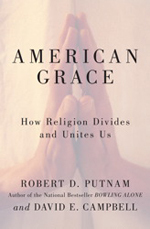
, John Cardinal O’Hara, C.S.C., Associate Professor of Political Science at the University of 91Թ, and Robert Putnam of Harvard University are the 2011 recipients of the Woodrow Wilson Foundation Award for their book “.”

The American Political Science Association awards the prize annually to the best book from the past year on government, politics or international affairs.

“Bob Putnam and I set out to do something that is increasingly rare: write a serious but engaging book for both a scholarly and public audience,” Campbell says. “This award is especially gratifying, since it indicates that our work ‘passes muster’ among our academic colleagues.”

American Grace

For “American Grace,” Campbell and Putnam conducted some of the most comprehensive studies ever conducted about religion in American society and examined the ways religion influences the nation’s political and civic life.

One of the most interesting findings from the American Grace study, Campbell says, was that mainline Protestants now make up only 14 percent of the population—and are now outnumbered by the 17 percent of the population with no religious affiliation at all.

Additionally significant were the discoveries that Americans have begun switching their religion to match their politics—rather than the other way around—and that most Americans (including those who are secular) believe that people who are personally religious are more trustworthy and make better leaders.

“The book deepens our understanding in a wide variety of ways,” the Woodrow Wilson Award committee notes. “Its analysis brings richness of detail and social scientific rigor to some of our most important and enduring political questions.”

It adds, “We applaud the authors’ painstaking diligence in so thoroughly cross-checking their findings and also their capacity to present the results of their work in such readable prose and clear graphic form.”

91Թ President Emeritus , calls the book a “must-read” for anyone interested in the role of religion in America’s civic life.

“Their findings from rich case studies and sophisticated analysis of original national surveys will be of great value to academics, politicians, community organizers, religious and non-religious leaders, and American citizens who wonder about why and how religion continues to matter so much in American civic and private life,” he says.

“American Grace” was also honored by the Religion Communicators Council, which awarded Campbell and Putnam its 2011 Wilbur Award for the Best Nonfiction Book.

Campbell is the founding director of 91Թ’s and focuses his research on religion, politics and civic engagement. He is the author of “Why We Vote: How Schools and Communities Shape our Civic Life” and editor of “A Matter of Faith: Religion in the 2004 Presidential Election.”

With funding from the National Science Foundation, Campbell is beginning a new project with Geoffrey Layman, associate professor of political science at 91Թ, and John Green at the University of Akron, to study the political implications of the rise in secularism.


Originally published by Joanna Basile at on September 09, 2011.

]]>
Joanna Basile
tag:news.nd.edu,2005:News/22052 2011-05-24T16:51:00-04:00 2021-09-03T21:02:03-04:00 Thomas Noble wins 2011 Otto Gründler Book Prize Thomas Noble

91Թ historian has won the 2011 for his work “Images, Iconoclasm, and the Carolingians” (University of Pennsylvania Press, 2009).

This award is given annually to the author of a book or monograph “in any area of medieval studies that is judged by the selection committee to be an outstanding contribution to its field.”

“Thomas Noble’s achievement in this magisterial book is to set the particular issues of iconoclasm, East and West, in a big historical framework that makes sense,” notes the prize committee.

“Readers are following a master historian as he plies his craft, squeezing recalcitrant documents for meaning, challenging conventional wisdom on old topics, and changing the way they will now view sacred images in the medieval world.”

A professor and chair in the College of Arts and Letters’ and the former director of the , Noble says “” focuses on the controversies surrounding religious art from approximately A.D. 300 to A.D. 900.

Images, Iconoclasm, and the Carolingians

“I grapple with historical questions, ideological questions, theological questions, and art historical questions,” he says. “The book reaches across a whole group of traditional academic disciplines.”

Noble says the book examines a time when the Christian church was just learning how to talk about the visual arts—while devotees were also grappling with how to discuss God and essential doctrines such as the Trinity, sin and redemption.

“[Christian art] evoked pleasure and approval in some circles, and horror and disapproval in other circles,” he says. “It became a matter of considerable contention.”

This trend, Noble says, continues into modern day, as many discussions about art have nothing to do with aesthetics, quality or the method of production. More frequently, politics, values and religion fuel such conversations.

“When you find a society arguing about art, listen carefully. They’re not going to be talking about art—they’re going to be talking about lots of other things,” he says.

“So, I simply backed up 1,000 years and eavesdropped on people arguing about art and asked: What are they actually talking about here? What’s really going on?”

Winning the Gründler prize is a real honor, Noble says. “Basically, in the whole field of medieval studies, there are two big book prizes: the Gründler prize and the Haskins Medal. So, to win one of these is wonderful.”

Noble’s accomplishment also marks the first time the Gründler prize has been awarded twice to faculty from one university—let alone a single department in back-to-back years. His colleague John Van Engen, the Andrew V. Tackes Professor of History, won the for “Sisters and Brothers of the Common Life: The Devotio Moderna and the World of the Later Middle Ages” (University of Pennsylvania Press, 2008).

“We’re on a roll,” says Noble, who accepted the Gründler prize on May 13 at the 46th annual International Congress on Medieval Studies.

Currently vice president of the , Noble will become the organization’s president in 2012. He was also recently awarded his third and named winner of the — the highest teaching honor in 91Թ’s .

In addition to his work on religious art and the Carolingians, Noble specializes in the early medieval era, late antiquity, the papacy and the city of Rome. His books include “Charlemagne and Louis the Pious: Lives by Einhard, Notker, Ermoldus, Thegan, and the Astronomer” (Penn State Press), and “From Roman Provinces to Medieval Kingdoms” (Taylor and Francis Group).

His next book project, “Rome in the Medieval Imagination,” will explore how writers from Constantine to Petrarch talked about Rome.


Originally published by Joanna Basile at on May 24, 2011.

]]>
Joanna Basile
tag:news.nd.edu,2005:News/19291 2011-04-11T14:49:00-04:00 2021-09-03T21:01:54-04:00 TEDx event to center on innovation and the humanities tedxnd_logo_2

Discovering, collaborating on, and promoting new ideas in the humanities is the focus of the first-ever at the University of 91Թ, set for Friday (April 15).

“This is going to create an exciting, dynamic community of people on campus interested in finding creative ways to solve problems and share information,” says primary organizer Sean O’Brien, assistant director of the Keough-Naughton Institute for Irish Studies.

Founded in 1984, began as an annual conference for professionals in the technology, entertainment and design fields to share “ideas worth spreading” through engaging speeches, all of 18 minutes or less. Official TED conferences are still held annually in California and the United Kingdom, but smaller “TEDx” events, like the one at 91Թ, are now taking place all around the globe.

“TEDxND is a local, self-organized event that brings members of the 91Թ community together to share and celebrate the spirit of innovation native to the ways we teach and research the humanities here,” O’Brien says.

Titled “Innovation and the Humanities,” TEDxND involves a large group of faculty, students and staff contributing at every level—and the presentations are designed to spark connections among attendees and inspire deeper and ongoing discussions on a wide range of topics.

This event will focus specifically on the humanities, O’Brien says, but “the TEDx format offers a great way to showcase all kinds of new ideas, from science and engineering to arts and entertainment.”

In addition to O’Brien, the event speakers include:

  • Paul Baranay—undergraduate student, College of Science, co-editor of
  • Christine Burgess—Robinson Community Learning Center volunteer and performing arts coordinator
  • Matt Cashore—University photographer, AgencyND
  • Nitesh Chawla—assistant professor, Department of Computer Science and Engineering
  • Chris Clark—assistant director, Kaneb Center for Teaching and Learning
  • Kyle Collins—undergraduate student, College of Engineering
  • Ann-Marie Conrado—associate professional specialist, Department of Art, Art History and Design
  • Dan Jacobs—undergraduate student, Department of Art, Art History and Design
  • P.J. Mathews— lecturer, University College Dublin School of English, Drama and Film,
  • Patrick McCabe—Keough visiting professor, Keough-Naughton Institute for Irish Studies
  • Nicole McLaughlin—University Writing Program
  • Nuala Ní Dhomhnaill—visiting Naughton fellow, Department of Irish Language and Literature
  • Brian Ó Conchubhair—associate professor, Department of Irish Language and Literature
  • Ziad Abdel Tawab—Cairo Institute for Human Rights Studies
  • Leah Wescott—founder, The Cronk of Higher Education


TEDxND will take place in the Andrews Auditorium in Geddes Hall. Tickets are free, but is required. The conference is sponsored by the , the , , , and .

“I hope the event will be the first of many,” O’Brien says, “and that TEDxND will expand beyond the humanities to incorporate the innovations going on all around us in the 91Թ community.”

Originally published by Joanna Basile at on April 08, 2011.

]]>
Joanna Basile
tag:news.nd.edu,2005:News/16658 2010-09-09T12:50:00-04:00 2021-09-03T21:01:20-04:00 Student play explores migrant issues, energizes London community "Child of the Migrant Moon"

During the spring semester, students studying abroad at the University of 91Թ’s brought the mission of the University to life in a local school play that was far from the typical gymnasium fare.

Led by , a professor in 91Թ’s Department of , the undergraduates helped bring to the stage the stories of migrant families as seen from the perspective of the children at Sacred Heart Primary School.

“The boundaries between culture and country were completely dislodged,” student Felicia Aguirre says. “Sometimes, in a country where everything feels unfamiliar—like the migrants experiencing their new homes—all a person has to do is sit and talk to others. Despite language, dress and cultural customs, humanity stays consistent in many different ways, such as the way in which we relate to others.”

The purpose of the theater class, “Migration Issues in Contemporary British Theatre: Theatre and Social Concerns,” was to give students an “appreciation of theater as an agent of social change,” says Juan, who has taught courses in South Bend in which students worked with the community on issues such as immigration and juvenile detention.

This past spring, with the help of the , students in his London class were able to work with children at Sacred Heart to put their experiences into words—and live performance. The Catholic school is located in Battersea, an ethnically diverse district in south London, and so brings together myriad races, cultures, and ethnicities. For approximately 75 percent of the students, English is a second language. In this one school, Juan says, “there are 80 languages spoken and 120 nationalities of origin.”

“We may be in London,” Aguirre says, “but we get to see Italy, Africa, the Philippines, etc., through the eyes of children.”

The first-hand accounts were woven into a play, directed by Juan, titled “Child of the Migrant Moon.” With students from his class, the children and their families acted out their personal migration stories, lending a powerful authenticity to the joys, challenges, and troubles they faced as people living on the edge of society.

The play energized and brought together the local community, and was featured in the local Battersea newspaper. This reinforces how Juan feels both about teaching and learning—that it does not stop at the classroom door.

“The mothers said they would like to perform the piece again, and Jared Brading, the school headmaster, said he is thinking of doing a repeat for the city council next year,” Juan says. “Indeed, I have come out of this experience—as my class has—with fond memories and, even more so, a new knowledge not only to keep for ourselves but to contribute to the world.”

]]>
Joanna Basile
tag:news.nd.edu,2005:News/16027 2010-06-30T14:34:00-04:00 2021-09-03T21:01:08-04:00 John Van Engen wins Gründler Book Prize in Medieval studies Van Engen, John

, Andrew V. Tackes Professor of History at the University of 91Թ, has been awarded the 2010 Otto Gründler Book Prize for “Sisters and Brothers of the Common Life: The Devotio Moderna and the World of the Later Middle Ages” (University of Pennsylvania Press, 2008). The honor is given each year to an author whose work in any area of Medieval studies is judged to be an outstanding contribution to the field.

“Drawing upon an unrivaled knowledge of writings by and about the Modern Devout, Van Engen succeeds in giving context to the humanity, the urban and religious community, even the spiritual longings of this vanished experiment in communal living, set amid the rich complexity of Dutch urban life,” the prize citation notes.

Adds Thomas Noble, chair of 91Թ’s Department of History, the book is based on “meticulous research in numerous archives and draws upon little-known writings in Middle Dutch. The Gründler prize, along with others garnered by this book, have established Van Engen as a premier interpreter of Medieval religious life.”

Widely recognized for his research in Medieval studies, Van Engen has received two previous honors for “Sisters and Brothers of the Common Life.” In 2009, he was the recipient of the John Gilmary Shea Prize and the Philip Schaff Prize, both of which acknowledged the significance of his work on a topic shrouded in uncertainty for hundreds of years.

In addition to his study of the Modern Devout and of religious and intellectual life during the Middle Ages, Van Engen’s research focuses on several other areas of importance in Medieval history. Some of his previous books and essays have centered on women’s writing, schools and universities, canon law, and notions of reform. He also is an active translator of Latin and Middle Dutch texts.

Van Engen joined the 91Թ faculty in 1977, has been a visiting professor at Harvard University, and has held research fellowships at Princeton University and the Institute for Advanced Study in Princeton, N.J. He received his award in May of this year at the Kalamazoo International Congress on Medieval Studies.

The Gründler prize was established in 1997 by Diether Haenicke, former president of Western Michigan University, in honor of Otto Gründler and his commitment to the field of Medieval studies. The 2010 prize considered all books published in 2008, and scholars from around the world were eligible for nomination.

]]>
Joanna Basile