tag:news.nd.edu,2005:/news/authors/kate-cohorst tag:news.nd.edu,2005:/latest 91Թ | 91Թ | News 2012-11-07T14:00:00-05:00 91Թ gathers and disseminates information that enhances understanding of the University’s academic and research mission and its accomplishments as a Catholic institute of higher learning. tag:news.nd.edu,2005:News/35386 2012-11-07T14:00:00-05:00 2021-09-03T21:04:07-04:00 91Թ offers new study abroad program in Paris Arc de Triomphe in Paris Arc de Triomphe in Paris

Paris, the legendary City of Lights, is the newest destination for University of 91Թ students who want to study abroad.

“We are delighted to offer this new opportunity for students seeking to spend a full year or one semester in Paris beginning in 2013-14,” says , a professor of French in the . “The new exchange program at the will expand existing offerings by allowing advanced students in the humanities to enroll directly in courses with French students at one of the youngest and most dynamic universities in Paris.”

Founded in 2007, Université Paris Diderot enrolls 26,000 students at its campus on the banks of the Seine in southeastern Paris. This neighborhood near the Bibliothèque Nationale de France has a distinct identity all its own—many residents are ethnic Chinese refugees from the former French colony of French Indochina (modern-day Vietnam, Cambodia and Laos) who speak Cantonese, Vietnamese and Khmer as well as French.

91Թ students in the new Paris program will study in the university’s College of Letters, Arts and Cinema, which offers a broad variety of courses in French language, linguistics, literature, art history and film studies “from an excellent group of teacher-scholars whose profile compares well with ND faculty,” Douthwaite says. It may be possible to take courses in other fields as well.

Université Paris Diderot Université Paris Diderot

The program is meant to complement, not replace, 91Թ’s other study abroad opportunities in France, including an intensive social sciences track at in Paris and the University’s popular, long-standing program at the in Angers.

Most students in the Angers program study at an institute within the university that is designed specifically to serve the needs of foreign language learners. As such, the Angers program is particularly well-suited for second-year students with intermediate levels of French, Douthwaite says, while the new Paris program is tailored to more advanced language students.

“The broad variety of humanities course offerings makes Université Paris Diderot a ‘must’ for advanced-level French majors,” she says. “They will be able to attend a well-regarded French university and take classes with native speakers, all the while doing upper-level coursework that is recognized for the major and supplementary major in French.”

Paris has been a capital of high style, art, cuisine and culture since at least the 17th century and has welcomed many famous American writers, artists and performers over the years, Douthwaite notes. With hundreds of museums, libraries, archives and world-famous monuments—as well as the premier sites of French government, education and finance—the city has much to offer advanced students seeking fluency, cultural immersion and intensive research opportunities.

The deadline to apply for study abroad programs is Nov. 15 (Thursday).

Contact: Julia Douthwaite, jdouthwa@nd.edu

Originally published by Kate Cohorst at on Nov. 6, 2012.

]]>
Kate Cohorst
tag:news.nd.edu,2005:News/34014 2012-10-04T10:00:00-04:00 2021-09-03T21:03:59-04:00 Historian Brad Gregory wins inaugural book prize Brad Gregory Brad Gregory

University of 91Թ historian has been awarded the inaugural for his latest book, “.”

Presented by Indiana Wesleyan University’s (JWHC), the prize recognizes a published book’s ability to reflect the highest ideals of Christian scholarship.

“Gregory’s wide-ranging and synthetic study is a model of Christian scholarship that challenges reductionist tendencies among historians and illuminates the character and genealogies of some of the fundamental dysfunctions of contemporary society,” says David Riggs, JWHC executive director.

“As the inaugural recipient of the Aldersgate Prize, ‘The Unintended Reformation’ has set an extremely high standard for the future years.”

Gregory, the Dorothy G. Griffin Collegiate Chair in Early Modern European History, says he was delighted by the honor.

“I am sure that there were many other worthy books from among the approximately 80 nominated, which makes me all the more grateful to have ‘The Unintended Reformation’ singled out in this way,” he says. “It is gratifying to have colleagues recognize the achievement of a book that is ambitiously revisionist, challenging and provocative.”

"The Unintended Reformation: How a Religious Revolution Secularized Society" by Brad Gregory

Gregory’s research traces the relationships among religion, science, politics, morality, capitalism and consumerism, and higher education from the Middle Ages through the Reformation era to the present.

“Because 16th- and 17th-century Christians could not agree about what was true, right and good, modern individuals were eventually permitted to determine these things for themselves,” Gregory says. “And as long as most people still continued to agree about basic moral views and political assumptions despite their religious differences, such politically protected individual freedoms could contribute positively to the robust functioning of a democratic society.”

But, Gregory argues, fundamental disagreements today about how we should live and the lack of a shared view of the common good — due, in part, to the proliferation of divergent secular and religious views — tends to cause friction and faction when those freedoms are exercised.

In notifying Gregory of his award, Indiana Wesleyan University Provost David Wright said, “Our selection committee believes your book best ‘demonstrates how rigorous Christian thought is brought to bear on disciplinary or interdisciplinary forms of scholarly engagement.’ Our committee members noted their significant respect for both the breadth and the depth of the details defining your work.

“Summing up many of their perspectives, one member of the committee went so far as to remark that your work was ‘magisterial’ in nature.”

Gregory will receive a monetary prize, an engraved glass sculpture from Kokomo Opalescent Glass, and the opportunity to offer the keynote address at the April 18, 2013, IWU Faith and Learning Luncheon.


Originally published by Kate Cohorst at on Oct. 3, 2012.

]]>
Kate Cohorst
tag:news.nd.edu,2005:News/32195 2012-07-27T12:50:00-04:00 2021-09-03T21:03:37-04:00 Political scientist Monika Nalepa wins second book prize Monika Nalepa

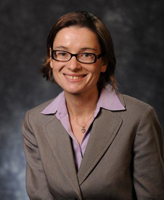
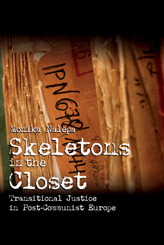
University of 91Թ Assistant Professor has won the 2012 Leon D. Epstein prize for “” (Cambridge University Press).

The book examines the strategies behind decisions on whether and how to penalize members of the former authoritarian regimes in Poland, Hungary and the Czech Republic as they transitioned to democracy, as well as the origins of the political parties that emerged in those newly democratic countries.

This is the second win in two years for Nalepa. “Skeletons in the Closet” also won the 2011 Best Book Award from the APSA’s Comparative Democratization section.

Presented by the APSA’s Political Organizations and Parties section, the Epstein award honors a book published in the last two calendar years that makes an outstanding contribution to research and scholarship on political organizations and parties.

“The sheer size and scope of Nalepa’s research design stood out from the very beginning of the evaluation process,” says Mark Brewer, chairman of the prize committee and associate professor of political science at the University of Maine.

“Our committee was even more impressed that she was able to actually carry out the project and produce such significant results. The word seminal was used more than once in our discussions of Nalepa’s important piece of work.”

Nalepa says she is honored — and inspired — by the success of her first book. “It is a great motivation to write my second book, but it has also encouraged me to bring my research to the classroom. I think if two different sections of the APSA think it is worth reading, it will stimulate good discussions.”

"Skeletons in the Closet: Transitional Justice in Post-Communist Europe," by Monika Nalepa

Nalepa, who was born in communist Poland and grew up there during the shift to democracy, says “Skeletons in the Closet” was her attempt to resolve a question that had long perplexed her — why Communist officials had been willing to negotiate peaceful transitions in most East European countries.

“Why would autocrats step down from power peacefully, when what awaits them is punishment?

“After a number of research trips to post-communist Europe,” she says, “I finally found a plausible solution, which is that members of the former opposition had actually collaborated with the Communists a lot more than was previously thought. The new leaders shied away from transitional justice because in the process of doing so, they could expose skeletons in their own closets. Because Communists knew that, they were willing to step down peacefully.”

In the book, Nalepa draws on archival evidence, statistical analysis and extensive interviews to support her argument. “I feel very fortunate that I was able to talk to some of the key players in the transition from communism while they were still alive,” she says.

After just completing a yearlong fellowship as a visiting associate research scholar at the Center for the Study of Democratic Politics in Princeton University’s Woodrow Wilson School of Public and International Affairs, Nalepa says she is eager to return to the classroom at 91Թ.

“This is going to be a great opportunity to actually incorporate the book into my teaching,” says Nalepa, who will teach an Introduction to Comparative Politics class for first-year students in the fall and a similar course for upper-level students in the spring.

The course, she says, will focus on the political forces at work in countries other than the United States, from post-Communist Europe to the Middle East, Asia and Africa.

“I want to increase the students’ awareness of puzzling events that call for answers in other countries around the world,” she says.

Nalepa is also at work on her next book project, which explores trends in legislative politics in post-communist Europe. “It is about how parties and party political organizations respond to changes in the electorate, how they conduct recruitment, how they set the policy agenda in response to that, and how they discipline their members.”

She is also interested in the origins of such parties and how formerly underground opposition groups and members of ousted authoritarian regimes organize and begin to compete for power in newly democratic countries.

“How do they transform themselves into viable, effective parties that are capable of ruling?”

College of Arts and Letters undergraduates will be able to play a role in her ongoing research, says Nalepa, who enlisted 91Թ sophomore and native Polish speaker Julia Banasikowski to help code some of her survey data last spring.

“That experience has brought me to realize that I can I can incorporate working with students into my research and in doing so expose them to the challenges, but also rewards of academic research,” Nalepa says.

“I look forward to working with more students such as Julia after I return to campus in August.”


Originally published by Kate Cohorst at on July 24, 2012.

]]>
Kate Cohorst
tag:news.nd.edu,2005:News/31983 2012-07-11T14:40:00-04:00 2021-09-03T21:03:34-04:00 Economist Joseph Kaboski receives 2012 Frisch Medal Notre Dame economist Joseph Kaboski, winner of the 2012 Frisch Medal

University of 91Թ economist has been awarded the for a paper evaluating the impact of microfinance, widely used as a tool to fight poverty in developing countries.

First awarded in 1978, the Econometric Society presents the Frisch Medal biennially for the best empirical or theoretical applied paper published in the journal Econometrica within the previous five years.

The Frisch medal is not only one of the top three prizes in the field of economics, but also the most prestigious “best article” award in the profession, says Rich Jensen, Gilbert F. Schaefer Professor of Economics at 91Թ and chair of the .

“Econometrica is the second highest ranked journal in economics and the most important one for the development and application of cutting-edge methodology,” Jensen said. “Joe’s accomplishment demonstrates that modern, mainstream economists not only care about social justice, but also understand that the best way to formulate social policy is to use state-of-the-art methods to determine which policies actually are effective in achieving their objectives.”

Kaboski is the David F. and Erin M. Seng Foundation Associate Professor of Economics in 91Թ’s and a fellow at the University’s , where he is involved in the . Kaboski is also an affiliated researcher with the (CFSP).

He shares the award with his co-author and former professor Robert M. Townsend, who is Elizabeth and James Killian Professor of Economics at the Massachusetts Institute of Technology and faculty director of CFSP. Townsend is the only person to have won the Frisch Medal twice.

Kaboski and Townsend — one of the largest government microfinance initiatives of its kind — to evaluate and understand the benefits and disadvantages of such interventions.

Thailand’s goal was to increase credit and stimulate the economy, using government funds to create nearly 80,000 village banks. Kaboski and Townsend’s study of the program suggests that microfinancing can have varying results for participants and may not be the most cost-effective use of funds for many situations.

The resulting paper, “,” ran in the September 2011 issue of Econometrica. The selection committee singled the paper out for “its combination of rigorous theory and careful econometrics to produce important insights into a major development policy.”

Kaboski says he was “simply shocked” to learn that he had won.

“For a little while, I thought maybe it was a friend of mine pranking me,” he says. “It was only after I conferred with my co-author Rob that I believed it was real. He was equally shocked even though he’d won it before.

“I had just been to a conference in Cyprus, and a plenary speaker spoke well of the paper in his talk, so I was hopeful that people were starting to take notice, but this was way beyond any expectation.”

Kaboski, who joined the 91Թ faculty in 2010, received his Ph.D. from the University of Chicago. His research focuses on growth, development and international economics, with an emphasis on structural change, finance and development, schooling and growth, microfinance, explaining international relative price patterns, and the role of inventories in international trade.

His current research includes several studies that build on the winning Econometrica paper. In one of his projects, Kaboski is working with a 91Թ graduate student and a former 91Թ undergraduate student to evaluate a privatized delivery mechanism for microfinance services among the very poor in Kenya, Uganda and Tanzania. “We’re essentially comparing a program where you teach to fish rather than continuing to give fish, and we’re seeing that the entrepreneur method — the teach-to-fish method — is not only more cost effective but more effective overall,” he says.

A second paper, Kaboski says, looks at the potential macroeconomic effects of scaling up microfinance. “This is important because poverty isn’t really solved in a wide-scale way by offering social services but by getting whole countries to grow and develop. We’re showing that microfinance, when offered on a large scale, would be much less effective in leading to aggregate development but much more effective as a redistributive policy, since it would lead to rising wages. These higher wages benefit all the workers, not just people who want to be entrepreneurs.”

With funding from the Kellogg Institute, Kaboski is also working on a pilot project in Uganda this summer that uses a microfinance experiment to understand the demand for microsavings.

“Is most savings meant as a precaution against bad events or are people saving to become entrepreneurs and invest? Like the Econometrica paper, this project is methodologically innovative: combining structural theory with experimental data.”


Originally published by Kate Cohorst at on July 11, 2012.

]]>
Kate Cohorst
tag:news.nd.edu,2005:News/31840 2012-07-02T14:00:00-04:00 2021-09-03T21:03:33-04:00 Anne García-Romero invited to National Playwrights Conference Anne García-Romero Anne García-Romero

, an assistant professor at the University of 91Թ, has been accepted to the prestigious this summer.

One of just eight playwrights selected out of nearly 1,000 applicants, García-Romero will spend the month of July at the Eugene O’Neill Theater Center in Connecticut, working with acclaimed theater professionals to workshop her play “Provenance.” Also among the honorees is 91Թ English alumna Theresa Rebeck, class of 1980, an award-winning playwright and creator of the television show “Smash.”

The Eugene O’Neill National Playwrights Conference is one of the top playwriting development programs in the nation and is known for “developing new American plays that often go on to have a successful trajectory in the U.S. theater,” García-Romero says.

“The O’Neill has a high national profile — because of the history of the conference, because of how selective it is — so this opportunity is a huge honor.”

Inspired by the works of Mexican painter Martín Ramírez, “Provenance” is the story of two Mexican-American sisters living in Los Angeles, García-Romero says. “They learn that their Mexican great-grandfather was a painter whose work is now very valuable. They receive a stolen painting of his and have to decide — are they going to sell or keep the painting?”

At the Eugene O’Neill Theater Center, García-Romero will work with Los Angeles-based director Juliette Carrillo, Washington, D.C.-based dramaturg John Baker and a company of New York actors. Together, she says, this team will explore the text of the play, reading it aloud, discussing the script, asking questions and making suggestions. “Then at some point we’ll get an idea of how this play works with physical bodies in time and space.”

Because the final public presentation is script-in-hand, García-Romero will be able to respond to these experiences by adding or changing a scene, rewriting lines or making other revisions right up to the last day.

“This opportunity is really about exploring a new script and working with talented and experienced theater artists, who can give the playwright feedback and guidance,” she says.

“Many influential theater artists are a part of the support and the organization of the O’Neill, so for me as a playwright it’s also significant because it allows my play to join a larger national conversation.”

A scene from the student-driven workshop production of Anne Garcia-Romero's "Provenance." A scene from the student-driven workshop production of Anne García-Romero’s “Provenance.”
García-Romero joined the in fall 2010 as part of the University’s inaugural class of . The program, she says, was integral to the development of “Provenance.”
“I wouldn’t have written the play right now if it hadn’t been for the Moreau, and I know the play wouldn’t be as far along in the writing process as it is without the experience here at 91Թ. I’m sure of that.”

During the first year of her fellowship, García-Romero conducted research in Mexico, New York and California, then wrote the initial script and held a first table reading of the play. After more revisions, rehearsals began for a student-driven workshop production of “Provenance” in fall 2011 in the Regis Philbin Theater, which gave her an opportunity not only to see the script come to life for the first time but also to experience an audience’s reactions.

“I accomplished so much in the student workshop production,” García-Romero says. “I’m going into this summer experience at the O’Neill with a script that I feel is really so much stronger.”

The happy ending to her two-year Moreau fellowship, she says, was an invitation to join the FTT faculty as an assistant professor.

“I knew from the start that 91Թ was a good fit for me in terms of the work that I do — as a playwright and a scholar. My department here allows me to be both and recognizes my work in each area. There’s such a remarkably supportive environment, the resources are outstanding, and I’m right by Chicago, which is a theater hub.”

A New Dramatists alumna and author of 25 plays, García-Romero holds a Ph.D. in theater studies from University of California, Santa Barbara. She is currently working with actor/director Andy Garcia to adapt one of her earlier works, “Mary Peabody in Cuba,” into a screenplay and is finalizing a book called “Contemporary Latina Theatre: Transcultural Voices.”

Her book, she says, is a study of five award-winning Latina playwrights in the 21st century, many of whom come from multicultural backgrounds. “I consider plays from each of these playwrights and how their work reflects intersections of cultures — and how this informs their exploration of identity, spirituality and theatrical experimentation.”

In addition to the Eugene O’Neill National Playwrights Conference, García-Romero is preparing for the world premiere of her play “Paloma” at the National Hispanic Cultural Center this summer — and getting ready to teach two fall courses in 91Թ’s .

One course will focus on contemporary Latina playwrights; the other, called “New Play Process,” will engage students with working playwrights who have offered to share their unpublished plays with the class.

She also plans to continue ND Playwrights Now, a program she began in spring 2011 in which undergraduate playwriting students have selections of their work performed on stage before a live audience.

“It’s really been a privilege to work with the students here at 91Թ,” says García-Romero, who taught both playwriting and script analysis while a Moreau fellow. “The students are very engaged in the learning process.

“My students have been so willing to take risks in their creative and intellectual growth and have a sincere desire to grow as both scholars and artists. I’m grateful for the opportunity to continue to contribute to the 91Թ community.”

Originally published by Kate Cohorst at on June 18, 2012.

]]>
Kate Cohorst
tag:news.nd.edu,2005:News/30602 2012-05-01T15:45:00-04:00 2021-09-03T21:03:15-04:00 José Limón to direct 91Թ's Institute for Latino Studies José E. Limón

, one of the country’s foremost scholars of Latino literature, has been appointed to lead the University of 91Թ’s (ILS). As the new director of ILS, he will hold the Julian Samora Chair in Latino Studies.

, a leading expert on Latino Catholicism, will serve as executive director of the institute, which is housed in the . Both appointments take effect July 1.

Established in 1999, the Institute for Latino Studies supports a variety of interdisciplinary initiatives to foster understanding of the U.S. Latino experience.

“I am extraordinarily pleased and grateful for the opportunity to lead the Institute for Latino Studies to even greater prominence and to place it it at the center of the intellectual life at 91Թ,” Limón says. “I look forward to working with Executive Director Timothy Matovina as well as the College of Arts and Letters and its departmental chairs.”

Limón is the 91Թ Professor of American Literature in the Department of English and author of three major books in the field of Latino studies: “American Encounters: Greater Mexico, the United States and the Erotics of Culture,” “Dancing with the Devil: Society and Cultural Poetics in Mexican-American South Texas” and “Mexican Ballads, Chicano Poems: History and Influence in Mexican-American Social Poetry.” The University of Texas Press is set to publish his fourth book, “Américo Paredes: Culture and Critique,” in fall 2012.

Limón’s academic interests are varied and include cultural studies, Latino literature, anthropology and literature, Mexicans in the United States, U.S.-Mexico cultural relations, critical theory, folklore and popular culture. He also teaches and writes on the literature of the U.S. South.

Theologian Timothy Matovina, a leading expert on Latino Catholicism, will serve as executive director of 91Թ's Institute for Latino Studies

Matovina, a professor in the Department of Theology, is completing a 10-year term as director of the , also housed in the College.

His new book, “Latino Catholicism: Transformation in America’s Largest Church,” published by Princeton University Press, closely considers the five-century-long history of Latino Catholics in America and how that history has affected them and their Church.

“I look forward to working with my colleague José Limón to build on the strong foundation that Gilberto Cárdenas has laid at the Institute for Latino Studies,” Matovina says.

In announcing the new appointments, College of Arts and Letters Dean also praised the work of Cárdenas, who has led ILS since its creation in 1999. An assistant provost and professor of sociology, Cárdenas is a distinguished scholar of Mexican immigration and Latino art.

“Gil Cardenas’s achievement is to place 91Թ at the center of Latino studies in the U.S. through his visionary leadership of multiple programs, in fields as diverse as Latino health, immigration and Latino art,” McGreevy says. “We are deeply grateful for his efforts.”

Latino studies is a key component of the academic mission of the College — and the University, McGreevy says. “The stakes for 91Թ in Latino studies are unusually high. Latinos are already a central part of American culture, business and politics, and this influence — important for all Americans, not just Latinos — will only grow in coming decades. At the same time, Latinos will soon number half of American Catholics, a development reflected in 91Թ’s rapidly growing number of Latino students.

“I look forward to working with two eminent scholars — José Limón and Timothy Matovina — in helping us to become preeminent in this area. "

Originally published by Kate Cohorst at on May 1, 2012.

]]>
Kate Cohorst
tag:news.nd.edu,2005:News/28564 2012-01-26T09:00:00-05:00 2021-09-03T21:02:50-04:00 Mark Roche honored for "Why Choose the Liberal Arts?" Mark Roche

, formerly dean of the at the University of 91Թ, has been named winner of the 2011 Frederic W. Ness Book Award from the (AAC&U). The Ness award is given annually to the book that best illuminates the goals and practices of a contemporary liberal education.

Roche’s winning book, “” (University of 91Թ Press, 2010), “outlines the benefits of a liberal education for all students striving for success in today’s tough economy,” says Pomona College President David W. Oxtoby, the Ness Book Award committee chair.

“The book is clearly written, nicely crafted into four thematically organized chapters, well argued in a reasonable and balanced manner, and convincingly supported by a substantial body of research,” Choice magazine states in its May 2011 review of the book. “It will prove valuable reading for anyone concerned with the state of the modern university and the future of liberal arts.”

The prize was presented on Jan. 26 at the AAC&U’s annual meeting in Washington, D.C.

“I am humbled by the award and elevated that several aspects of a that are particularly valued at an institution such as 91Թ—engaging the great questions as an end in itself, forming character, and developing a sense of vocation—have been endorsed in this way,” says Roche, the Rev. Edmund P. Joyce, C.S.C. Professor of German Language and Literature and a concurrent professor of philosophy.

“Beyond developing the practical and economic value of a liberal arts education, I sought to raise our expectations for higher education today.”

"Why Choose the Liberal Arts?"

In his book, Roche develops three overlapping arguments for a strong liberal arts education: first, the intrinsic value of learning for its own sake, including exploration of the profound questions that give meaning to life; second, the cultivation of intellectual virtues necessary for success beyond the academy; and third, the formative influence of the liberal arts on character and on the development of a sense of higher purpose and vocation.

“Even if my second chapter, on the practicality of a liberal arts education for future employment and leadership opportunities, may resonate the most with students and their parents, it is important to remember that it is not the only rationale for having such an education,” Roche says. “If we reduce the purpose of education to that of getting a job, we have failed to adorn it with higher meaning. Even more than awakening a deeper meaning in work, a liberal arts education gives graduates a direction for life.”

Finding a vocation begins with the great questions, Roche says. “What is of highest value? What are the most pressing challenges of the age? Who am I? What ought I do with my life? These questions form the core of a liberal arts education.”

And it is through the study of such questions, Roche says, that liberal arts students develop vital skills in reading, writing, speaking, and critical thinking “that will allow them to flourish, whatever career paths they might choose or life choices they might make over time.”

Roche is the author of seven books, including “Why Literature Matters in the 21st Century” and “The Intellectual Appeal of Catholicism and the Idea of a Catholic University.” He also served as dean of 91Թ’s College of Arts and Letters from 1997 to 2008.


Originally published by Kate Cohorst at on January 26, 2012.

]]>
Kate Cohorst
tag:news.nd.edu,2005:News/27459 2011-11-17T11:00:00-05:00 2021-09-03T20:54:58-04:00 91Թ medievalist receives major NEH grant National Endowment for the Humanities

University of 91Թ Professor and his team have been awarded a National Endowment for the Humanities (NEH) grant to produce the first critical edition of a key work by medieval theologian and philosopher John Duns Scotus.

The three-year, $300,000 grant was one of the largest awarded by the NEH this year, according to Emery, a professor in the (PLS) in 91Թ’s and the University’s .

Beatified by Pope John Paul II in 1993, Scotus is “one of the most important of all medieval philosophers and theologians, on the same level with Thomas Aquinas,” Emery notes, adding that Scotus is perhaps best known for his work defending the doctrine of the Immaculate Conception of Mary against its many critics in the Middle Ages.

Scotus’ arguments about Mary, Emery says, “were crucial for the Church’s authorities to accept this as a teaching of the Catholic faith.”

In universities and in schools of religious orders, Peter Lombard’s “Sentences” was “the textbook for teaching theology from the 13th through the 16th centuries,” Emery says, “and anyone who wanted to get a doctorate in theology had to write a commentary on the questions it contained.”

Scotus first did so while at Oxford University, in a version known as the “Ordinatio,” which he continued to expand upon throughout his life. The Franciscans at the International Scotistic Commission in Rome have been working since 1950 to prepare a critical edition of the "Ordinatio"—and are still far from finished, Emery says.

Kent Emery Jr.

“These works are huge, and they are many volumes,” he explains. “It’s become apparent they will never be able to do all of Duns Scotus’ other works, the most important of which were done after he left Oxford and was appointed to the University of Paris, which was the most prestigious of all theology faculties.

“So the Scotistic Commission in Rome agreed that all of the Parisian works, including his lectures on the “Sentences” that he gave there, should be done by our American team.”

The NEH grant establishes the Scotistic Commission of America at 91Թ and helps fund its first major project on Scotus’ “Sentences” lectures in Paris.

Led by Emery and his co-director, Catholic University of America’s Timothy B. Noone, the editorial team includes four scholars from the 91Թ College of Arts and Letters: Philosophy Professor ; PLS Assistant Professor ; and and , both Ph.D candidates from the Medieval Institute.

While Scotus’ Parisian lectures on the “Sentences” are largely unknown, they “represent his most mature, authoritative teaching,” Emery says.

To produce the first critical edition of this work, Emery and his team must gather and compare dozens of medieval manuscripts containing lecture notes written by Scotus and his students, analyze and translate them, and find and explain all of the references to the teachings of earlier scholars such as Aristotle and Augustine.

“This is a long and very patient work, but it’s at the center of medieval studies,” Emery says, “because everything in medieval studies is in handwritten books, and the ones that survived are scattered in libraries across the world.”

With its “unparalleled library in medieval studies” and a group of scholars who are experts on Scotus and the philosophy and theology of his time, 91Թ is an ideal site for this work in the United States, he says, adding that it is particularly appropriate because the University’s founder, Father Sorin, “had a great piety to our Lady’s Immaculate Conception.”

Over the next three years, Emery and his team plan to complete Scotus’ lectures on the first of the four books in Lombard’s “Sentences” and a large part of another.

“We hope that we will be able to build on this and to continue to receive grants from the NEH to edit the rest, and also the other Parisian works of Duns Scotus,” Emery says. “We are envisioning a many-year project centered at 91Թ in the Medieval Institute.”

Contact: Kent Emery Jr., 574-631-6110, Kent.Emery.1@nd.edu

Originally published by Kate Cohorst at on November 11, 2011.

]]>
Kate Cohorst
tag:news.nd.edu,2005:News/27424 2011-11-14T14:00:00-05:00 2021-09-03T20:54:56-04:00 Design professor wins pair of national awards Robert Sedlack

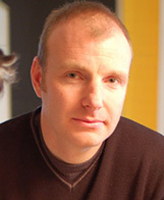
Robert Sedlack, an associate professor in the University of 91Թ’s , recently won two American Graphic Design Awards for University-related projects.

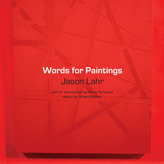
magazine honored , a 1989 91Թ graduate, for his work on the “” exhibition catalogue for the University’s and for “,” an artist’s monograph showcasing the work of 91Թ Assistant Professor .

To design Lahr’s book, Sedlack says he drew on elements of the artist’s technique, including his use of typography and the blue masking tape he employs when stenciling and airbrushing.

Words for Paintings cover

“The publisher, Stepsister Press, wanted a book that wasn’t the standard glamour shot of the finished product, page after page,” Sedlack explains. “What they wanted was a book about his process and a book about his writing and how those things lead to these great paintings.”

The end result did exactly that, Lahr says.

“Throughout the process of working on the book I was constantly impressed by Robert’s vision and innovation,” he says. “He truly created a book that embodied both my writing and studio practice. I am thrilled that his hard work has been recognized at the national level.”

A spread from Words for Paintings

Sedlack says he particularly enjoyed the project because it was a collaboration with two colleagues from the Department of Art, Art History, and Design: Lahr and Michael P. Grace Professor of Painting , who wrote the introduction.

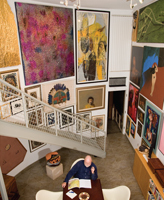
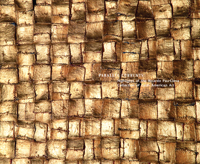
For the dual-language “Parallel Currents” catalogue, Sedlack was designer and production coordinator and served as art director for a three-day photo shoot at the Florida home of the collector, Ricardo Pau-Llosa.

Parallel Currents

The catalogue, he says, does more than showcase the exhibit pieces. It illustrates how the Latin American art collection “is central to Ricardo Pau-Llosa’s professional endeavors as poet, critic and curator—and integral to the extraordinary domestic space that he has created over the past 30 some years.”

The design work for both winning projects was done through Sedlack Design Associates, a business endeavor he says is integral to his work at 91Թ.

Parallel Currents cover

“Particularly as a teacher, I want to keep my hand in the professional game,” Sedlack says. “I want to continue to practice my craft professionally, so when I walk into the classroom I can talk about what I did last week, not ‘here’s what I did 15 or 20 years ago.’ That’s extremely important to me.”

In addition to receiving recognition for his design work from HOW, Graphis, Print and the American Association of Museums, Sedlack won two American Graphic Design Awards in 2006 and was included in the magazine’s list of “People to Watch” in 2007.

He teaches both undergraduate and graduate design students in 91Թ’s , and his course work includes projects that tackle various social issues, including discrimination, gun control and voter participation. Sedlack, who spent fall break in South Africa, is currently working with advanced students to develop a campaign to address xenophobia in that country.

“My area of academic research is based in the social model for design,” he says, “the idea that graphic design, in particular visual communications, can make a demonstrable difference in society and can get people to understand things differently.

“Projects like these—where my teaching, my academic research, and my experience in professional practice overlap—are the most exciting.”


Originally published by Kate Cohorst at on November 07, 2011.

]]>
Kate Cohorst
tag:news.nd.edu,2005:News/26190 2011-09-26T14:00:00-04:00 2021-09-03T21:02:22-04:00 Philosopher Alasdair MacIntyre honored for book’s lasting influence Alasdair MacIntyre

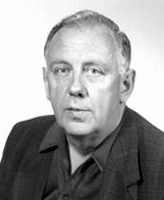
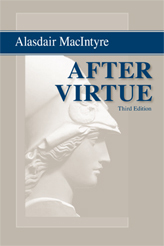
The American Political Science Association recently honored University of 91Թ philosopher for his influential 1981 book (University of 91Թ Press).

MacIntyre, the Rev. John A. O’Brien Senior Research Professor of Philosophy (emeritus), received the association’s biennial Benjamin E. Lippincott Award, which recognizes “a work of exceptional quality by a living political theorist” that is still considered significant at least 15 years after its original publication.

After Virtue: A Study in Moral Theory, by Alasdair MacIntyre

When the book first appeared in 1981, Newsweek called it “a stunning new study of ethics by one of the foremost moral philosophers in the English-speaking world.” In 2007, it was also featured in “” by Don Brophy.

“Alasdair MacIntyre has done more than any other person in the last quarter century to energize debate about the dilemmas of ethical decision making in daily living,” Brophy writes.

A fellow of the American Philosophical Society and American Academy of Arts and Sciences, MacIntyre has made significant contributions to the history of philosophy, moral philosophy, political theory, philosophy of the social sciences, and philosophy of religion.

He is a prolific writer whose books include “A Short History of Ethics,” “Whose Justice? Which Rationality?” “Three Rival Versions of Moral Enquiry,” and “Dependent Rational Animals.” He most recently published “God, Philosophy, Universities: A Selective History of the Catholic Philosophical Tradition.”

Five other 91Թ faculty members received book awards at the American Political Science Association annual meeting over Labor Day weekend:

  • , John Cardinal O’Hara, C.S.C., Associate Professor of Political Science at 91Թ, and his co-author, Robert Putnam of Harvard University received the for “American Grace: How Religion Divides and Unites Us” (Simon and Schuster). The Wilson Award recognizes the best book published in the U.S. during the previous calendar year on government, politics or international affairs.
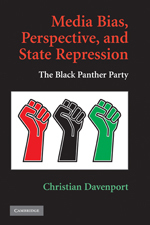
  • , professor of peace studies, political science and sociology at the University’s , won the prize for for “Media Bias, Perspective and State Repression: The Black Panther Party” (Cambridge University Press).
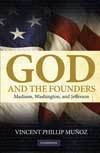
  • , Tocqueville Associate Professor of Religion and Public Life, was named co-winner of the for his book “God and the Founders: Madison, Washington, and Jefferson” (Cambridge University Press). The biennial prize recognizes the best book in religion and politics.
  • Assistant Professor was named co-winner of the from the Comparative Democratization Section of the APSA for “Skeletons in the Closet: Transitional Justice in Post-Communist Europe” (Cambridge University Press).


Originally published by Kate Cohorst at on September 09, 2011.

]]>
Kate Cohorst
tag:news.nd.edu,2005:News/26160 2011-09-20T14:00:00-04:00 2021-09-03T20:55:11-04:00 Revealing the earliest origins of Italian language Piazza San Carlo, Torino, Italy

It’s a timeless project—and a priceless opportunity: Advanced students at the University of 91Թ are currently working with some of Italy’s top linguistics experts to assemble the most complete historical dictionary of the Italian language prior to 1375.

91Թ is currently the only university outside of Italy invited to to the (TLIO) project, an initiative of the prestigious Accademia della crusca’s Opera del vocabolario italiano (OVI) branch.

“It’s a kind of training that nobody else in the United States gets to do,” says , a post-doctoral research fellow who spent a year at the OVI in Florence as a Ph.D. student at 91Թ and now manages the University’s involvement in the dictionary project.

“Through this kind of text-based, philological analysis you really do learn how to read Italian and think about the Italian language in a completely different way.”

“It is a very practical and direct way to get into Italian language and culture,” agrees , a TLIO researcher who received her master’s in Italian studies from 91Թ last spring and is entering the new program this fall. “When you are studying each word you have to deal with the context in which it was used and also the things that it meant at that time, and it opens a broader horizon.”

Since the summer of 2008, students in the have written more than 100 dictionary entries. Although participants have primarily been graduate students, the project is open to faculty, postdoctoral fellows and advanced undergraduates as well.

“We’ve done a really interesting range, including some pretty important words for Italian culture, such as gondola, cupola, and prosciutto,” Leavitt says.

Charles Leavitt

“Cantica,” he continues, “is a word that Dante uses to refer to different sections of the ‘Divine Comedy,’ and there are studies done just on where is he getting this word and why he’s using it because it’s a strange one that you wouldn’t expect.

“And we did the entry here for cantica—we went far beyond Dante to give a more complete definition.”

Drudi and the other 91Թ participants are each assigned a specific list of words and given a variety of relevant text excerpts, mainly from the 11th and 12th centuries. They then try to discern the definition based on how the word is used in those contexts, Leavitt says.

Each entry includes etymology, first documented use, primary and alternate definitions, examples of phrases in which the word might have a different meaning, and the geographic distribution of the word over time—which is of particular interest in Italian because there were wide regional disparities as the language developed.

“Then there is a section called linguistic notes, where you really get to see some of the creativity and the ability of the people actually writing entries,” Leavitt says.

, who received his master’s in Italian studies last spring, participated in the TLIO project during each of the past two summers.

“It’s a very interesting program to develop our proficiency,” he says. “You have the opportunity, first of all, to publish something, as entries can count as a publication. Also, you can work with people from whom you can learn a great deal. It’s a very pedagogical project.

“It is also one of those exclusive resources which are available at 91Թ—and one of the reasons why I decided to go on with my Ph.D. here in medieval studies,” he adds.

Another, more unexpected benefit, say both Drudi and Gianferrari, has been exposure to texts they would not otherwise have read.

“Very often you just study the most famous texts or those texts that were elected by the critics, but there are many others,” he says. “And it’s important for a scholar to develop a knowledge of the wide range of texts that constitute a culture.”

The OVI collaboration has proven to be valuable across the curriculum at 91Թ, Leavitt says.

“[Associate Professional Specialist] Giovanna Lenzi-Sandusky has said that she was able to share some of her work on the dictionary with her students in first- and second-year language courses, and to get them excited about the growth and change of the Italian language over time,” he says. “Elizabeth Simari [a 2008 91Թ graduate], who began work on the OVI the summer after her graduation from 91Թ with a bachelor’s in Italian, now lives and works in Italy; and James Kriesel [now assistant professor of Italian at Colby College] developed his interests in medieval philology into a dissertation on Boccaccio.”

Although still a work in progress, the free, online, searchable database 91Թ is helping to create is also contributing to the work of scholars here and around the world. According to an article in the journal , those who have used the dictionary database in their research so far include a Renaissance musicologist, an economic historian at the Federal Reserve Bank of Chicago, and linguistic researchers, historians and scholars working on critical editions.

The opportunity for 91Թ faculty and students to contribute to this valuable resource will be available for many years to come, Leavitt says. “I don’t know that there’s any kind of end date on it because it’s such a huge project.”

In fact, the University’s participation in the project is expected to grow along with its new interdisciplinary at 91Թ program, which connects faculty and students from the Ph.D. in Literature program, the , the , and the departments of history, classics, theology, Romance languages and literatures, and art, art history and design.

“Italian Studies at 91Թ already has a strong reputation, but I think because it is a program that is also growing and changing very quickly it can take on a project like this,” Leavitt says.

“We anticipate many more participants in the OVI collaboration in the future.”

]]>
Kate Cohorst
tag:news.nd.edu,2005:News/26078 2011-09-14T17:00:00-04:00 2021-09-03T20:52:46-04:00 Political scientist wins book prize Monika Nalepa

, assistant professor of political science at the University of 91Թ, has been named a winner of the 2011 Best Book Award from the American Political Science Association’s Comparative Democratization section for “” (Cambridge University Press).

The book examines the strategies behind decisions on whether and how to penalize members of the former authoritarian regimes in Poland, Hungary and the Czech Republic as they transitioned to democracy.

It is a subject of particular interest for Nalepa, who was born in communist Poland and grew up there during the shift to democracy. “I remember very well the immediate aftermath of the transition,” she says, “and there were many conversations about what to do with members of the Communist Party and their collaborators.”

Skeletons in the Closet: Transitional Justice in Post-Communist Europe, by Monika Nalepa

As a scholar, Nalepa says she had long been puzzled about why Communist officials were willing to negotiate peaceful transitions in most East European countries.

“If I’m going to be punished after I step down from office, why wouldn’t I just hang on to office as long as possible? That’s pretty much what leaders like Gadhafi are doing.”

“After a number of research trips to post-communist Europe, I finally found a plausible solution,” she says, “which is that members of the former opposition had actually collaborated with the Communists a lot more than was previously thought. The new leaders shied away from transitional justice because in the process of doing so, they could expose skeletons in their own closets. Because Communists knew that, they were willing to step down peacefully.”

In the book, Nalepa draws on archival evidence, statistical analysis and extensive interviews to support her argument.

“I feel very fortunate that I was able to talk to some of the key players in the transition from communism while they were still alive,” she says.

Nalepa says she was “surprised and thrilled” that her first book has received this recognition.

“I’ve always wanted to be a scholar of the comparative democratization field. That’s why I came to 91Թ from Rice—because of the strength of the comparative democratization program here. To be recognized in this way by this section of the APSA is a tremendous honor.”

Sharing the award with Timothy Frye, the Marshall D. Schulman Professor of Post-Soviet Foreign Policy at Columbia University, is also a point of pride, she says. Frye was named co-winner for his book “Building States and Markets After Communism: The Perils of Polarized Democracy” (Cambridge University Press).

“He’s so much more accomplished and senior,” Nalepa says. “I’ve actually assigned his book in my classes, so I feel particularly honored to be co-winner with him.”

This academic year Nalepa has a fellowship at Princeton as a visiting associate research scholar at the Center for the Study of Democratic Politics in the Woodrow Wilson School of Public and International Affairs.

There, she is working on a new book about trends in legislative politics in post-communist Europe, specifically the dwindling rights of individual members of parliament (MPs).

“In the beginning, there was a lot of resistance to parties as the main vehicles of government because of the experience with authoritarian parties under communism,” Nalepa says. “Individual MPs spoke when they felt the urge to, sponsored bills they liked, and voted as they pleased. It is remarkable how quickly parties consolidated, started voting in a much more unified way, and began to discipline their members into submission.”

She is planning a trip to Poland during the country’s October parliamentary elections to finalize her research, which already includes interviews with parliamentarians, party bosses, and more than half of the house speakers since the transition to democracy. Nalepa is also conducting research in the parliamentary archives and analyzing roll call votes from 1993 to the present to show how parties have consolidated power over the years.


Originally published by Kate Cohorst at on September 09, 2011.

]]>
Kate Cohorst
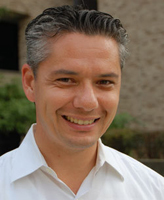
tag:news.nd.edu,2005:News/25472 2011-08-11T15:27:00-04:00 2021-09-03T21:02:14-04:00 Christian Davenport receives political science book award Christian Davenport

University of 91Թ Professor has been awarded the American Political Science Association’s 2011 prize for best book on race, ethnicity and politics.

“Media Bias, Perspective and State Repression: The Black Panther Party” (Cambridge University Press) explores the “Rashomon effect”—the tendency for events to be perceived and reported in different ways, depending on who is telling the story and to whom—and its implications for violence, protest, repression and peace. The phenomenon is named after Akira Kurosowa’s 1950 mystery film “Rashomon,” in which a single event is recalled in four contradictory ways by different individuals.

“This award means a great deal to me, for this is actually the first book that I wrote, but the second that I published,” says Davenport, a professor of peace studies, and at the University’s .

“The topic was a complex one, and thus it took me a while to figure it out,” he says. “That individuals felt the effort was worthy of an award feels like vindication for the amount of effort put into it.”

Media Bias, Perspective, and State Repression

Fascinated by the wildly different accounts of police interactions with members of the Black Panthers, Davenport spent more than a year scouring various newspaper archives to analyze the coverage of these events. The resulting book demonstrates the use of “event cataloging,” an emerging research methodology for comparing and contrasting diverse sources of information.

“I was interested in how our understanding of political conflict in general and violence in particular was influenced by the sources that we consulted,” he says.

“For example, if we only looked at or heard stories generated with an interest in advocating for governments, what would we understand about state-dissident confrontations? If we looked at or heard stories generated by an advocate for challengers, what would we understand? If we considered all sources together, what could we learn?”

As a scholar and teacher, Davenport uses statistical research, ethnography and other approaches to examine human rights violations in Rwanda, India, Northern Ireland and the United States. The author of the 2007 book “State Repression and the Domestic Democratic Peace” (Cambridge University Press), he currently directs two research initiatives: Save Our States and the Radical Information Project.

Davenport says he recently completed a new book project called “To Kill a Movement,” about the role repression plays in the destruction of social movements. He is also concluding a 12-year study on political violence in Rwanda for a book called “In Pursuit of a Number,” with Allan Stam at the University of Michigan, and is working with a group of colleagues on another book about “untouchability” in India.

At 91Թ this fall, he will teach an undergraduate course called Death by Government, about the different ways that political authorities kill their citizens.

“Unfortunately, we do not know as much about the topic as it deserves,” Davenport says.


Originally published by Kate Cohorst at on August 11, 2011.

]]>
Kate Cohorst
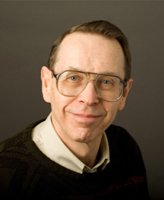
tag:news.nd.edu,2005:News/22806 2011-07-19T15:58:00-04:00 2021-09-03T21:02:10-04:00 Political scientist Vincent Phillip ѳñdz wins book award Vincent Phillip ѳñdz

Vincent Phillip ѳñdz, the Tocqueville Associate Professor of Religion and Public Life at the University of 91Թ, has been named a winner of the 2011 American Political Science Association’s Hubert Morken Award for his book “” (Cambridge University Press).

will receive this biennial prize for the best book in religion and politics at the association’s annual meeting in early September. He shares the award with Elizabeth Shakman Hurd, author of “The Politics of Secularism in International Relations” (Princeton University Press).

A specialist in constitutional law, American politics and political philosophy, ѳñdz is a faculty member of the in the and of the . “God and the Founders” is his first book.

“My scholarship is a bit more traditional than what is currently trendy in academia,” Munoz says. “I try to ask big questions that are relevant to current legal and political issues—then I try to provide normative answers. That’s a bit risky for a young scholar, so to be recognized by the leaders in my discipline for such work was validating and, to be honest, quite surprising.”

"God and the Founders: Madison, Washington, and Jefferson"

In “God and the Founders,” he analyzes the public documents, private writings and political actions of James Madison, George Washington and Thomas Jefferson to explain their competing philosophies of religious freedom and to show how each might have decided key Supreme Court cases.

“I believe the right to religious freedom is one of our most precious natural rights,” ѳñdz says. “But hard questions exist related to its philosophical foundations, its limits, and how it can best be protected under the rule of law. I was hoping to help scholars, legal practitioners and citizens better understand the meaning of the right to religious freedom so we can better protect it.”

Michael Gibbons, associate professor of government and international affairs at the University of South Florida and a member of the Hubert Morken Award committee, called “God and the Founders” “a very thorough, well argued and researched book addressing an issue of significant theoretical and practical importance.”

ѳñdz is currently working on a sequel that will focus on how the American Constitution was designed to protect religious freedom. Articles from that project have already appeared in the Harvard Journal of Law and Public Policy and the University of Pennsylvania Journal of Constitutional Law.

This fall, he teaches American Constitutional Law as well as Constitutionalism, Law and Politics—the gateway class to the University’s new undergraduate minor in constitutional studies.

Originally published by Kate Cohorst at on July 18, 2011.

]]>
Kate Cohorst
tag:news.nd.edu,2005:News/22213 2011-06-10T11:33:00-04:00 2021-09-03T21:02:05-04:00 Pope’s new book lauds 91Թ theologian John P Meier

A new book by Pope Benedict XVI highlights University of 91Թ biblical scholar ’s extensive research on the history of Jesus.

“From the immense quantity of literature on the dating of the Last Supper and of Jesus’ death, I would like to single out the treatment of the subject, outstanding both in its thoroughness and its accuracy, found in the first volume of John P. Meier’s book, ‘A Marginal Jew: Rethinking the Historical Jesus,’” the pope writes in “Jesus of Nazareth,” volume two, “Holy Week: From the Entrance into Jerusalem to the Resurrection.”

This is the second time Meier has been so honored. The pope also mentioned Meier’s work in the first volume of Jesus of Nazareth.

“The last time, in volume one, it was simply a gracious note in the back of the book,” said Meier, the William K. Warren Foundation Professor of Theology in the University’s College of Arts and Letters. “In volume two, he actually draws me into the book itself and says very complimentary things there as well.”

In his introduction to the new book, Pope Benedict calls Meier’s four published volumes of “A Marginal Jew”
“excellent” and “exhaustive.” The pope also mentions Meier’s research in the chapter about the Last Supper, in a note in the extended bibliography, and even in the glossary—where Meier was given his own entry.

Meier jokes that his glossary listing falls right between Maximus the Confessor, a Church Father and Byzantine theologian, and Melchizedek, the priest and king of Salem. “At least all three of us are, in some sense or other, priests according to the order of Melchizedek,” he said with a smile.

He said he first heard the news this spring, when the publisher offered him a chance to read proof pages of the book before it was published.

“I had no clue before then,” Meier said. “It was a very pleasant surprise.”

He was particularly pleased to be the only American the pope named among a handful of respected Catholic exegetes—many of whom Meier himself has studied and looked up to as his inspiration.

“Needless to say it was a great honor, on the one hand, just being acknowledged by the pope and, on the other hand, to be mentioned with them in a very small, selective list,” he said. “I felt extremely honored, extremely grateful to the pope for having done that.”

A New Testament scholar and priest of the Archdiocese of New York, Meier focuses his research on the quest for the historical Jesus—"that Jesus whom any serious scholar could try to reconstruct from the historical sources we have," he said.

His premise is to find those details, based purely on historical grounds, about which a Catholic, a Protestant, a Jew, a Muslim, and an agnostic could all agree.

“The historical Jesus is not the real Jesus,” Meier explained. “Historical Jesus is a very narrowly defined academic reconstruction which is not exactly the full reality of who he was or is. It is not going to include the whole dimension of faith that, say, either a believing Catholic or a believing Protestant would insist is the full reality.”

So far, Meier has published four volumes of “A Marginal Jew: Rethinking the Historical Jesus,” which have been translated into Italian, French, Portuguese and Spanish. He is currently working on the fifth and final volume.

Earlier volumes examined Jesus’ background and the chronology of his life, his core message and ministry, the influence of those who surrounded Jesus, and his teaching on and relationship to the Mosaic law.

“I purposely kept the most difficult problems, the true enigmas, for the end,” Meier said.

In the final volume, Meier will explore Jesus’ tendency to speak in riddles and parables and to refer to himself by unusual titles and phrases, such as “son of man.”

“Not only does he speak riddles and parables, but he’s making himself the ultimate riddle and parable of God by speaking in this strange, enigmatic way,” he said.

Meier is also attempting to tease apart which parables and titles can be attributed to historical Jesus and which may have come from the early church imitating his way of teaching and speaking.

Finally, the book will examine the historical circumstances that led up to and precipitated Jesus’ death—what Meier calls the “ultimate riddle.”

“There are endless historical questions there before you ever get into the properly theological mysteries of his death and resurrection,” he said.


Originally published by Kate Cohorst at on June 08, 2011.

]]>
Kate Cohorst
tag:news.nd.edu,2005:News/18917 2011-03-14T14:24:00-04:00 2021-09-03T21:01:49-04:00 Historian Felipe Fernández-Armesto honored in Spain Felipe Fernández-Armesto honored in Spain

, William P. Reynolds Professor of History at the University of 91Թ, has been appointed the 2011 at the Complutense University of Madrid.

Named for Queen Victoria Eugenia, the consort of Spanish King Alfonso XIII, the honor is awarded each year to a distinguished British professor in a different discipline. This year, the academic chair is in communications studies.

While Fernández-Armesto is best known as an historian, he also is an accomplished journalist whose work appears frequently in the national press in Spain and the U.K.

“I’m basing my [chair] lectures on the problem which I call ‘understanding misunderstanding,’” he says. “Why do we misunderstand each other so much? Why is it so hard to get people to grasp the message? Why in ordinary conversation do we understand each other so little? Why do international negotiations break down? Why, when people have heard the same ad or lecture or radio or television show, do they all give you different accounts of what it said?

“This is a fundamental problem,” he says, “but it’s never really been addressed as a topic of academic research.”

Fernández-Armesto, who teaches fall semesters at 91Թ’s South Bend campus and spring semesters at the University’s , gave his first lecture in Madrid in January and will return to Spain to present additional talks during spring break and at the end of the semester.

He says the appointment holds special meaning for him because it is a part of Universidad Complutense de Madrid. “It was originally founded by Cardinal Cisneros, the early 16th century Spanish humanist and statesman,” he says, “and the very first academic paper I published was on Cardinal Cisneros, so it’s a great source of pleasure for me to go to the university he founded.”

Since that first paper, Fernández-Armesto has made his mark in a wide variety of subjects—publishing books that include “1492: The Year the World Began,” “Columbus on Himself,” “Millennium: A History of the Last 1,000 Years,” “So You Think You’re Human: A Brief History of Humankind,” “Near a Thousand Tables: A History of Food,” and “Ideas That Changed the World.”

His research and teaching interests include Spanish history and the history of late medieval and early modern colonial societies, particularly cartography, maritime subjects, exploration and cultural exchanges. In recent years, he has made contributions to global history, understood as the study of genuinely global experiences, and to global environmental history.

“I’m very intellectually undisciplined,” he says. “I always work on lots of different things simultaneously, like a juggler with all the balls in the air.”

Among his current projects, Fernández-Armesto has accepted a grant from a Spanish foundation to write a history of the United States from a Hispanic perspective, and he is editing the 2010 Schouler Lectures, an endowed series of talks he presented at Johns Hopkins University on the subject of 18th century slave languages in the New World.

“I’m also researching cultural organisms,” he says. “How do you find a common frame of reference for describing the history of all societies and cultural organisms? What can the study of other primate societies—and other cultures belonging to animals more remotely connected with us—tell us about our own history? Can we find a common frame of reference in which we could write about the history of all cultural organisms?

“That’s a very important subject for 91Թ,” he says, “because it’s a very important subject for the Church. It raises the fundamental question of what is unique about humans.”

Originally published by Kate Cohorst at on March 10, 2011.

]]>
Kate Cohorst
tag:news.nd.edu,2005:News/18878 2011-03-11T14:42:00-05:00 2021-09-03T21:01:49-04:00 91Թ anthropologist receives grant to explore human nature Agustin Fuentes

Who are we? Why are we here? Why do we do what we do? What makes humans unique?

These are the universal questions at the heart of an ambitious new initiative led by University of 91Թ anthropologist .

Funded by a $197,000 grant from the , the Human Natures Project is a two-year research effort that could pave the way for a much larger, long-term endeavor.

“The idea really is to find a path forward into a multidisciplinary conversation on human nature—and I want it to happen here at 91Թ,” says Fuentes, the director of the University’s and a professor in the .

While many scholars explore the essence of human nature, they continue to do so within specific academic disciplines, Fuentes says.

“The problem is that people ask that question from all these different perspectives, and the perspectives almost never talk to each other,” he says. “So if you read it in theology, it’s going to tell you one thing. If you read it in biology, it’s going to tell you another thing. If you read it in psychology, it’s going to tell you another thing—and the same for philosophy and anthropology.”

Fuentes recalls the old Indian tale of the blind men and the elephant, where each man touches a separate part of the animal, leading them to dramatically different conclusions about the animal.

“Each one of them is actually describing something that’s real, but they have no idea of the whole big picture,” he says. “What I’m hoping is that there’s actually a big picture out there for human nature and that maybe by trying to get together and work in a cross-disciplinary context we can find it.”

Fuentes says his goals for the initial two-year project are to determine whether the disciplines share any common or overlapping definitions and methodologies that could be a starting point for conversation and to explore whether “there is something about human culture and its connection with human evolution that might be a nexus for us to look at this commonality.”

To help answer those questions, he will review relevant literature and then personally interview top human nature scholars within each of the different fields.

“I’m not only looking at what people actually published officially out in the academic world, but what do they really think? Is this worthwhile? Is there a way to do this?” Fuentes says. “I want to try to connect the published work with the personal ideas and philosophies of these individuals. I think one of the best ways to really get beyond the disciplinary boundaries is talking to the people who are actually doing this.”

In particular, Fuentes is interested in discussing the emerging theory of biocultural evolution. “The way it’s structured enables it—I think—to be the place where theology, psychology, philosophy, anthropology and biology can engage in real discussions that move us forward in an understanding of what human nature or natures might be,” he says.

In the first year, Fuentes will conduct the interviews, form a team of graduate and undergraduate students to help gather information, and develop an interdisciplinary working group of 91Թ faculty members. The second year will be for analysis, publishing and organizing a conference tentatively set for May 2013.

Fuentes also plans to create a website similar to “,” which is a project of the National Humanities Center. “It would be a virtual center for the study of human nature, where academics and intellectuals get together to think big things and post ideas online where they are accessible to the public,” he says.

Calling this new research initiative “a huge, adventuresome project,” Fuentes says he is eager to see what he discovers over the next two years.

“I want to see if it looks like we have something,” he says. “And if we do, I want to expand this into an ongoing multi-year, multi-decade project housed at 91Թ—because where else can you really think truly interdisciplinarily about human nature?”

Originally published by Kate Cohorst at on March 10, 2011.

]]>
Kate Cohorst
tag:news.nd.edu,2005:News/18633 2011-02-28T12:41:00-05:00 2021-09-03T21:01:48-04:00 91Թ to host conference on dimensions of goodness Notre Dame Institute for Advanced Study

The University of 91Թ Institute for Advanced Study (NDIAS) will host an international and interdisciplinary conference called “” April 4 to 6 in the 91Թ Conference Center (McKenna Hall).

The event features 17 leading scholars and other experts from a wide variety of disciplines, including biomedicine, engineering, law, philosophy, political science, psychology and theology.

Each speaker will address a different question related to the subject of “the good”—including:

  • How does interculturality challenge our moral ideas?
  • What are the right politics for a developing country?
  • What are the main challenges of modern medicine in the 21st century?
  • What happens in our brain when we make a moral decision?
  • What is Christianity’s contribution to ethics?
  • What are the major changes in the history of our moral principles?
  • How can international law limit the use of violence?


Presenters include Anita L. Allen, professor of philosophy and Henry R. Silverman Professor of Law at the University of Pennsylvania; Mexican economist Luis Ernesto Derbez Bautista; Richard Ernst, winner of the 1991 Nobel Prize in chemistry; and 91Թ faculty members Mary Ellen O’Connell, Robert and Marion Short Professor of Law; Peter Kilpatrick, professor of chemical engineering and the McCloskey Dean of Engineering; Georges Enderle, the John T. Ryan Professor of International Business Ethics at the Mendoza College of Business, and Vittorio Hösle, Paul Kimble Chair of Arts and Letters and NDIAS Director.

A complete list of conference speakers, topics, and registration information is available on the .

Goodness is one of the three major values—beauty, goodness, and truth—that inspire the interdisciplinary work of the institute, whose inaugural conference in 2010 focused on the nature of beauty.

“The intellectual enterprise of our time is characterized by ever more narrow specialization, and, while this is indispensable, we need a counteracting force that tries to reconnect the various disciplines,” Hösle says. “Only thus can the old questions (such as questions of beauty, justice or religion) reasonably be treated. The neglect of such questions will inevitably lead to a loss of meaning in the scientific quest.”

NDIAS supports research that is directed toward, or extends inquiry to include, ultimate questions and questions of value, especially as they engage the Catholic intellectual tradition. It encourages fellows to explore the relationship between the world as it is and the world as it should be, and to reflect on the broad questions that link multiple areas of inquiry.

Image: The Cardinal and Theological Virtues, a fresco by Raphael as part of his Stanza della Segnatura in the Palazzi Vaticani in Vatican City. Courtesy of the Vatican Museums.

Originally published by Kate Cohorst at on February 11, 2011.

]]>
Kate Cohorst
tag:news.nd.edu,2005:News/18228 2011-01-26T13:29:00-05:00 2021-09-03T21:01:40-04:00 91Թ continues record success in NEH fellowships NEH

Two University of 91Թ professors—historian and theologian been awarded National Endowment for the Humanities (NEH) fellowships for 2011-12.

“It’s a big honor,” says Noble, chair of the and former director of the Medieval Institute in the College of Arts and Letters. “I’m very pleased to continue the line here at 91Թ. We’ve done quite well with the NEH over the years.”

91Թ has been awarded between 1999 and 2011—more than any other university in the country. The University of Michigan has been second to 91Թ with 35 NEH fellowships during that 12-year period, followed by Harvard University at 26, Princeton University at 22, and the University of California, Berkeley, at 19.

NEH fellowships support advanced research that contributes to scholarly knowledge or to the general public’s understanding of the humanities. Recipients usually produce articles, monographs on specialized subjects, books on broad topics, archaeological site reports, translations, editions, or other scholarly tools.

A New Take on Rome

Tom Noble

Dz’s NEH fellowship is for a book called “Rome in the Medieval Imagination,” which will explore how medieval people thought about Rome.

“My book should be of value to medievalists of every kind because every medievalist encounters Rome, but no one has had a guidebook for those encounters,” Noble says. “There’s really no book that someone can take off the shelf and say, ‘What did medieval people actually think about Rome? What did Rome mean to them? What valence did it possess?’”

The book is not a history of Rome, but is meant to provide insights on the medieval people who expressed such varying opinions about it, Noble says. “I’m actually not interested particularly in whether anybody was right or wrong but in why they said the things they did.”

Noble has been writing about late antique and medieval Rome for more than 30 years. His research has focused on Carolingian history, medieval Rome, the popes, the papacy, papal relations with Byzantium, and controversies over religious art.

He has been awarded two previous NEH fellowships—one in 1980 to work on “The Republic of St. Peter: The Birth of the Papal State” and another in 1993 when he began the research for his book “Images, Iconoclasm, and the Carolingians.”

NEH fellowships are a strong affirmation, Noble says. “It’s a kind of an early signal that you’re onto something, that you’re doing something that your peers think is worthwhile.”

Ancient Insights

Eugene Ulrich

Ulrich, Rev. John A. O’Brien Professor of , is one of the world’s leading scholars of the , a collection of ancient texts discovered after World War II in caves along the shore of the Dead Sea near Jerusalem.

“The biblical scrolls are manuscripts in Hebrew that are 1,000 years older than any Hebrew texts we used to have, so they really take us back to the period of the composition of the text,” he says.

’s NEH fellowship is for “The Bible in Light of the Dead Sea Scrolls,” a follow-up to his 2010 book, “The Biblical Qumran Scrolls: Transcriptions and Textual Variants”—a collection of all the texts in the biblical Dead Sea Scrolls.

“This new book will be a synthetic view that pulls together in a systematic fashion all the surprising learnings these scrolls have taught us—what we now know about the Bible that we didn’t 60 years ago,” he says. “There was great pluriformity in the biblical texts in antiquity, but we inherited only one form of it. Now we are seeing many of the other forms.”

Ulrich has spent virtually his entire academic career editing and studying the Dead Sea Scrolls—arguably the greatest archeological find of the 20th century. In 1977, he received an NEH fellowship to publish his first Dead Sea Scroll, the Book of Samuel. Between 1986 and 2006, Ulrich says he received “almost continuous” NEH funding as part of the official Dead Sea Scrolls translation team.

He is one of the three general editors of the Scrolls International Publication Project, chief editor of the Biblical Scrolls, and a member of the editorial board for Oxford’s “Encyclopedia of the Dead Sea Scrolls.” Ulrich, who co-authored “The Dead Sea Scrolls Bible,” is also a member of the translation teams of both the “New Revised Standard Version” of the Bible and the “New American Bible.”

Originally published by Kate Cohorst at on January 26, 2011.

]]>
Kate Cohorst
tag:news.nd.edu,2005:News/18223 2011-01-25T14:36:00-05:00 2021-09-03T21:01:40-04:00 91Թ psychologist drives change in diagnosis of personality disorders Lee Anna Clark

University of 91Թ psychologist recently began work on a five-year study that will contribute to revolutionizing the way personality disorders are diagnosed and further cement Clark’s standing as one of the world’s preeminent research psychologists.

The study, funded through a $2 million grant from the National Institute of Mental Health, will expand on Clark’s previous work establishing a trait-based approach to diagnose personality disorders. The research will be conducted in partnership with Oaklawn Psychiatric Center, a local nonprofit mental health agency.

“Diagnosis is the first step toward treatment,” says Clark, William J. and Dorothy K. O’Neill Professor of Psychology at 91Թ. “If we can figure out the components of personality disorder, then it should be easier to figure out how we can develop treatments that will address these different components.”

Clark the faculty this fall, after 17 years at the University of Iowa. She recently also was voted president-elect of the Society for Research in Psychopathology.

Her personality research started in graduate school and coincided with the publication of the Diagnostic and Statistical Manual, 3rd edition (DSM). For the first time, the DSM—considered the “bible” for making psychiatric diagnoses—switched to a criteria-based approach to diagnose all mental disorders, and additionally highlighted personality disorder as requiring separate attention.

But despite this advance, Clark believed that applying the same model to diagnosing personality and other disorders was a mistake, so she set out to find a better method.

“Our personalities are a complex combination of personality traits, attitudes, preferences, and so on,” Clark says. “It’s necessary to measure the whole domain of personality traits in the abnormal range, not just to have a few criteria.”

After 12 years of research, she published the Schedule for Non–adaptive and Adaptive Personality, or SNAP, a now widely used test that assesses disorders by measuring personality traits across the normal-abnormal spectrum.

“It’s proven to be a pretty good measure of personality traits in abnormal range,” Clark says. “But it’s not perfect. Now we need figure out what other traits are necessary.”

Her latest research will expand on the SNAP project, looking at what other traits should be measured. It also will study functioning—or why some people with extreme personality traits are adjusted and able to function well in society, while others are not.

The first two phases of the project include data gathering from patients at Oaklawn and from their adult friends and family. The last phase will be a preliminary test of how the assessment tool might work in a clinical setting, with physicians and psychologists invited to refer patients to the study. Clark and her collaborators will diagnose the patients and provide clinicians with the information, then follow up six months later to find out how useful it was.

Clark’s collaborators at 91Թ are , Andrew J. McKenna Family Professor of Psychology, and , John Cardinal O’Hara, C.S.C., Associate Professor of Psychology. Also working on the project are postdoctoral associate Eunyoe Ro, project coordinator Laura Gumbiner, and a number of graduate students.

Clark also is currently one of 11 members of the work group revising the Personality and Personality Disorders section of the DSM-5, which is due out in 2013. The group is proposing that the DSM switch the way personality disorders are diagnosed to a trait-based system. While the DSM-5 will use the existing system, Clark is hopeful her research will provide the information needed to make the change in the next revision.

Such a switch would be a validation of her lifetime of work. “The switch the DSM is making is very exciting for me,” she says. “What distinguishes my work over my career is that from the beginning, I said ‘We have to find a better way to do it.’”

Originally published by Sara Burnett at on January 20, 2011.

]]>
Kate Cohorst