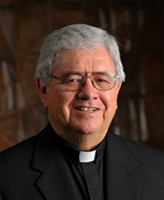
Joseph E. Capizzi, dean of the School of Theology and Religious Studies at the Catholic University of America, has been appointed the McGrath-Cavadini Director of the University of 91Թ’s (MICL), effective July 1.
The McGrath Institute partners with Catholic dioceses, parishes, and schools to address pastoral challenges with theological depth and rigor. By connecting the Catholic intellectual life to the life of the Church, the institute forms faithful Catholic leaders for service to the Church and the world.
Capizzi will succeed , who has led the MICL for the past 25 years and will return to full-time research and teaching in the Department of Theology. “All of us are in John’s debt for his dedicated and tireless service as director,” said , the Charles and Jill Fischer Provost. “His cultivation of the institute’s signature programs, his capacity to attract external support from foundations and his passion for connecting the worlds of the University and the Church have elevated not only the McGrath Institute but 91Թ.”
As the institute’s next director, Capizzi will build on that strong foundation, supporting existing programs while working with partners across campus to envision new initiatives that anticipate the evolving needs of the Global Church — particularly in light of shifting demographics and emerging challenges.
“Joseph Capizzi rose to the top of a competitive national search,” McGreevy said. “We were impressed with his energy, leadership experience, deep understanding of and commitment to the University’s Catholic mission, passion for the life and future of the Church and ambition to help us realize the possibilities of this great University.”
Capizzi has been a member of the Catholic University faculty since 1997. He was appointed dean of the School of Theology and Religious Studies in 2023. Previously, he served as the executive director of Catholic University’s Institute for Human Ecology from its founding in 2016 until 2023.
Capizzi received his bachelor’s degree from the University of Virginia, his master’s in theological studies from Emory University and his master’s and doctoral degrees in theology from 91Թ, where he was a John A. O’Brien Fellow.
He teaches in the areas of social and political theology, with special interests in issues of peace and war, citizenship, political authority and Augustinian theology. He has written, lectured and published widely on just war theory, bioethics, the history of moral theology and political liberalism. Capizzi is the author of “Politics, Justice and War: Christian Governance and the Ethics of Warfare,” published by Oxford University Press, and “A Catechism for Business: Tough Ethical Questions and Insights from Catholic Teaching” with Andrew Abela. He is currently working on a book project focused on the right to property in the Catholic tradition.
Capizzi said he was attracted to the position by the opportunity to serve the men and women of the Church and to work with diocesan priests, religious men and women, bishops and laypeople, as well as faculty experts and colleagues across a university that is committed to world-class scholarship and cross-disciplinary collaboration.
“Being given the opportunity to lead the MICL as the McGrath-Cavadini Director is a great gift and frankly, a challenge,” he said. “McGrath has a well-earned reputation for helping the Church address pastoral challenges by drawing on a wide and talented pool of leading academics. I am grateful to John Cavadini for his role in shaping McGrath’s vision and guiding it for so many years. I cannot wait to be a part of its unique mission and dedicated community of scholars, friends and students.”
McGreevy acknowledged the search committee for its efforts over the past several months. “Vice President and Associate Provost Maura Ryan and the members of the committee represented the University with integrity and worked diligently to identify and recruit an excellent pool of candidates,” he said. “I am thankful for their consistent effort and sound judgment throughout the process.”
Contact: Erin Blasko, assistant director of media relations, 574-631-4127, eblasko@nd.edu
]]>Corcelli, who has served as interim science dean since July, was selected through a comprehensive national search launched after his predecessor, Santiago Schnell, was appointed as Dartmouth’s provost.
“In multiple roles at 91Թ, including associate dean, department chair, and most recently as interim dean, Steve has consistently earned the respect of his colleagues and proven to be a wise and visionary leader who is deeply dedicated to our Catholic mission,” Father Dowd said. “I am confident that under his leadership, the College of Science will continue to play an essential role in 91Թ’s pursuit of excellence as a global Catholic research university.”
As dean, Corcelli will lead six departments comprising more than 280 faculty, more than 600 doctoral students, and 1,726 undergraduate student majors. He will guide the college in its mission to prepare the scientific leaders of tomorrow, seek greater understanding of the natural world and foster discoveries that answer the world’s toughest questions and solve its most enduring problems.
, the Charles and Jill Fischer Provost, said Corcelli rose to the top of a highly qualified pool of candidates. “Over the past two decades at 91Թ, he has shown a commitment to collaboration and innovation in the laboratory and the classroom,” McGreevy said. “Steve’s leadership experience, his background as a first-generation college student, his distinction as a nationally recognized computational chemist and his commitment to the University’s Catholic mission will make him a superb dean of the College of Science.”
Corcelli leads a research program focused on the molecular-level understanding of aqueous acids, bases and salts, as well as on the mechanisms of biomolecular binding. His lab uses advanced simulations to investigate ion transport in aqueous electrolytes — relevant to battery technologies — and the binding interactions critical to biological function and drug development.
He has received national recognition for his research, including an NSF CAREER Award, a Sloan Research Fellowship, and the Camille and Henry Dreyfus New Faculty Award. Corcelli is a fellow of the American Chemical Society and a Kavli Fellow of the National Academy of Sciences. He has authored over 90 publications and given more than 100 invited talks.
Corcelli is also a dedicated educator who has received multiple teaching awards, including the and the .
He earned his bachelor’s degree in chemistry from Brown University and his doctoral degree in chemistry from Yale University. After completing a postdoctoral research position at the University of Wisconsin-Madison, he joined 91Թ’s faculty as an assistant professor in 2005.
Prior to his appointment as interim dean, Corcelli served as chair of the from 2022 to 2025, and as the associate dean for interdisciplinary studies and faculty development in the College of Science from 2019 to 2022.
“I am deeply honored to serve as the William K. Warren Foundation Dean of the College of Science,” Corcelli said. “91Թ has a unique opportunity to integrate scientific discovery with its Catholic mission in ways that serve both the University and the broader world. I look forward to working with our community to strengthen partnerships across the University and beyond; support our faculty, students and staff in their pursuit of discovery and learning; and advance an intellectually ambitious vision for science in service to the common good.”
McGreevy thanked the search committee for its work over the past several months. “Members represented the University well and were diligent in identifying, evaluating and recruiting an excellent pool of candidates,” he said. “I appreciate their steady work and discernment throughout the search process.”
Contact: Brandi Wampler, associate director of media relations, brandiwampler@nd.edu, 574-631-2632
]]>Fisher is currently chair of the Fischell Department of Bioengineering at the University of Maryland, where he is Distinguished University Professor, MPower Professor, and Distinguished Scholar-Teacher. At 91Թ, he will succeed, who retired in December as inaugural director of BELS and Arthur J. Schmitt Professor of Chemistry and Biochemistry.
The Bioengineering & Life Sciences Initiative is a joint effort of the and the and is a key priority in the University’s . The initiative advances human health and wellness through interdisciplinary biomedical research and training — from fundamental discoveries through detection, prevention and treatment of disease. Emphasizing accessible health care solutions, BELS brings together researchers from a variety of fields to create transformative solutions for health.
“This appointment reflects both the strength of the foundation already in place — thanks to Paul’s superb leadership — and our aspirations for the future of Bioengineering & Life Sciences at 91Թ,” said John T. McGreevy, 91Թ’s Charles and Jill Fischer Provost. “John Fisher is a visionary leader and excellent scholar-teacher whose experience aligns perfectly with the initiative’s trajectory and 91Թ’s ambitions as the leading global Catholic research university.”
Fisher holds bachelor’s degrees in chemical engineering and biomedical engineering from Johns Hopkins University, a master’s in chemical engineering from the University of Cincinnati and a doctorate in bioengineering from Rice University. He joined Maryland’s Department of Chemical Engineering in 2003 and three years later became a founding member of the bioengineering department he now chairs. During his two decades at Maryland, Fisher has won a variety of awards for teaching excellence, graduate student mentorship and scholarship, including a National Science Foundation CAREER award and a Fulbright. In 2024, he was appointed Distinguished University Professor, the institution’s highest honor for a tenured faculty member, recognizing excellence, impact and significant contribution to the field both nationally and internationally.
“We are thrilled to have John, who is an extraordinary biomedical engineer, join us in the college and lead the BELS Initiative,” said Patricia Culligan, the Matthew H. McCloskey Dean of the College of Engineering. “Advancing research and training in bioengineering is among our highest priorities for the College of Engineering, and I look forward to working with him to elevate collaborations within our college and across science, engineering and other units on campus.”
As director of the, Fisher leads a research team that focuses on computational modeling and tissue engineering, bioprinting, and bioreactors for the regeneration of lost tissues. He also directs the , which aims to create a broad community focusing on 3D printing and bioprinting for regenerative medicine applications.
Fisher has served in numerous leadership positions in his field, including as the 2025 chair of the Council of Chairs, a national assembly of bioengineering and biomedical engineering department chairs, and as 2018-20 chair of the Americas Chapter of the Tissue Engineering and Regenerative Medicine International Society. Fisher is a fellow of the International Academy of Medical and Biological Engineering, the American Institute for Medical and Biological Engineering and the Biomedical Engineering Society. He is currently a member of the society’s board of directors and co-editor-in-chief of Tissue Engineering. His work has been supported by the National Science Foundation, the National Institutes of Health, the Department of Defense and the Food and Drug Administration, among others.
“What attracted me to 91Թ is the excellence and rigor of the research,” Fisher said. “The types of questions people in science and engineering are exploring, and the execution of their research programs, is really top-notch. I’m also a big believer that we’re here to educate as well as to do research. I love teaching, and I love 91Թ’s commitment to teaching.
“What really speaks to me is the mission — the commitment to pursue research and to educate at the highest level, but doing it in a way that positively impacts society. There are some personal things as well. I grew up in the Midwest, our family is Irish Catholic, so it’s wonderful to bring that aspect of who I am together with my work.”
Fisher joins the University at a pivotal moment for the Bioengineering & Life Sciences Initiative, as it accelerates efforts to expand research, training and shared infrastructure.
Since its launch in 2024, the. It has identified core research themes and awarded nearly $1.25 million in seed funding to support multidisciplinary teams working in areas such as cancer, cardiovascular disease, global health and emerging infectious threats. It has also expanded training opportunities for graduate students and postdoctoral fellows and made major investments in shared research infrastructure — including the acquisition of a Glacios 2 cryo-TEM microscope, the first of its kind at 91Թ, scheduled for installation in April, along with complementary efforts to restructure flow cytometry resources.
To learn more about the Bioengineering & Life Sciences Initiative, visit.
]]>
, vice president and associate provost for academic space and support at the University of 91Թ, has been appointed the Edward H. Arnold Dean of the by University President
Meserve, who has served as interim library dean since August 2024, now begins a five-year term.
“The Hesburgh Libraries are vital to 91Թ’s aspirations to be the leading global Catholic research university,” Father Dowd said. “Over her 20-year career at the University, Margaret has demonstrated exceptional leadership and dedication to 91Թ’s mission, including most recently as interim dean, earning the respect and admiration of her colleagues. I am confident that under her guidance, the libraries will continue to advance the University’s research, teaching and learning goals while fostering 91Թ’s engagement with the global scholarly community.”
, the Charles and Jill Fischer Provost, said Meserve was well-suited to her new role. “Margaret is an unusually gifted administrator,” he said. “She possesses vision, superb communications skills and a deep commitment to 91Թ. All of this has been in evidence in her multiple roles at 91Թ.”
Meserve was appointed vice president and associate provost for academic space and support in 2023. Prior to that, she served as associate dean for the humanities and faculty affairs and director of space planning in the and co-director of the .
“A professor of history, Margaret is passionate about rare books and special collections, sophisticated in her use of data and a leading scholar of the history of the book,” McGreevy noted. “The search committee praised her work as interim dean, her compelling vision for the library and her commitment to deepening the engagement of the libraries with all of 91Թ’s colleges and schools.”
In her continued capacity as vice president and associate provost, Meserve will maintain oversight of the , the and the . She will be handing off her current duties related to academic space and support to Vice President and Associate Provost by the end of the academic year.
As dean, Meserve will lead a team of nearly 140 faculty and staff members at the flagship Hesburgh Library — which houses the Navari Family Center for Digital Scholarship, the Medieval Institute Library, the University Archives and Rare Books & Special Collections — and three specialty libraries located across the 91Թ campus (architecture, business and music).
“I’m honored and excited to continue working with our expert library faculty and staff to strengthen support for research, teaching and the preservation of knowledge at 91Թ for generations to come,” Meserve said. “And I look forward to advancing new initiatives in information literacy, digital collections and scholarly communication that will advance the Hesburgh Libraries as a leader among university research libraries.”
Meserve received her bachelor’s degree in classics from Harvard and her master’s and doctorate in Renaissance history from the University of London. She taught at Princeton for two years before coming to 91Թ in 2003. She has won fellowships from the National Endowment for the Humanities and the American Council of Learned Societies, and she is a fellow of the American Academy in Rome.
In her research and teaching, Meserve focuses on the Italian Renaissance and the histories of printing and book production, history writing, humanist culture and the papacy in the 15th and 16th centuries. Both her undergraduate and graduate courses often make use of the Hesburgh Libraries’ rare books and manuscripts as a way to introduce students to the material evidence of history. Her most recent book, “Papal Bull: Print, Politics, and Propaganda in Renaissance Rome,” for the most distinguished work in Italian history published in 2021.
She is currently working on a translation of the “Commentaries” of Pope Pius II, a Renaissance pope known for his scholarship and the only pope ever to compose an autobiography while in office.
]]>, the William K. Warren Foundation Dean of the at the University of 91Թ, has accepted an appointment as . He will depart 91Թ at the end of June and begin his new role in July.
“This news is bittersweet,” said John T. McGreevy, the Charles and Jill Fischer Provost of 91Թ. “While we heartily congratulate Santiago on being selected as the next provost at Dartmouth, we are also sorry to see him go. He has been a superb colleague and collaborator, a visionary leader for the College of Science and a true champion for advancing 91Թ and its mission as the leading global Catholic research university. We thank him for his service and wish him every success in his new role.”
Schnell, who has served as dean since 2021, led the College of Science in advancing its research enterprise, strengthening undergraduate and graduate education and deepening public engagement and international partnerships.
A renowned mathematical biologist, Schnell has also served as scientific director of 91Թ’s and holds tenured appointments in the Departments of and . He is a member of the American Academy of Sciences and Letters and a fellow of the Royal Society of Chemistry, Royal Society of Biology, the American Association for the Advancement of Science, the Society for Mathematical Biology, the Latin American Academy of Sciences and the Royal Society of Medicine.
Among his many accomplishments as dean, Schnell co-launched the with College of Engineering Dean Patricia Culligan, and built robust interdisciplinary collaborations across departments and with international partners, notably forging .
Under Schnell’s tenure, the College of Science significantly expanded graduate and postdoctoral programs, establishing the to attract top postdoctoral talent and implementing new initiatives to enhance professional development and career preparation. He also strengthened undergraduate science education, including creating the nation’s first minor in rare disease patient advocacy and growing research opportunities for students across all scientific disciplines.
Schnell placed particular emphasis on public science engagement, creating new platforms for sharing 91Թ’s research with broader audiences and elevating the college’s national and global visibility. He established the first professorship for the public understanding of science in the U.S., created the College of Science’s series and inaugurated the , an international accolade recognizing excellence in science.
“Our work in the College of Science has been animated by a simple but profound ideal: ‘Spes in Caelis, Pes in Terris’ — Hope in Heaven, Feet on Earth,” Schnell said. “It has been a privilege to imagine boldly, act humbly and pursue science in service of society and discovery. Though I step away from the Dome, my heart will forever love thee, 91Թ.”
An interim dean for the College of Science will be appointed for the 2025-26 academic year. The University will convene a search committee as outlined in the Academic Articles and will work with executive search firm Isaacson, Miller to lead an international search for a new dean.
]]>
Kenneth Scheve, the Dean Acheson Professor of Political Science and Global Affairs and the dean of social science at Yale University, has been appointed the I.A. O’Shaughnessy Dean of the by University of 91Թ President Scheve, who will also hold a tenured faculty position in the Department of Political Science, begins a five-year term as dean on July 1.
“Ken Scheve is a renowned political scientist and experienced administrator with a deep commitment to our Catholic mission,” Father Dowd said. “His global perspective, commitment to interdisciplinary research and collaborative leadership style make him the ideal person to serve as dean of 91Թ’s oldest and largest college at this point in the University’s history. We are delighted to welcome Ken back to his alma mater.”
An elected member of the American Academy of Arts and Sciences, Scheve studies the domestic and international governance of modern capitalism — seeking to explain how politics succeeds and fails in contributing to shared prosperity. His research examines inequality and redistribution, the politics of globalization, the social and political consequences of long-run economic change, and climate politics.
He is the author, with David Stasavage, of “,” which examines the role of fairness concerns in the politics of progressive taxation from the early 19th century through contemporary debates. Scheve is also the author, with fellow Class of 1990 alumnus , of “,” examining American public opinion about the liberalization of trade, immigration and foreign direct investment policies. His research has been published in leading journals including the American Political Science Review, American Journal of Political Science, The Journal of Politics, Proceedings of the National Academy of Sciences, and International Organization.
Scheve’s scholarly awards include the International Political Economy Society’s David A. Lake Award, the American Political Science Association (APSA) Franklin L. Burdette/Pi Sigma Alpha Award, the Michael Wallerstein Award from the APSA’s Political Economy Section, the Robert O. Keohane Award from the journal International Organization, and the International Studies Association’s Society for Women in International Political Economy Mentor Award.
At 91Թ, Scheve majored in economics and graduated with highest honors. He worked as a financial analyst in Morgan Stanley’s Commercial Bank Group for two years and then taught math at a high school in Kansas City before going on to complete a Ph.D. in political science from Harvard University, where he won the Toppan Prize for best dissertation on the subject of political science.
Scheve began his faculty career as an assistant professor in the Department of Political Science at Yale. He has also held faculty positions at the University of Michigan and Stanford University, where he served in a number of leadership roles, including director of The Europe Center. He returned to Yale in 2020, where he served as deputy director for academic affairs at the Jackson Institute (now the Jackson School) for Global Affairs, leading faculty recruitment and curricula development for a new Master in Public Policy in Global Affairs degree.
In his current role as dean of social sciences, Scheve serves on the leadership team for the dean of Yale’s Faculty of Arts and Sciences, oversees the seven departments in the Division of Social Sciences and works with the dean of humanities to steward cross-divisional programs such as the Department of African American Studies.
“In an exceptionally competitive pool, Ken rose to the top,” said , 91Թ’s Charles and Jill Fischer Provost. “He is an award-winning teacher-scholar with an impressive international research profile. He is also an energetic problem-solver with extensive administrative experience and a commitment to our Catholic mission. We were uniformly impressed with his vision, leadership style and dedication to excellence.”
McGreevy thanked the search committee for its efforts over the past several months. “The committee members were excellent recruiters and representatives of 91Թ,” he said. “I’m grateful for their dedication and discernment throughout this process.”
Established in 1842, the year 91Թ was founded, the College of Arts and Letters includes 20 departments across the arts, humanities and social sciences; 20 centers and institutes; more than 550 faculty members; 3,000 undergraduates; and 1,100 graduate students. The college is also the liberal arts home for all 91Թ students as they take core curriculum courses and electives in everything from theology and philosophy to economics and creative writing.
“For many, attending 91Թ is a transformative experience, and it certainly was for me — it helped shape my values, deepened my curiosity about the world and instilled invaluable habits of mind,” Scheve said. “I have a deep appreciation for what a Catholic liberal arts education can mean in someone’s life. I’m truly honored to return in a role where I can contribute to that in a meaningful way and support the outstanding work of the college’s departments and faculty.
“The moment I saw this opportunity, I felt a real spark. It brings together everything I’ve worked on — as a teacher, scholar and administrator — and brings it to bear on a mission that I’m really passionate about.”
Contact: Carrie Gates, associate director of media relations, 574-631-4313, c.gates@nd.edu
Arun Agrawal, a renowned scholar of environmental politics and sustainable development, will join the University of 91Թ on Jan. 1, 2025, as the inaugural director of the Just Transformations to Sustainability Initiative, a key priority in the University’s .
An elected member of the National Academy of Sciences, Agrawal is currently the Samuel Trask Dana Professor of Governance and Sustainability at the School for Environment and Sustainability at the University of Michigan. At 91Թ, he will be the Pulte Family Professor of Development Policy in the and director of the new University-wide strategic initiative for sustainability.
Drawing inspiration from Pope Francis’ encyclical , the Just Transformations to Sustainability Initiative aims to transform how students and faculty at 91Թ engage with sustainability research and practice. It also seeks to transform the field of sustainability itself through high-impact, multidisciplinary research and knowledge creation, curricular innovations and global engagement.
“The accelerating challenges posed by climate change and its impact on food security, energy, water systems and the built environment threaten the ability of people around the world to live lives of dignity,” said , the Charles and Jill Fischer Provost. “As a leading global Catholic research university, 91Թ has an opportunity and an obligation to marshal our expertise across the disciplines to advance sustainability solutions that will not leave behind the most vulnerable.”
The Just Transformations to Sustainability Initiative will coordinate and amplify sustainability research, education and engagement efforts across 91Թ’s eight colleges and schools as well as a wide array of centers, institutes and programs. It will develop an agenda for leading-edge research that focuses on place-based and partner-connected solutions and train a new generation of sustainability champions dedicated to caring for our common home and enabling the flourishing of people and nature for a common future.
“I am grateful to the many faculty and staff who have worked on our sustainability efforts, and to the deans of the Keough School of Global Affairs and the Colleges of Architecture, Engineering and Science for articulating a vision for this work,” McGreevy said. “We are thrilled that Arun Agrawal has agreed to lead this initiative as inaugural director. He is an exceptional scholar-teacher and a visionary leader who will significantly enhance 91Թ’s role and influence in advancing sustainability efforts on a global scale.”
As a leading researcher and professor in sustainability, Agrawal investigates the political economy of institutional change, sustainability and conservation. He has written on Indigenous knowledge, community-based conservation, common property and commoning, agrarian change, and governance of environment and sustainability. His fieldwork has taken him to more than 20 countries in Asia, Africa and Latin America, with current research focusing on India, Nepal, Indonesia, the Philippines, Kenya, Ghana, South Africa and Brazil.
He has led research with support from both public and private foundations around the world, including the National Science Foundation, the John Simon Guggenheim Memorial Foundation, the MacArthur Foundation, the Ford Foundation, the Moore Foundation and the United Kingdom’s development cooperation agency. His current projects include a $3.1 million grant from the U.S. Department of Defense Minerva Research Initiative to examine the effects of demographic and climate change on sociopolitical stability in Africa and a grant from the NSF to support international undergraduate training.
Agrawal’s work has appeared in Science, the Proceedings of the National Academy of Sciences (PNAS), American Political Science Review, Current Anthropology and various Nature Portfolio journals. He serves as a member of the editorial board of the PNAS and was the editor-in-chief for the journal World Development from 2013 to 2020.
He received his doctorate in political science from Duke University and he holds an MBA from the Indian Institute of Management in Ahmedabad. He has held teaching and research positions at the University of Michigan; Yale University; University of Florida; McGill University; University of California, Berkeley; Indiana University; and Harvard University.
In 2022, Agrawal was , an organization established to improve the interface between science and policy on issues of biodiversity and ecosystem services. He is also the coordinator of the research network and interim vice president of the new .
Agrawal said he was drawn to 91Թ’s mission and University-wide commitment to a more just and sustainable world.
“The opportunity 91Թ presents — to me and to higher education institutions in sustainability — is special. The Just Transformations to Sustainability Initiative represents the perfect integrative design for the triptych of research, curriculum and engagement that real-world impact by any university requires,” he said.
“I felt complete alignment with what I want to do at this stage in my life.”
, the Marilyn Keough Dean of the Keough School of Global Affairs and a member of the initiative’s executive committee, said she was honored to welcome Agrawal to the Keough School faculty.
“His scholarship in environmental governance, sustainability and community-based conservation aligns seamlessly with our mission and our commitment to an integrated approach,” she said. “With his leadership and expertise, Professor Agrawal will inspire and enrich our academic community and help propel our sustainability work in the Keough School and across the University.”
To learn more about the Just Transformations to Sustainability Initiative, visit .
]]>
Art historian and College of Arts and Letters Associate Dean for the Arts has been named director of the University of 91Թ’s new emerging from “.”
, the Arts Initiative, also known as Arts@ND, will spearhead collaborative research projects in the arts, promote strategic curricular innovation and stage high-visibility events with substantial community outreach.
“Scholars at 91Թ are producing groundbreaking research and innovative creative work in the arts, and Arts@ND will amplify the impact of this work and foster its growth,” Schreffler said. “We will do this by building on existing areas of strength and advancing the successes of early-stage collaborative projects with colleagues from the sciences, engineering and other parts of the University. Our ultimate goal is for the University to be recognized as a beacon in the landscape of research and creative practice in the arts.”
A key part of the initiative is the establishment of a biennial arts festival that engages faculty, students and staff from all parts of the University and opens 91Թ’s doors to the local community and the world. The 91Թ Arts Biennale will include a major exhibition, performances, an academic conference, visiting artists and speakers, curricular tie-ins, and substantial campus and community involvement. Each iteration of it will be thematically aligned with the University’s mission and strategic priorities and with the research goals of Arts@ND. The plan is to announce the theme for the first biennial in spring 2025, with the festival to take place across the spring 2027 semester.
The initiative’s leadership structure includes an , a research and curricular strategy committee and a biennial committee. These teams of faculty and staff campus arts leaders will work closely with the director to plan the inaugural festival and guide strategic investments. Together they will advance the Arts@ND goals of making the arts an integral part of a 91Թ education and making the University a preeminent locus of arts research and creative practice.
While the Arts Initiative is new, the University’s commitment to the arts is longstanding and deeply rooted in its Catholic identity and its mission to educate the whole person — mind, body and soul, Schreffler said.
“This effort aligns with the Church’s long and distinguished tradition of placing the arts at the center of devotional and intellectual practice,” he said. “The visual and performing arts invite communal experiences that bring us together physically and emotionally, create shared understanding and sense of meaning, and have the potential to cross social and partisan divides. The arts shed light on complex and sometimes difficult issues and at the same time they inspire and bring joy.”
As a professor in the Department of Art, Art History and Design, Schreffler’s scholarly work focuses on Spanish colonial art and architectural history. His most recent book, “Cuzco: Incas, Spaniards, and the Making of a Colonial City,” .
As , Schreffler oversees the Departments of , , and , as well as the and programs. He will continue in that role during his three-year appointment as director of the Arts Initiative. A search is underway for a full-time managing director for the initiative who will begin work this fall.
The Arts Initiative’s launch comes at an exciting time of increased energy and collaboration among 91Թ’s arts departments and programs, Schreffler said, pointing to the unified website launched last year and the The museum anchors area at the southern edge of campus, along with the , and . Future plans call for the construction of a new building in the Arts Gateway to house the Department of Art, Art History and Design along with additional space for the museum and an administrative office for the biennial, creating more opportunities for synergy.
“The arts at 91Թ have never been stronger, with remarkable facilities, superb faculty, talented students, dedicated staff and increasing engagement with South Bend and the region,” said , the Charles and Jill Fischer Provost. “The challenge in the next generation is to build on our collective resources to create compelling interdisciplinary programs that provide intellectually rich arts experiences to the 91Թ community and beyond. Under Michael Schreffler’s leadership, the Arts Initiative will help us work together as an institution to do just that.”
]]>“Amid a highly competitive field of nominees, these 12 award winners stood out for their varied yet truly excellent contributions: to our students, our campus, and to their disciplines, nationally and internationally,” McGreevy said.
The 2024 honorees are:
Coordinated by the Office of the Provost, the annual University faculty awards recognize excellence in research, teaching and service to the University; signal milestone accomplishments and contributions across the disciplines; and celebrate outstanding members of the 91Թ community. For more information, visit.
Originally published by at on May 15.
]]>
Mary Gallagher, the Amy and Alan Lowenstein Chair in Democracy, Democratization and Human Rights and director of the International Institute at the University of Michigan, has been appointed the Marilyn Keough Dean of the by Gallagher, who will also hold a tenured faculty position in the Keough School, begins her five-year term as dean on July 1.
“Mary Gallagher is a leading political scientist with deep expertise in China and a strong commitment to integral human development, interdisciplinary research and policy impact,” Father Jenkins said. “She will be an outstanding addition to our senior leadership team and University community.”
An expert in Chinese domestic politics, political economy and industrial relations, Gallagher has published extensively in leading academic journals as well as in prominent media outlets such as the Washington Post and The New York Times. She is the author or editor of five books: “Authoritarian Legality in China: Law, Workers and the State” (Cambridge University Press, 2017), “Contagious Capitalism: Globalization and the Politics of Labor in China” (Princeton, 2005), “Chinese Justice: Civil Dispute Resolution in Contemporary China” (Cambridge, 2011), “From Iron Rice Bowl to Informalization: Markets, Workers, and the State in a Changing China” (Cornell, 2011) and “Contemporary Chinese Politics: New Sources, Methods, and Field Strategies” (Cambridge, 2010).
Gallagher received her Ph.D. in politics from Princeton University and her B.A. in government and East Asian studies from Smith College. Her international experience includes teaching at the Foreign Affairs College in Beijing and visiting professorships at East China University of Politics and Law in Shanghai and at the KoGuan School of Law at Shanghai Jiao Tong University.
Over the course of her career, Gallagher has received multiple honors for her research, including two Fulbright awards and grants from the National Science Foundation and the Luce Foundation. As a faculty member at Michigan, she also earned recognition for her work in the classroom, including awards for excellence in education, creativity and collaboration in curriculum, and outstanding research mentorship.
Gallagher brings extensive policy experience to her new role. She is a nonresident senior fellow at the Brookings Institution, a member of the National Committee on U.S.-China Relations, and a consultant for the World Bank, the U.S. State Department, the U.S. Department of Labor and many other nongovernmental and international organizations.
As director of the International Institute at Michigan for the past four years, she managed 17 centers and programs focused on specific world regions and global themes as well as academic programs including an undergraduate major in international studies, a master’s in international and regional studies and joint programs with the university’s professional schools. From 2008 to 2020, she directed the Kenneth G. Lieberthal and Richard H. Rogel Center for Chinese Studies, one of the largest units housed within the International Institute.
“Mary Gallagher has demonstrated excellence as a scholar, teacher, policy expert and administrator,” said , the Charles and Jill Fischer Provost at the University of 91Թ. “With a strong scholarly and teaching record and extraordinary experience in fostering collaboration across diverse units, she is the ideal candidate for the deanship of the Keough School. We are thrilled that she accepted our offer.”
McGreevy thanked the search committee for its efforts over the past several months. “The committee members worked tirelessly to identify, evaluate and recruit a strong and diverse slate of candidates for this important position,” he said. “I am grateful for their diligence, dedication and thoughtful guidance throughout the process.”
Gallagher succeeds, who is stepping down June 30 after a decade of service as the founding dean of 91Թ’s first new school in nearly a century.
As dean of the Keough School, which is, Gallagher will lead nine centers and institutes, 70 faculty representing more than 25 different disciplines, 200 undergraduate majors and around 80 graduate students from more than 60 countries.
“I was drawn to 91Թ’s distinctive mission as a leading global Catholic research university, and to the Keough School’s focus on research and teaching that address global challenges through the lens of integral human development and shape future generations of global leaders,” Gallagher said. “I’m excited and honored to lead the Keough School into its second decade.”
]]>Every day, poverty stifles hope, opportunity and dignity for 700 million people worldwide, including 37 million Americans. And despite well-intentioned policies and programs, too little is known about how to break poverty’s vicious generational cycle. The Poverty Initiative, part of 91Թ’s new , is poised to change that.
“91Թ’s Catholic mission gives a distinctive orientation to all we do, including our research, and nothing reflects that mission more powerfully than the Poverty Initiative, which willstudy and combat the causes and consequences of poverty,” said University President Rev. John I. Jenkins, C.S.C. “I believe 91Թ is uniquely positioned to make a meaningful difference in the lives of people burdened by poverty.”
The is supported by an alumni couple’s lead gift of $100 million — the largest single donation to an academic priority in the University’s history. “This extraordinary gift is a signal of the confidence our benefactors have in 91Թ’s capacity to address the root causes of poverty and advance evidence-based, dignity-affirming solutions in partnership with service providers, policymakers, philanthropists and practitioners,”said John T. McGreevy, the Charles and Jill Fischer Provost. “We are honored by their trust inus and excited about 91Թ’s ability to transform lives through this important work.”
Led by economist , the 91Թ Poverty Initiative will establish the University as a leading institution for poverty research, prepare students for careers and service in antipoverty efforts, and turn evidence into action, illuminating proven pathways out of poverty for people around the world.
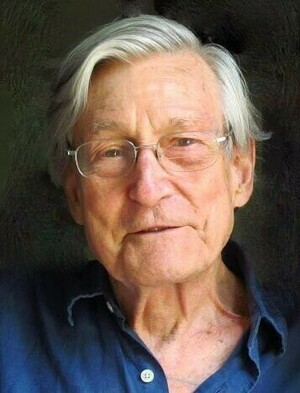
A graduate of the Goodwill Excel Center — a high school for adults that found proven results and ongoing success through their partnership with LEO.Through the work of the (LEO) in the Collegeof Arts and Letters and the at the Keough School of Global Affairs, 91Թ has already established a record of success by combining world-class research expertise with deep local knowledge and insights. Over the past decade, LEO and Pulte have built a foundation of strong partnerships with service providers and practitioners around the world and across the country, including Goodwill Industries, Catholic Charities USA, Catholic Relief Services and the U.S. Agency for International Development (USAID).
The new Poverty Initiative will unify efforts across LEO and Pulte, fueling an innovative local-to-global approach. It will also establish stronger connections between the many departments, organizations, programs, faculty and students across the University who are committed to alleviating poverty, including the and the .
The 91Թ Poverty Initiative will direct its work toward three areas:
“As both an alum and a 91Թ faculty member for over two decades, I have never been more excited to be a part of this institution,” said Sullivan, a professor of economics who directsboth the Poverty Initiative and LEO, which he co-founded.
“This gift will ensure that 91Թ is the place where undergraduate and graduate students come to study poverty, where prominent faculty come to conduct poverty-related research and where policymakers, philanthropists, practitioners and providers look to discover new pathwaysto break the cycle of poverty. The Poverty Initiative exemplifies 91Թ’s mission to be aforce for good in a world deeply in need.”
]]>“The strategic framework’s release is an exciting moment when we at 91Թ turn our collective gaze to the future,” said 91Թ President “The University has critical contributions to make to our students, the nation, the Church and the world, and we are eager to begin work on realizing the vision outlined in the framework.”
“” is the result of more than two years of involving contributions from more than 700 faculty, staff and leaders from across the University.
“We are deeply grateful to everyone who participated in this planning process,” said, the Charles and Jill Fischer Provost, who led the development of the document. “Our effort to educate students and conduct research at the highest level animated by a distinctive Catholic mission is one of the most exciting and consequential experiments in global higher education.”
In identifying where 91Թ should go in the next decade, the framework focuses on three themes — Strengthening Foundations, Global Catholicism, and Science and Engineering for a World in Need. Together these themes advance the.
More than any previous planning effort, the framework emphasizes 91Թ thinking and acting as an institution to make the most meaningful contributions to questions of national and international concern. Several of the strategic initiatives will be coordinated efforts drawing on expertise in multiple schools, colleges, centers and institutes. Other initiatives from all levels of the University will continue to emerge in the coming years.
The document also reinforces a deep commitment to diversity and inclusion as an integral part of the University’s Catholic mission and highlights the importance of engagement with South Bend and the region.
“On behalf of the Board of Trustees, I want to express our profound thanks to Father Jenkins and to all who have worked so hard to formulate such a thoughtful, challenging and focused framework for the future of Our Lady’s University,” Board Chairman John J. Brennan said. “We look forward to the realization of the aspirations outlined in this document and to reaching new heights as the premier Catholic research university in the world.”
“91Թ 2033: A Strategic Framework” is available online at .
]]>“Scott’s leadership as founding dean of the Keough School has been simply extraordinary,” said , the Charles and Jill Fischer Provost. “Beginning the first new college or school at 91Թ in almost 100 years is no simple task. Faculty must be appointed, students recruited, degree programs established and a mission for the school developed. In all of this Scott has excelled. His vision, tenacity and commitment to building a more global 91Թ and a more just world have enriched us all.”
Appleby is a leading scholar of global religious movements and a professor of history who joined the 91Թ faculty in 1994 as director of the Cushwa Center for the Study of American Catholicism. He went on to serve as director of the Kroc Institute for International Peace Studies for 14 years before his appointment as founding dean of the Keough School in 2014.
In this role, Appleby led the development of a mission and strategic plan for the Keough School, which seeks to advance integral human development, a holistic model of human flourishing grounded in the God-given dignity of each and every person.
During his tenure as dean, Appleby oversaw the appointments of more than 60 new faculty, including research, teaching, policy and professional practice scholars; opened a global policy office in Washington, D.C.; and launched two degree programs that complement the teaching and research of the nine interdisciplinary institutes housed within the Keough School. The public policy-oriented program annually attracts and enrolls highly qualified students from approximately 40 countries around the world. An undergraduate major in global affairs launched in spring 2022.
“It’s been an honor to work alongside the talented and dedicated faculty, staff and students in the Keough School. With an ambitious new strategic plan to guide the school, and a new and exciting strategic framework for 91Թ, the future is bright,” Appleby said. “I look forward in my final year as dean to working vigorously with my Keough colleagues to implement our plan, and with University leadership to ensure a smooth transition.”
At the conclusion of his time as Keough School dean, Appleby plans to continue his research and teaching as a faculty member at 91Թ.
“The issues Scott has worked on throughout his career remain pressing,” McGreevy said. “I know he will make a meaningful contribution to those topics through his research and teaching in the years ahead.”
The author or editor of 15 books, Appleby’s publications include “The Ambivalence of the Sacred: Religion, Violence and Reconciliation,” “The Oxford Handbook of Religion, Conflict and Peacebuilding,” and the five volumes of “The Fundamentalism Project” (University of Chicago Press), which he edited with Martin E. Marty. He is a fellow of the American Academy of Arts and Sciences and of the American Academy of Political and Social Science, and is the recipient of five honorary degrees.
The University has hired executive search firm Isaacson, Miller to lead an international search for a new dean and will soon convene a search committee as outlined in the Academic Articles.
]]>, the Glynn Family Collegiate Professor of History and co-director of the at the University of 91Թ, has been appointed vice president and associate provost for academic space and support, effective July 1.
In this role, Meserve will work with the University Architect’s office to help manage major new projects for academic units, including new buildings, renovations and moves. In addition, she will manage plans for backfill, swing space and efficient use of existing space on campus and set priorities for the upgrade and repair process.
Meserve will also develop a long-term strategic plan for existing and projected academic space and help to determine standards for utilization of academic space in consultation with Vice President and Associate Provost for Academic Strategy David Go.
“Space is a crucial resource for everyone at 91Թ, and learning how to do more with the space we have is central to our aspirations in teaching, learning and research,” said John T. McGreevy, the Charles and Jill Fischer Provost. “Margaret is already a trusted partner of the Facilities Design and Operations team and she has helped us tremendously over the past few months as we consider our academic space needs and how to responsibly steward our resources. I look forward to working with her in this expanded role.”
Meserve previously served as associate dean for the humanities and faculty affairs and director of space planning in the College of Arts and Letters, where she provided strategic leadership for 24 renovation projects for humanities departments and programs in Decio and O’Shaughnessy Halls. In January, she was named senior director of academic space for the Provost’s Office.
In her new expanded role, she will split her time equally between the Provost’s Office and her scholarly work, which includes teaching, research and leadership of the Glynn Family Honors Program.
Meserve studies the Italian Renaissance and the histories of printing and book production, history writing, humanist culture and the papacy in the 15th and 16th centuries. Her most recent book, “Papal Bull: Print, Politics, and Propaganda in Renaissance Rome,” for the most distinguished work in Italian history published in 2021.
Meserve received her bachelor’s degree in classics from Harvard and her master’s and doctorate in Renaissance history from the University of London. She taught at Princeton for two years before coming to 91Թ in 2003. She has won fellowships from the National Endowment for the Humanities and the American Council of Learned Societies and she is a fellow of the American Academy in Rome.
She is currently working on a translation of the “Commentaries” of Pope Pius II, a Renaissance pope known for his urban planning projects and the only pope ever to compose an autobiography while in office.
“I’m thrilled to take on this important role working with partners across campus to make the best use of our academic buildings,” Meserve said. “91Թ enjoys an extraordinary architectural heritage and I hope our spaces can promote excellent teaching and research and a stronger sense of academic community among faculty, students and staff.”
]]>In this role, Metoyer will oversee 91Թ Learning, which includes the Office of Digital Learning, the Kaneb Center for Teaching Excellence and the Office of Learning Analytics. He will lead the University’s approach to innovative pedagogical and learning strategies, including online/digital learning, inter-institutional collaboration and experimental models for the future of education. Metoyer will chair the New Instructional Initiatives Committee and work closely with Rev. Dan Groody, C.S.C., vice president and associate provost for undergraduate education, on policies to support effective teaching and learning. He will also serve as a member of the President’s Leadership Council, the Provost’s Cabinet and the Core Curriculum Committee.
Metoyer is replacing Elliott Visconsi, who is leaving 91Թ this month .
“Teaching and learning is at the heart of everything we do at 91Թ, and Ron is an ideal choice for this important role,” said John T. McGreevy, the Charles and Jill Fischer Provost. “Human-centered strategies are central to his scholarly work, so he is exceptionally well-positioned to help our faculty use technology and new pedagogical techniques to enhance teaching and learning across the University. Ron is also an outstanding teacher in his own right, experienced in working with undergraduates, graduate students and postdoctoral fellows. I look forward to working with him.”
Metoyer will remain an active researcher following his appointment, dividing his time between the Office of the Provost and his , which specializes in human-computer interaction with an emphasis on information visualization. His research focuses on the design and use of visual representations in real-world applications where people must carry out complex tasks or make difficult decisions. His current projects include a funded by the National Institute of Food and Agriculture that aims to develop data-driven supports for food access in neighborhoods with limited options for fresh, healthy food.
Metoyer received his bachelor’s degree in computer engineering from the University of California, Los Angeles and his doctorate in computer science from Georgia Institute of Technology. He is the recipient of a 2002 NSF CAREER Award for his work in exploring usability issues around the generation of animated character content for training scenarios. He has published a book, “,” and more than 75 papers in top conferences and journals in human-computer interaction and computer graphics. Metoyer is also a leader in the National Science Foundation’s community.
“I couldn’t be more excited about this opportunity,” Metoyer said. “I’m looking forward to working with the ND Learning team to support student learning and faculty teaching to ensure that all students in our programs have an ‘unsurpassed’ educational experience.”
]]>Celebrating excellence in research, teaching and other important work supporting 91Թ’s academic mission, these annual are coordinated by the Office of the Provost, with the exception of the and the Toohey Awards, which are presented by and the , respectively.
The 2022-23 recipients are:
Twenty faculty members from across the University have been awarded the:
Three faculty members were honored with
The Joyce and Dockweiler awards are presented by the Office of the Provost, and the recipients are selected through a process that includes peer and student nominations.
For more information, visit.
]]>
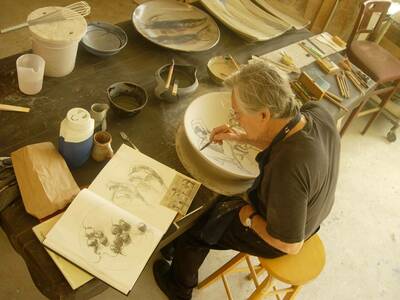
Douglas Kinsey, an artist and professor emeritus in the at the University of 91Թ, died May 21 at his home. He was 88.
Kinsey joined the 91Թ faculty in 1968 after earning his MFA at the University of Minnesota and his bachelor’s degree at Oberlin College. Before coming to 91Թ, he taught at Oberlin, the University of North Dakota and Berea College.
At 91Թ, Kinsey was honored with the , the highest teaching honor in the College of Arts and Letters. It recognizes a faculty member who has sustained excellence in research and instruction over a wide range of courses and who motivates and enriches students using innovative and creative teaching methods.
“He was truly dedicated to his students,” said ceramics professor , a longtime friend and mentee of Kinsey’s. “When he would do his grading, he would type out a letter to each student explaining the grade and his understanding of the work. He had a large student following and they would come to visit him for years after graduation.”
Although he moved to emeritus status in 1999, Kinsey was still a frequent presence in the department for many years, participating in the end-of-semester critiques and engaging with students, alumni and departmental colleagues, many of whom considered him a mentor.
Kinsey’s studio and his home on 91Թ Avenue were always open to students for counsel on art or on life. He was equally generous to his fellow faculty members, Kremer recalls.
“I remember meeting him in the studio when I first came to 91Թ in 1973,” Kremer said. “I was 14 years younger. He just sort of took me under his wing and from then on he was a mentor for me. I called him Uncle Doug.”
When Kremer wanted to buy a house in a rural area so he could set up a ceramics studio with kilns, the Kinseys even loaned him the money for a down payment, he recalled. The two friends often bonded about art, teaching and life, visiting each other's homes and studios and working together in their shared garden.
“Doug was a wonderful man — a very gentle person but incredibly idealistic,” Kremer said. “He had very high standards for himself and for the world.”
Kinsey’s approach to life and art reflected his deep commitment to social justice and his lifelong involvement with the Religious Society of Friends. Many of his paintings were inspired by news photographs — often from The New York Times — that spoke to his concern for those in crisis, dispossessed by war or natural disaster.
“Hopefully this will suggest to the viewer that in spite of the fact that catastrophe happens, the spirit and quality of human community perseveres,” Kinsey said when describing his work during his 1999 Sheedy Award acceptance speech.
Kinsey had more than 70 one-man shows to his credit across the country as well as internationally, and his work has been shown frequently at the Snite Museum at 91Թ and at the South Bend Museum of Art.
In addition to his solo artwork, Kinsey enjoyed collaborating with friends and fellow artists, providing illustrations for books of poetry, or working with Kremer on a series of painted ceramic platters.
Kinsey is survived by his spouse, Marjorie Schreiber Kinsey, and his sister, Dea Kinsey Andrews.
A Memorial Meeting after the custom of Friends will be held for Kinsey at 2 p.m. June 11at the South Bend Friends Meeting, 333 W. Colfax Ave. in South Bend.
To honor his memory, donations may be made to the , the or the . Palmer Funeral Homes-River Park Chapel is assisting the family with arrangements. Online condolences may be expressed to the family at .
Originally published by at on June 1.
]]>“The sudden loss of colleague, friend, teacher and mentor Mary Ellen Konieczny is a devastating blow to our department, from her important scholarly work on religion and conflict to her tremendous dedication to her students,” said , professor and chair of the Department of Sociology. “She had a brilliant intellect and an even more brilliant spirit that was shared in abundance with all those she came into contact with. Few interacted with Mary Ellen without experiencing her enthusiasm, energy and earnest devotion to her family, friends and work. She was also deeply committed to the mission of 91Թ, building bridges across campus, and indeed, around the world with her recent work in Rwanda.
“Mary Ellen will be deeply, deeply missed but carried in the hearts of the many she inspired.”
Konieczny, a faculty fellow of the and the , studied religion and conflict, the family and public politics.
Her 2013 book, “The Spirit’s Tether: Family, Work, and Religion among American Catholics,” is an ethnography of liberal and conservative Catholic parishes that examines how religion and family life support and shape Catholic Americans’ moral and political polarization. She was co-editor of “Polarization in the U.S. Catholic Church: Naming the Wounds, Beginning to Heal,” a 2016 volume that grew from a conference she helped organize at 91Թ in 2015.
Most recently, Konieczny was working on a book called “Service before Self: Organization, Cultural Conflict, and Religion at the U.S. Air Force Academy” and a research project in Rwanda on the interplay of post-genocide reconciliation and religious practice.
“Mary Ellen Konieczny was a distinguished sociologist of religion in a department known as a national leader in that area,” said , I.A. O’Shaughnessy Dean of the . “Her scholarship on Catholic parishes helped us better understand tensions and strength in individual congregations just as her uncompleted work on religion in the military probed the overlap between religious and civic identity.
“We will remember Mary Ellen for that scholarship, but perhaps even more for her high spirits and sense of joy, which undergirded her teaching and research and proved a constant source of inspiration to colleagues and students.”
A 1981 graduate of 91Թ, Konieczny received her Master of Divinity from Weston Jesuit School of Theology and worked in ministry and administration for the Catholic Archdiocese of Chicago before pursuing a Ph.D. in sociology at the University of Chicago.
“Mary Ellen has been an inspiration to me in the 10 years we worked together on 91Թ’s faculty,” said the William W. and Anna Jean Cushwa Director of the .
“It was a privilege to accompany her as she published her first book and earned tenure, and along with her other colleagues and students I mourn the loss of all that she had ahead of her professionally. Her death is also devastating personally to so many of us. I never had a friend quite like her, with whom I could, over the course of a single conversation, discuss scholarship and teaching, marriage and motherhood, faith and feminism, and even fashion. She was the kind of person who would text you to say that she had just purchased a new dress, but she thought it would look better on you, so could you swing by her office to pick it up? Her unique combination of generosity, curiosity and energy was a gift to the entire 91Թ community, and it will not be the same without her.”
Konieczny is survived by her husband, Chris, and their two sons, John and Peter.
A Mass of Christian Burial will be celebrated at the Basilica of the Sacred Heart at 91Թ at 9:30 a.m.Thursday (March 1)with Rev. John I. Jenkins, C.S.C., officiating. Burial will follow at Cedar Grove Cemetery, on campus. Friends may call on Wednesday at the Church of Our Lady of Loretto, 100 Lourdes Hall – Saint Mary’s, 91Թ, IN from 4-8 p.m. with a remembrance at 6.30 p.m.
Memorial donations, in lieu of flowers, may be made in the Professor’s memory to: Buffalo Academy of the Sacred Heart, Buffalo NY, 3860 Main St., Buffalo, NY 14226.
Arlene Dávila
Anthropologist will visit the University of 91Թ Wednesday-Saturday (April 23-26) as the inaugural recipient of the Virgilio Elizondo Distinguished Visiting Professorship.
A professor of anthropology and American studies at New York University, Dávila “is one of the country’s leading Latino studies cultural anthropologists, but on that firm foundation, she does not hesitate to venture forth into interdisciplinary work ranging across history, media studies, the sociology of mobility and popular culture — and she does so across several Latino groups,” said ILS Director , the 91Թ Professor of American Literature and Julian Samora Professor of Latino Studies.
, professor of theology and executive director of ILS, said that Dávila “has been praised as ‘the finest, fiercest and most piercing of our public intellectuals.’”
Dávila’s research spans urban ethnography, the political economy of culture and media, creative economies and consumption, immigration and geographies of inequality and race.
She is the author of five books, “Culture Works: Space, Value and Mobility Across the Neoliberal Americas” (2014), “Latino Spin: Public Image and the Whitewashing of Race” (2008), “Barrio Dreams: Puerto Ricans, Latinos and the Neoliberal City” (2004), “Latinos, Inc.: The Marketing and Making of a People” (2001) and “Sponsored Identities: Cultural Politics in Puerto Rico” (1997), and co-editor of “Mambo Montage: The Latinization of New York” (2001). “Latino Spin” won the 2010 Distinguished Book Award in Latino Studies from the Latin American Studies Association.
Rev. Virgil Elizondo
“This new visiting professorship is named in honor of our leading senior professor in the Institute for Latino Studies, , whose name and scholarship exemplify the rigorous academic direction that the Institute has been taking in the last three years,” Limón said.
Elizondo, the 91Թ Professor of Pastoral and Hispanic Theology, is widely recognized as the “father of U.S. Latino religious thought” and was hailed by Time magazine as one of the top spiritual innovators of the 21st century.
“When we considered the possible invitees for launching this new program,” Limón said, “the distinguished professor Arlene Dávila immediately came to our minds. We are delighted to have her as our inaugural Virgilio Elizondo Visiting Professor.”
The visiting professorship includes a public lecture or performance, a symposium, presentations in Latino Studies classes and meetings with graduate and undergraduate students to mentor them in their research projects and careers.
Dávila will present a public lecture, “” at 4 p.m. Thursday (April 24) in the Eck Center Auditorium, and will lead a Young Scholars Symposium for advanced doctoral students and pre-tenured professors.
Created in 1999, the Institute for Latino Studies plays a vital role in fostering understanding of the U.S. Latino experience and seeks to prepare transformative leaders in education, the professions, the economy, civic affairs, faith and family life.
Building upon the intellectual legacy of the late Julian Samora, a pioneering Latino scholar and professor in 91Թ’s , the institute supports interdisciplinary initiatives in Latino studies as a key component of the University’s academic mission.
The Virgilio Elizondo Distinguished Visiting Professorship is among several new ILS initiatives, including the Transformative Latino Leadership Lecture Series, which brought historian and author Carlos Eire and San Antonio Mayor Julián Castro to campus this year; a new Latino studies seminar; and an aggressive faculty hiring program designed to bring to 91Թ’s the best academics working in Latino studies.
Among the first recruits are historian Mike Amezcua, sociologist Jennifer Jones and theologian Peter Casarella. Together with ILS, the College of Arts and Letters is also conducting a search this year for an endowed professor in Transformative Latino Leadership.
Originally published by Kate Garry at on April 17, 2014.
]]>
Alex Coccia, an Africana studies and peace studies major in the University of 91Թ’s , has been named a 2013 .
Established in 1975 as a “living memorial” to President Harry S. Truman, the prestigious scholarship includes $30,000 in graduate study funds, priority admission and supplemental financial aid at select institutions, leadership training, career and graduate school counseling, and internship opportunities within the federal government.
Nationwide, just 60 to 65 college juniors are selected as Truman scholars each year, based on leadership potential, intellectual ability and likelihood of “making a difference.”
“It is such an honor to be named a 2013 Truman Scholar,” Coccia said. “I cannot thank enough my professors who have mentored me throughout my time at 91Թ and the staff at the University’s (CUSE), whose thoughtful and critical guidance prepared me well for the Truman application and interview process.”
A native of Columbus, Ohio, Coccia is a scholar in the and an active student-athlete. He was a member of 91Թ’s 2011 National Championship fencing team and founded the 4 to 5 Movement, a student initiative in support of LGBTQ inclusion on campus. He was recently elected student body president for the 2013-2014 term.
Coccia, who is also involved in the in 91Թ’s , taught fencing to schoolchildren in Uganda in summer 2011, and spent summer 2012 conducting research in Rwanda. He plans to draw on that research for a senior thesis on the Gacaca court system in Rwanda.
“The courts were set up after the genocide in an effort to be sort of a transitional justice, a restorative justice model,” Coccia said. “My question is: Has this focus on reconciliation had an effect on the actual development of communities? And what is the relationship between reconciliation and development in post-conflict societies?”
Looking to the future, he said he is interested in politics and human rights law.
“I’ve always been interested in law as the system in which society operates, and I think having that background is important when we’re dealing with structural injustices.”
Coccia is the fourth 91Թ College of Arts and Letters student to be named a Truman Scholar in as many years. Past winners include Elizabeth Davis, Class of 2012, a Program of Liberal Studies major; Elizabeth Simpson, Class of ’11, a theology and peace studies major; and Puja Parikh, Class of ’11, a political science and psychology major.
Among the program’s many benefits is a Truman Scholars Leadership Week, which Coccia said was a fantastic experience.
“I had the opportunity to spend time with 61 other passionate and dedicated student leaders,” he said. “Their commitment to public service, whether through public office, medicine, nonprofit development work or other areas of interest, is truly inspiring.
“I’m certainly humbled to have received the scholarship and am looking forward to using it to further my education in an effort to live out the mission of both the University and the Truman Foundation — in service to justice.”
Coccia’s Truman Scholarship was made possible in part through his participation in 91Թ’s (CUSE). CUSE provides undergraduate students in all the University’s colleges opportunities for research, scholarship, and creative projects. The center also assists them in finding faculty mentors, funding and venues for the publication or presentation of their work, and promotes applications to national Fellowship programs and prepares them in their application process.
More information on CUSE is available online at .
Originally published by Kate Garry at on June 7, 2013.
]]>