tag:news.nd.edu,2005:/news/authors/mary-hendriksen tag:news.nd.edu,2005:/latest 91Թ | 91Թ | News 2025-01-31T16:58:00-05:00 91Թ gathers and disseminates information that enhances understanding of the University’s academic and research mission and its accomplishments as a Catholic institute of higher learning. tag:news.nd.edu,2005:News/169666 2025-01-31T16:58:00-05:00 2025-01-31T16:58:33-05:00 Ahsan Kareem elected to the European Academy of Sciences and Arts ,the Robert M. Moran Professor of Engineering in the (CEEES) at the University of 91Թ, has been elected to the European Academy of Sciences and Arts. He will join the academy’s division of technical and environmental sciences.

Kareem’s election to the academy recognizes his contributions and achievements in advancing the safety and resilience of civil infrastructure exposed to natural hazards such as wind, waves and earthquakes. His research includes using synergistic approaches such as computer modeling as well as laboratory and full-scale experiments to better understand and predict the impact of natural hazards on the constructed environment and to develop measures to enhance structural performance.

Much of Kareem’s research takes place within 91Թ’s (NatHaz Modeling Laboratory), which he directs. The mission of the laboratory is to quantify load effects caused by various natural hazards on structures and to develop innovative strategies to mitigate and manage their effects.

In 2023, Kareem was named a for contributions to analyses and designs to account for wind effects on tall buildings, long-span bridges and other structures.

In the U.S., Kareem is also an elected member of the National Academy of Engineering. He is a foreign member of the Chinese Academy of Engineering, a foreign fellow of the Indian Academy of Engineering, and a foreign member of the Engineering Academy of Japan.

Located in Salzburg, Austria, the European Academy of Sciences and Arts numbers 1900 eminent scholars and practitioners, among them 28 Nobel Prize winners. Members are divided into eight classes: humanities, medicine, arts, natural sciences, social sciences, law and economics, technical and environmental sciences, and world religions.

Previous 91Թ faculty elected to the European Academy of Sciences and Arts include , the William K. Warren Professor of Theology, and , director of the and professor of social ethics.

]]>
Mary Hendriksen
tag:news.nd.edu,2005:News/158021 2023-11-15T09:00:00-05:00 2023-11-14T16:47:51-05:00 Workshop explores the connection between names and identity When Fulbright Foreign Language Teaching Assistant (FLTA) taught and took classes on the University of 91Թ’s campus last year, she found that administrators and her fellow FLTAs at the , her academic home and a frequent collaborator with , took time to learn how to pronounce her name correctly. They then called her by her name simply and directly, not remarking on her name’s “exoticness” or drawing attention to their own efforts in pronouncing it.

“They were also interested in learning the meaning of my Hindi name, which is ‘prayer song,’” Benal said.

Yet, she noted, that atmosphere was something of a “cocoon.”

She has friends and colleagues who have had very different experiences. Some have been introduced to people who have refused outright to say a name they deem “unpronounceable.” Others have encountered a new acquaintance who decides to “rename” them — so that, for example, the name Aanandini becomes “Ann.”

Because her given name, Stuti, has two syllables and a phonetic structure that seems familiar to the average English speaker, Benal said that most people generally say her name with little hesitation. They may not grasp the subtleties of a soft “st” or the correct placement of the accent, but she feels that usually it is a close approximation, a good effort. When new acquaintances stumble repeatedly on her name or hesitate, she might suggest that they use an abbreviated name, “Stu.” At least, she said, “it has half the sound of my given name.”

Outside of her “cocoon,” and as do many who have a name that may seem difficult at first glance to pronounce, Benal had a “Starbucks name” on campus and in the community — usually “Sophie.” Once, though, she gave her name as “Clare” when awaiting a carry-out order. She laughs now when she recounts that the friend waiting along with her had to prompt her to claim that order.

“Clearly, she said, ‘Clare’ meshed with my identity so little that I didn’t even respond to it.”

Connection between names, identity and inclusiveness

Now teaching at the Université de Franche-Comté in Besançon, France, Benal will join virtually on Thursday (Nov. 16) with, assistant director of the CSLC, and associate director of International Student and Scholar Affairs in 91Թ International, to lead an designed to guide faculty, staff and students on the proper pronunciation of Hindi names.

All three workshop leaders are passionate about the importance of recognizing the connection between a name and a person’s identity. They are passionate as well about the responsibility of each member of a community to learn to pronounce the names of all of its members correctly.

“To fulfill 91Թ’s aspirations to be a community that honors diversity and strives for inclusivity,” Karabatak said, “there must be more than the one-way movement of people at 91Թ going to the University’s global centers and gateways. Being a global citizen is a shared responsibility. It encompasses not only studying internationally, but, on campus, demonstrating a personal responsibility to bridge cultures.”

All around the world, parents choose a name with great consideration. Learning to pronounce that name correctly honors a student’s or colleague’s identity as well as their culture.

Cin Hua Flta
Fulbright FLTA Cin-Hua Chen

It takes intention and, often, some effort.

“We know that many people struggle to pronounce names that sound foreign to them,” Davis said. “At times, even attempting that pronunciation can make a person feel uncomfortable or nervous and they may be tempted to use another ‘easier’ name, a nickname, or even avoid addressing the person at all. Any of those actions, however, can cause someone to feel excluded from the community. The better way requires effort — often minimal — to learn how to pronounce a person’s name.”

With that philosophy as the foundation, Davis and Karabatak last February on the pronunciation of Mandarin names. Led by Fulbright FLTA Cin-Hua Chen, more than 100 attendees gathered online that day. Comments were so positive that this semester’s Hindi name workshop is modeled on the Mandarin name workshop’s general outline and format, which includes the following:

  • Sharing a few personal name stories that highlight the connection between a person’s name and their identity.
  • Challenging the mindset that certain names are “impossible” to pronounce.
  • Demonstrating the linguistic building blocks of a language.
  • Practicing within small groups.

Take-aways from the Mandarin Name Pronunciation Workshop

Reflecting on that workshop now from her current base in Singapore, Chen said that the underlying message of the name pronunciation initiative is: “Names are a very good beginning in efforts for inclusivity.”

Her pointers include:

  • Ask a new acquaintance how to pronounce his or her name.
  • Listen intently to try to imitate sounds and accents.
  • Repeat the name right away, simply and directly. There is no need to exaggerate sounds or comment on the name’s difficulty or “foreignness.”
  • Ask, “Is that correct?”
  • Then jump right into a conversation about the topic at hand.

Chen joins with her colleagues in emphasizing that effort — actually trying — is the point.

“Your first attempt may not be perfect,” she said, “but it is that effort that displays your willingness to engage with a person. It is how we can all work together to create a multicultural environment.”

International Education Week

Davis and Karabatak emphasized the importance of 91Թ’s FLTAs in their initiatives related to identity and inclusion.

“The FLTAs do important work for us on campus,” Karabatak said. “Trained in the teaching of language, and coming to campus with a firm commitment to the bridging of cultures, they are a key resource for us.”

The Hindi Name Pronunciation Workshop is part of , an opportunity to celebrate the benefits of international education and exchange worldwide. This joint initiative of the U.S. Department of Education and the U.S. Department of State is part of their efforts to promote programs that prepare Americans for a global environment and to attract future leaders from abroad to study, learn and exchange experiences.

about the upcoming workshop and register today.

Originally published by Mary Hendriksen at on Nov. 10.

]]>
Mary Hendriksen
tag:news.nd.edu,2005:News/133187 2021-01-11T15:00:00-05:00 2021-01-11T15:03:06-05:00 New partnership with Royal Irish Academy supports research and dialogue on the future of Ireland, north and south On Monday (Jan. 11), the and the at theUniversity of 91Թ’s are launching the , an initiative that brings together leading experts from Ireland and abroad to consider the most challenging policy issues now being debated throughout the island of Ireland.

ARINS, or Analysing and Researching Ireland North and South, is being launched against the backdrop of Brexit, the United Kingdom’s withdrawal from the European Union, which took full effect on Jan. 1. Brexit has created both a sense of urgency and opportunity regarding relationships within Ireland and between the Irish Republic and the United Kingdom.

Research questions to be explored as part of the ARINS Project range from constitutional and institutional issues to options for economic, fiscal and social policy. Relations within Northern Ireland, across the island of Ireland, and between Ireland and Britain will all be assessed.

“While the issue of a future referendum on the constitutional position of Ireland has been raised, holding a referendum in the absence of prior research and informed debate on the options and their consequences would be most unfortunate,” said Gerry McKenna, senior vice president of the Royal Irish Academy, an all-Ireland, leading body of experts in the sciences and humanities. “The academy recognizes the sensitivities around the very process of conducting such research, but also believes that the need to ensure that all eventualities are anticipated and researched, and that ensuing debate is informed and comprehensive, takes primacy.”

This new partnership enables the RIA and Keough-Naughton Institute to jointly conduct and commission rigorous, nonpartisan and independent research by a wide range of scholars in multiple disciplines. In publishing and publicizing that research, the goal is to support respectful debate among politicians, within the media and civil society, and among the general public.

“Research on these matters is not intended to strengthen or weaken any particular aspiration, but rather to foster meaningful debate,” said , the Madden-Hennebry Professor of History and director of the Keough-Naughton Institute for Irish Studies. “Irrespective of how constitutional questions might develop, it is also essential to understand how the Good Friday/Belfast Agreement and its institutions might be affected by the uncertainties of this moment. As part of this exercise, it is critical to map interdependencies and connections within and between Northern Ireland, Ireland and the United Kingdom.”

Papers will be published monthly in the Irish Studies in International Affairs journal edited by John Doyle, director of the Institute for International Conflict Resolution and Reconstruction at Dublin City University. All articles will be free to access online at . Each article published will be accompanied by at least one response, often from a different standpoint. Forthcoming articles include Jennifer Todd, University College Dublin, on Unionism, identity and Irish unity; Deirdre Heenan, Ulster University, on cross-border cooperation on health issues; Duncan Morrow, Ulster University, on Unionist responses to the new debate on constitutional futures; Rory Montgomery, a former Irish diplomat, on the Good Friday/Belfast Agreement and a united Ireland; and Katy Hayward, Queen’s University Belfast, on Brexit and the Northern Ireland protocol. Climate policy in the two jurisdictions has also been identified for detailed research and analysis.

Other experts contributing to the ARINS project include Alan Barrett, Economic and Social Research Institute; Marie Cowan, Geological Survey of Northern Ireland; Etain Tannam, Trinity College Dublin; Cathy Gormley-Heenan, Ulster University; and Christopher McCrudden, Queen’s University Belfast.

On Jan. 11, theIrish Timesand theBelfast Telegraphwill publish opposing viewpoints fromBrendan O’Leary, University of Pennsylvania,and Peter Shirlow, University of Liverpool,on whether the Irish should prepare for a referendum on unification.

At 7 p.m. local time that day, Fintan O’Toole, an Irish Times columnist, and William Crawley, a BBC commentator, will have an online public conversation on the theme “Northern Ireland after Brexit.” Tickets are free of charge but booking is essential at

The Royal Irish Academy discourse program is sponsored by Mason Hayes & Curran.

.

Contact: Mary Hendriksen, assistant director, Keough-Naughton Institute for Irish Studies, mhendrik@nd.edu

]]>
Mary Hendriksen
tag:news.nd.edu,2005:News/91784 2018-10-25T11:00:00-04:00 2018-11-29T13:13:52-05:00 Patrick Griffin awarded distinction of honorary professor at University of Edinburgh , Madden-Hennebry Professor of History and director of the at the University of 91Թ, has been named honorary professorat the University of Edinburgh’s School of History, Classics, and Archaeology.

One of the world’s leading scholars in transatlantic history, Griffin is the author of numerous books, including "The Townshend Moment: The Making of Empire and Revolution in the Eighteenth Century" (Yale University Press, 2017)and "The People with No Name: Ireland’s Ulster Scots, America’s Scots Irish, and the Creation of a British Atlantic World" (Princeton University Press, 2001).

Griffin’s interests map very closely on two areas of world-class expertiseat the University of Edinburgh:American and Irish history.

A key event in his association with that universitywas thefounding and organization ofthe in 2012 with Frank Cogliano, professor of history at Edinburgh. The Global Dome Program has been a highly successful, intensive seminar designed to accelerate dissertation progress and build international networks of young scholars in the humanities field.The program was cited as one of Griffin’s distinctions when 91Թ’s Graduate School awarded him the James A. Burns, C.S.C., Award in 2017.

At the University of Edinburgh, an honorary professorship is conferred on scholars who undergo a rigorous evaluation process and is considered equivalent to a full professorship.

Edinburghis consistently ranked in the top 20 world universities in the QS World Rankings, with its program in history named as.

“I am thrilled with the great honor of being affiliated with the University of Edinburgh,” said Griffin.

“Each time I have given lectures at Edinburgh, met with facultyor worked with graduate students, I see that the University and its history department are considered preeminent for good reason. I am looking forward to working closely with my new colleagues for years to come.”

Originally published by Mary Hendriksen at on Oct.22.

]]>
Mary Hendriksen
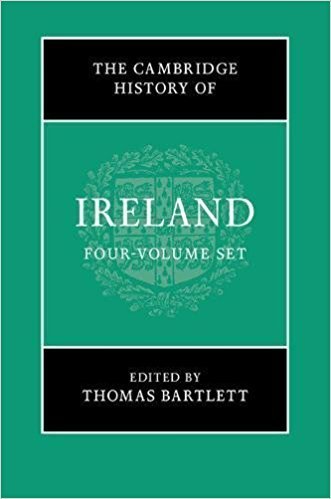
tag:news.nd.edu,2005:News/86370 2018-04-30T15:00:00-04:00 2018-11-29T13:13:52-05:00 Two 91Թ faculty published in new 'Cambridge History of Ireland' Cuptombartlett

A landmark survey of Irish history, "The Cambridge History of Ireland" (Cambridge University Press) presents the Irish story – or stories – from c. 600 to the present. Four comprehensive volumes bring together the latest scholarship, setting Irish history within broader Atlantic, European, imperialand global contexts.


Two University of 91Թ faculty members are contributing authors to thislandmark series.


, Madden-Hennebry Professor of History and Director, Keough-Naughton Institute for Irish Studies,wrote achapter titled, "‘Irish’ Migration to America in the Eighteenth Century? Or the Strange Case for the ‘Scots/Irish,’"in volume III.

,associate professor of Irish language and literature and director of the Center for the Study of Languages and Cultures at91Թ, wrote an article titled,"The Culture Wars: The Gaelic League and Irish-Ireland,"in volume IV.

The Keough-Naughton Institute for Irish Studies has joined with Cambridge University Press and the Trinity Long Room Hub to sponsor a seminar on Monday (April 30) and then a celebration at Dublin Castle in the evening, with President Michael D. Higgins offering a special address.

The work benefits from a strong political narrative framework,and is distinctive in including essays that address the full range of social, economic, religious, linguistic, military, cultural, artistic and gender history, and in challenging traditional chronological boundaries in a manner that offers new perspectives and insights.

Each volume examines Ireland’s development within a distinctperiod, and offers a complete and rounded picture of Irish life, while remaining sensitive to the Irish experience.

The first volume of "The Cambridge History of Ireland" presents the latest thinking on key aspects of the medieval Irish experience, focusing on the extent to which developments were unique to Ireland. The openness of Ireland to outside influences, and its capacity to influence the world beyond its shores, are recurring themes. Underpinning the book is a comparative, outward-looking approach that sees Ireland as an integral but exceptional component of medieval Christian Europe.

Volume II looks at the transformative and tumultuous years between 1550 and 1730, offering fresh perspectives on the political, military, religious, social, cultural, intellectual, economicand environmental history of early modern Ireland. As with all the volumes in the series, contributors here situate their discussions in global and comparative contexts.

The 18th and 19th centuries were an era of continuity as well as change. Though properly portrayed as the era of "Protestant Ascendancy," it embraces two phases – the 18th century, when that ascendancy was at its peak; and the 19th century, when the Protestant elite sustained a determined rear-guard defense in the face of the emergence of modern Catholic nationalism. This volume moves beyond the familiar political narrative to engage with the economy, society, population, emigration, religion, language, state formation, culture, art and architecture, and the Irish abroad

The final volume covers the period from the 1880s to the present. This insightful interpretation on the emergence and development of Ireland during these often turbulent decades is copiously illustrated, with special features on images of the "Troubles" and on Irish art and sculpture in the 20th century.

At the celebration in Dublin Castle, President Michael D. Higgins commented on the impressive scholarship contained in the four volumes. He highlighted just a few chapters—one of which was the contribution of Patrick Griffin:

The character of this eighteenth-century migration from Ireland of perhaps up to 250,000 people has been cemented in the popular mind through the use of the term of ‘Scots Irish’, which, as Professor Patrick Griffin’s contribution demonstrates, was itself a nineteenth-century appellation rather than one which might be familiar to the migrants themselves, indicating not only the fluid character of migration within these islands and the New World Colonies, but also something of the ideological environment in which ethnic categories were later constructed and mobilised.

The re-interpretation of the nature of this wave of Irish migration, and I use the term ‘Irish’ deliberately, is important not only for our own historiography but for historical debates within the United States, where the immigration that followed An Gorta Mór is very often thought of as, in an excessively exclusive way, the foundational event in Irish-America, and of what we have come to know as ‘the Irish diaspora’, a term that encompasses all those who claim Irish ancestry today, with all the diversity and complexity that implies.

Originally published by Mary Hendriksen at on April 30.

]]>
Mary Hendriksen
tag:news.nd.edu,2005:News/83372 2018-01-24T13:55:00-05:00 2018-11-29T13:13:52-05:00 Keough family's gift expands the Snite Museum’s Irish art collection The has receiveda gift from the Donald and Marilyn Keoughfamily of 19 modern and contemporary paintings by Irish artists. Combined with earlier acquisitions of 18th-century prints by James Barry and Thomas Frye and photographs by Alen MacWeeney, the gift lays the foundation for a significant collection of Irish art spanning three centuries at the University of 91Թ.

“This gift of paintings does not only represent an aesthetic contribution to 91Թ,” said , Madden-Hennebry Professor of History and director of the Keough-Naughton Institute for Irish Studies,“it also helps build a bridge between Ireland and the University. For these reasons, we are thrilled to have these paintings here. It is especially gratifying for me that the gift comes from one of our most generous benefactors, the Keough family.”

Included in the gift are prime examples of modern art by Jack B. Yeats, Roderic O’Conorand Paul Henry, among others. Yeats is probably the best known and most beloved Irish artist, notable for his expressionistic treatment of Irish subjects plucked from common life — horse races, fairs, the countrysideand coastlines of Ireland. A participant in the Armory Show in New York in 1913, he developed a strong following in the United States and sold many of his best paintings to collectors on this side of the Atlantic.

Other artists represented in the collection are Nathaniel Hone, who introduced Barbizon naturalism into Irish landscape painting, Mary Swanzy, Grace Henry, Maurice Canning Wilks, Markey Robinsonand James O’Halloran.

“These paintings are welcome additions to our holdings of modern European art; they provide a heretofore lacking visual component to the rich resources offered in the University of 91Թ’s esteemed Irish Studies program,” said Chuck Loving, director of the Snite Museum. “They will strengthen our ability to partner with the Irish studies program, Hesburgh Libraries Special Collectionsand the University’s Dublin Global Gateway.”

Jack B. Yeats’ "Driftwood in a Cave"painting is now temporarily installed on the new acquisitions wall in the atrium of the museum.


Before their passing, Donald and Marilyn Keough were generous benefactors of the University. In addition to a gift in 1992 that established the Irish studies program and created an endowed chair initially held by Professor Seamus Deane, the couple made several other significant contributions to 91Թ for a variety of educational and residential initiatives, including two additional endowed chairs in Irish studies; a summer internship program for 91Թ students in Ireland; the restoration of O’Connell Housein Dublin; the Keough-Hesburgh Professorships for leading scholars who demonstrate a commitment to 91Թ’s Catholic mission; and a men’s residence hall named in Marilyn Keough’s honor. Most recently, they funded the Donald R. Keough School of Global Affairs, the first college or school established at the University in nearly a century.

Donald Keough was chairman of the board of Allen & Company Inc., a New York investment banking firm. He retired as president and chief operating officer of The Coca-Cola Company in 1993. He was a member of the University’s Board of Trustees from 1978 until 2015, serving as chair from 1986 to 1991. Marilyn Keough was an educator at Good Shepherd Convent School in Omaha, Nebraska, before marrying Donald in 1949. The couple settled with their six children in Atlanta where they supported area arts institutions, colleges and schools. Five of of their children are 91Թ graduates, with several of them serving on either the University’s Board of Trustees or advisory councils.

The Snite Museum of Art, University of 91Թ

is located on the campus of the University of 91Թ, near South Bend, Indiana. Museum hours are 10 a.m.–5 p.m., Tuesday through Friday; and Saturday and Sunday noon–5p.m. Admission is free.

The Snite Museum of Art provides opportunities to enjoy, respond to, learn from, and be inspired by original works of art.As a department of the University of 91Թ, the museum supports teaching and research, creates and shares knowledge, celebrates diversity through the visual arts, serves the local community and explores spiritual dimensions of art.

Originally published by Mary Hendriksen at on January 24, 2018.

]]>
Mary Hendriksen
tag:news.nd.edu,2005:News/70431 2016-10-10T14:10:00-04:00 2021-09-03T21:09:35-04:00 1916 The Irish Rebellion awarded "Best Documentary Series" 2016 Irish Film And Television Award Photo credit: Gaye Cunningham

was awarded “Best Documentary Series” at the 2016 Irish Film and Television Academy’s gala awards ceremony, held on Friday, October 7, in Dublin.

Narrated by Liam Neeson, the three-part series tells the dramatic story of the events that took place in Dublin during Easter Week 1916, when a small group of Irish rebels took on the might of the British Empire. The documentary – featuring a combination of rarely seen archival footage, new segments filmed on location worldwide, and interviews with leading international experts – also uncovers the untold story of the central role Irish Americans played in the lead-up to the rebellion. Although defeated militarily, the men and women of the Easter Rising would wring a moral victory from the jaws of defeat and inspire freedom struggles throughout the world – from Ireland to India.

The documentary and events associated with it are an initiative of the at the University of 91Թ. The Institute’s director, , is executive producer. , the Thomas J. and Kathleen M. O’Donnell Professor of Irish Studies and Concurrent Professor of Film, Television, and Theatre at the University of 91Թ, is the originator, creator, producer, and executive producer of the documentary.

Information on the creative and academic teams associated with 1916 The Irish Rebellion is available .

Broadcast of the three-part series occurred in Ireland (RTÉ), the United Kingdom (BBC), France (TF1 Histoire), the United States (PBS affiliates), and many other countries, as well as in the air through Aer Lingus.

Also distributed in an 86-minute feature-film version, the documentary has met with spectacular success—with screenings and broadcasts worldwide to viewers in more than 60 countries on five continents. Many of the screenings are associated with the initiative, while others have been sponsored by Irish embassies and the Irish Government, which has made the documentary a centerpiece of its commemoration of the Rising.

The — an integral part of 91Թ’s new — is dedicated to the study of Irish culture in all of its manifestations, in Ireland and around the world, and is a leader in exploring the “worlding” of Irish studies.

]]>
Mary Hendriksen
tag:news.nd.edu,2005:News/65554 2016-03-22T16:00:00-04:00 2021-09-03T21:08:59-04:00 Barry McCrea wins book prize Barry McCrea

The professor of Irish Studies won the René Wellek Prize for his “Languages of the Night.”

Read more: .

]]>
Mary Hendriksen
tag:news.nd.edu,2005:News/39667 2013-05-02T14:00:00-04:00 2021-09-03T21:04:58-04:00 Nathan Hatch to speak at 91Թ Graduate School Commencement Nathan Hatch

Nathan O. Hatch, president of Wake Forest University and formerly provost and the Andrew V. Tackes Professor of History at the University of 91Թ, will be the principal speaker at the commencement ceremony for the on May 18 (Saturday). Degrees will be bestowed on doctoral and master’s students in more than 30 programs of study during the ceremony.

The ceremony will take place at 10 a.m. at the Compton Family Ice Arena.

Hatch grew up in Columbia, S.C., where his father was a Presbyterian minister. A summa cum laude graduate of Wheaton College in Illinois, he received his master’s and doctoral degrees from Washington University in St. Louis, from which he received the Distinguished Alumnus Award in 2007. After holding postdoctoral fellowships at Harvard and Johns Hopkins universities, Hatch joined the 91Թ faculty in 1975.

Hatch is regularly cited as one of the most influential scholars in the study of the history of religion in America. He received national acclaim for his 1989 book, “The Democratization of American Christianity,” in which he examines how the rise of religious groups in the early 19th century helped shape American culture and foster democracy. The book was chosen in a survey of 2,000 historians and sociologists as one of the two most important books in the study of American religion. He is also the author or editor of seven additional books on American history.

Hatch served as 91Թ’s director of graduate studies in history for three years before assuming various administrative positions in the . He served as the University’s vice president for graduate studies and research from 1989 to 1996, when he was named 91Թ’s provost.

Hatch became Wake Forest’s 13th president on July 1, 2005. As president, he oversees the undergraduate college, the graduate school, and schools of business, divinity, law and medicine.

In his seven years as Wake Forest’s leader, Hatch has worked to clarify that university’s mission and strategic plan, assemble a distinguished and cohesive team of leaders, and make significant realignments in business and medicine. He has also undertaken an initiative to make standardized tests optional for undergraduate applicants and, throughout the university, worked to develop new programs to educate the whole person.

Hatch is an active leader in American higher education and in local and community affairs, both in South Bend and Winston-Salem, N.C. He served on the board of the American Council on Education and is currently chair of the Division I Board of Directors of the NCAA. He is the immediate past chair of the board of directors of the National Association of Independent Colleges and Universities.

The Graduate School’s commencement ceremony will recognize new doctoral and master’s degree recipients. Also honored at the ceremony will be the recipient of the , the , the 2013 and a winner from each of the Graduate School’s four divisions.

]]>
Mary Hendriksen