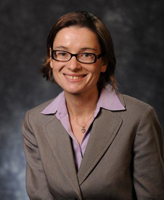
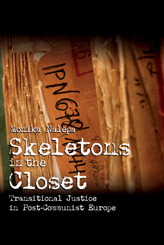
, assistant professor of political science at the University of 91³Ō¹Ļ, has been named a winner of the 2011 Best Book Award from the American Political Science Associationā€™s Comparative Democratization section for ā€œā€ (Cambridge University Press).
The book examines the strategies behind decisions on whether and how to penalize members of the former authoritarian regimes in Poland, Hungary and the Czech Republic as they transitioned to democracy.
It is a subject of particular interest for Nalepa, who was born in communist Poland and grew up there during the shift to democracy. ā€œI remember very well the immediate aftermath of the transition,ā€ she says, ā€œand there were many conversations about what to do with members of the Communist Party and their collaborators.ā€
As a scholar, Nalepa says she had long been puzzled about why Communist officials were willing to negotiate peaceful transitions in most East European countries.
ā€œIf Iā€™m going to be punished after I step down from office, why wouldnā€™t I just hang on to office as long as possible? Thatā€™s pretty much what leaders like Gadhafi are doing.ā€
ā€œAfter a number of research trips to post-communist Europe, I finally found a plausible solution,ā€ she says, ā€œwhich is that members of the former opposition had actually collaborated with the Communists a lot more than was previously thought. The new leaders shied away from transitional justice because in the process of doing so, they could expose skeletons in their own closets. Because Communists knew that, they were willing to step down peacefully.ā€
In the book, Nalepa draws on archival evidence, statistical analysis and extensive interviews to support her argument.
ā€œI feel very fortunate that I was able to talk to some of the key players in the transition from communism while they were still alive,ā€ she says.
Nalepa says she was ā€œsurprised and thrilledā€ that her first book has received this recognition.
ā€œIā€™ve always wanted to be a scholar of the comparative democratization field. Thatā€™s why I came to 91³Ō¹Ļ from Riceā€”because of the strength of the comparative democratization program here. To be recognized in this way by this section of the APSA is a tremendous honor.ā€
Sharing the award with Timothy Frye, the Marshall D. Schulman Professor of Post-Soviet Foreign Policy at Columbia University, is also a point of pride, she says. Frye was named co-winner for his book ā€œBuilding States and Markets After Communism: The Perils of Polarized Democracyā€ (Cambridge University Press).
ā€œHeā€™s so much more accomplished and senior,ā€ Nalepa says. ā€œIā€™ve actually assigned his book in my classes, so I feel particularly honored to be co-winner with him.ā€
This academic year Nalepa has a fellowship at Princeton as a visiting associate research scholar at the Center for the Study of Democratic Politics in the Woodrow Wilson School of Public and International Affairs.
There, she is working on a new book about trends in legislative politics in post-communist Europe, specifically the dwindling rights of individual members of parliament (MPs).
ā€œIn the beginning, there was a lot of resistance to parties as the main vehicles of government because of the experience with authoritarian parties under communism,ā€ Nalepa says. ā€œIndividual MPs spoke when they felt the urge to, sponsored bills they liked, and voted as they pleased. It is remarkable how quickly parties consolidated, started voting in a much more unified way, and began to discipline their members into submission.ā€
She is planning a trip to Poland during the countryā€™s October parliamentary elections to finalize her research, which already includes interviews with parliamentarians, party bosses, and more than half of the house speakers since the transition to democracy. Nalepa is also conducting research in the parliamentary archives and analyzing roll call votes from 1993 to the present to show how parties have consolidated power over the years.
Originally published by at on September 09, 2011.