
, a University of 91勛圖 associate professor of history, has received a fellowship from to study the complex economic and cultural connections between coffee lovers and the men, women泭and children who grow the beans in places such as Kenya.
The will support Ocobock���s research of key forces in the history of international trade for his book ���Imperial Blend: Kenyan Coffee and Capitalism in the Era of Anglo-American Empire,��� and to develop new courses on global economic history.
���I want to focus on people���s everyday experiences with coffee, and then, through this book, fold them together so the experiences of the person who is drinking the coffee every morning and the person who is tending and weeding and harvesting coffee meet,��� Ocobock said.
Created in 2002, the New Directions Fellowship is designed to help humanities faculty acquire systematic training outside their own areas of interest and to encourage cross-disciplinary research.
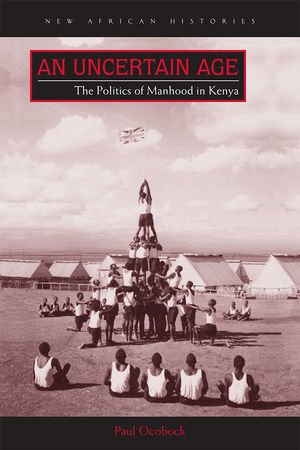
Ocobock���s previous book, ���,��� won the American Historical Association���s 2018 Morris D. Forkosch Prize for the best book in English in the field of British, British imperial泭or British Commonwealth history since 1485.泭
His new research aims to bridge the fields of economic history, which tracks large-scale transformations over time, and cultural history, which considers people���s daily lives, ideas泭and meanings they ascribe to things. As part of the fellowship, he will take advanced coursework on economic history, theory泭and methods at Northwestern University to deepen his ability to engage with and visualize key forces in international trade.
He also will train in the digital humanities at 91勛圖���s and the University of Victoria���s .
���I wouldn���t have received this fellowship if it had not been for the tremendous resources available at 91勛圖,��� Ocobock said. ���I���m fortunate to be at an institution where there is so much support for research and assistance available to faculty. I���m especially thankful for the help of Amanda Retartha, director of ; Associate Dean Margaret Meserve in the ; Ken Garcia at the ; and the continued support for this project provided by the .���
Ocobock, a fellow of the Kellogg Institute, also plans to use geographic information system mapping that will allow him to layer data as a tool to find periods of drought or too much rain and how people dealt with those extremes. During two research trips to Kenya next year, he will talk to both new and more experienced coffee farmers. He will also visit boutique coffee roasteries in America where Kenyan coffee is sold.泭
Ocobock said advanced knowledge of economic theory and methods and data visualization are essential to his studying how the regulation of international trade, influence of Britain and the United States, interventions of international financial institutions, and tastes of Western consumers shaped Kenyans��� livelihoods and their position in the global economy.泭
Given the wide public interest and broadening understanding of coffee, Ocobock hopes his research will appeal to a wider audience beyond just historians of Africa.
���I want this book to be approachable and something a lot of people can find some value in,��� he said. ���We���re at a moment now where when people go to the grocery store or coffee shop, they���re no longer just buying a name brand. They might want a coffee from Kenya or Guatemala, or they want a pour-over or a French press. They want to connect with their coffee, so I think this is a moment for a book like this.���泭
泭
Originally published by at on July 22.